1720 - 1728
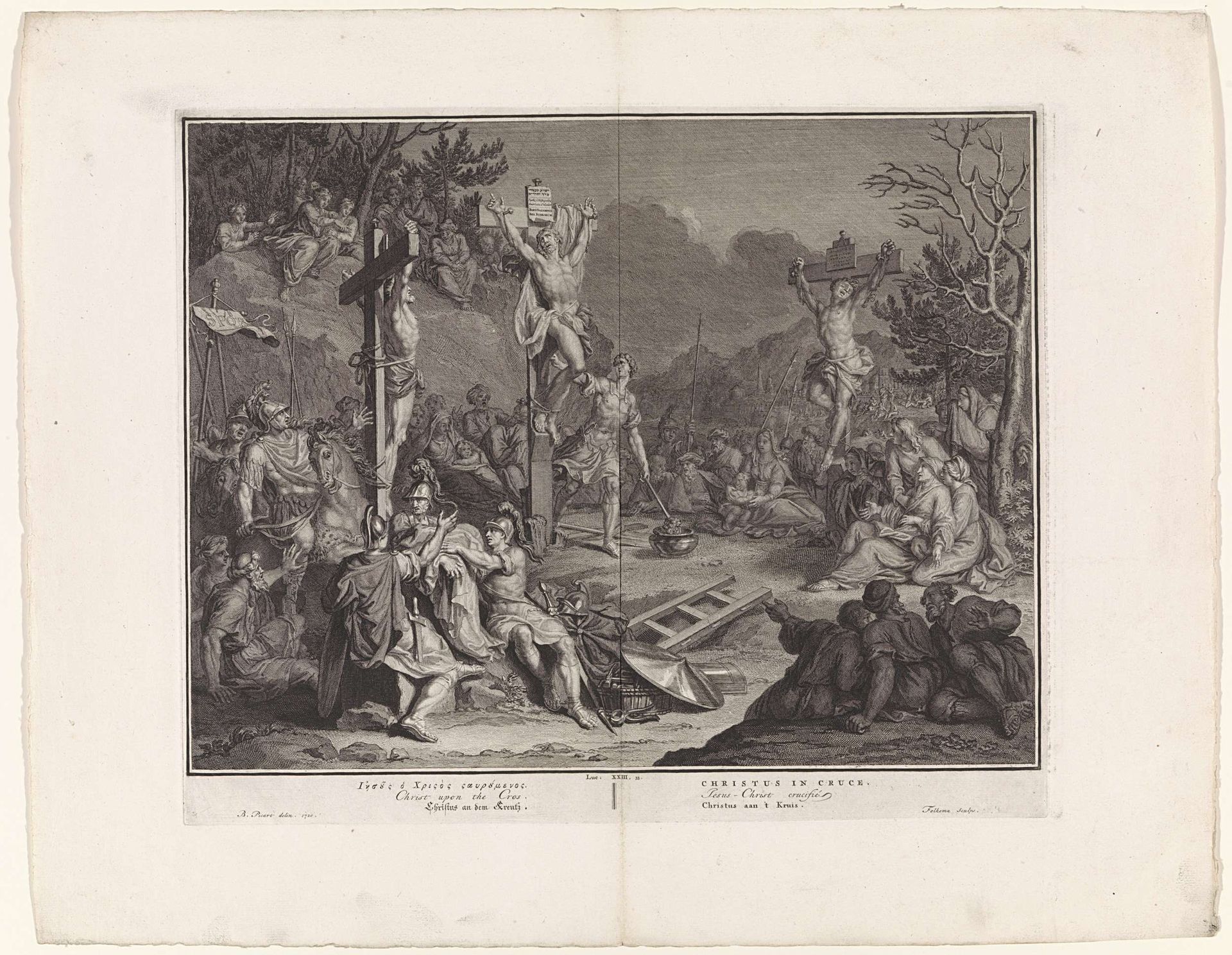
Kruisiging van Christus

Jacob Folkema
1692 - 1767Location
RijksmuseumListen to curator's interpretation
Curatorial notes
Jacob Folkema created this print of the Crucifixion of Christ sometime in the 18th century, using a technique called etching. Etching is an indirect process, quite different than drawing with a pencil. The artist covers a metal plate with a waxy ground, then scratches away lines to expose the metal. The plate is then submerged in acid, which bites into the exposed lines. The longer the plate sits in acid, the deeper the lines become, giving greater tonal range to the final print. Folkema would have carefully controlled these variables. The plate is then inked, wiped, and run through a press, transferring the image to paper. It’s a mode of production suited to the rapid distribution of images, making the crucifixion accessible to a wide audience. The stark contrast between the etched lines and the blank paper gives the scene a dramatic weight, emphasizing the somber and pivotal moment in Christian history. This print stands as a testament to the power of reproductive techniques, as well as the artist's skillful manipulation of materials and process.