About this artwork
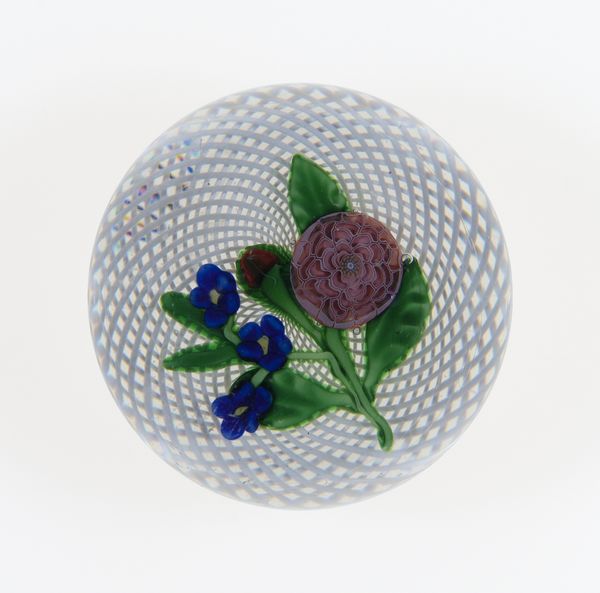
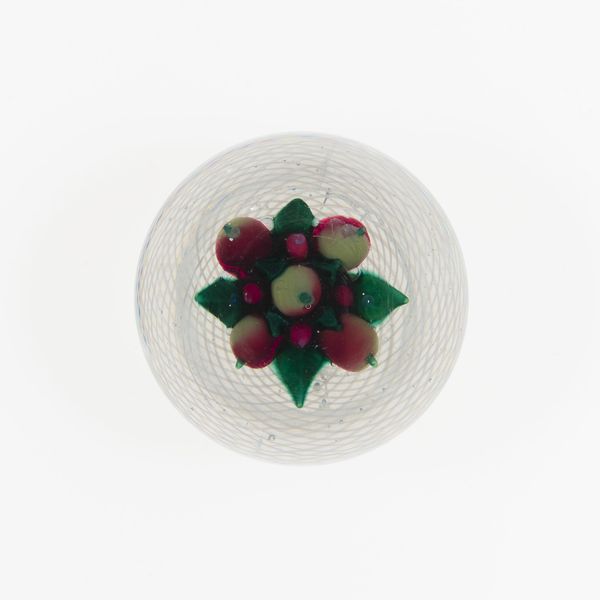
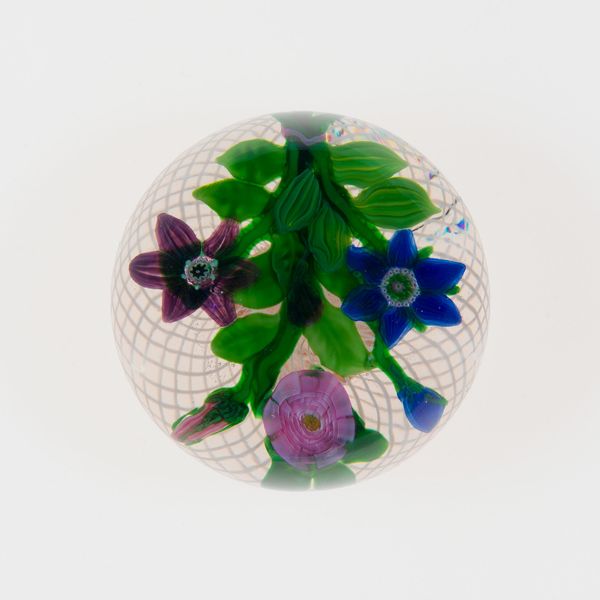
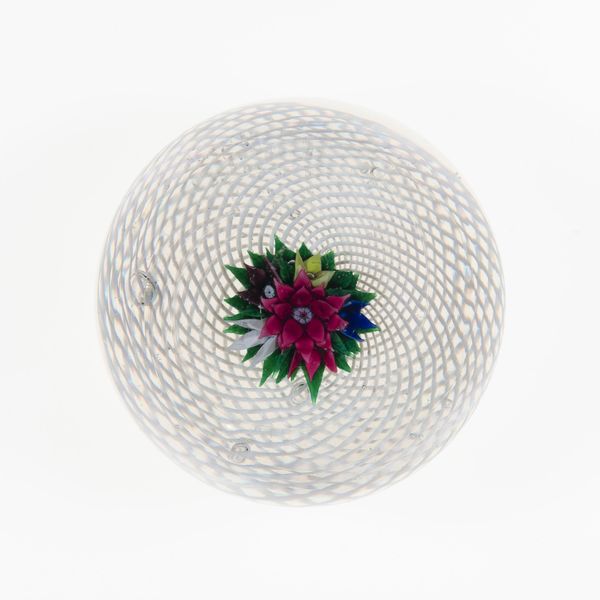
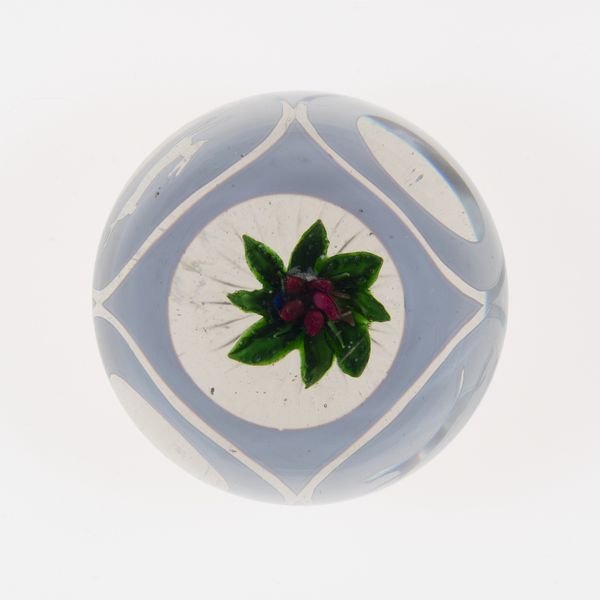
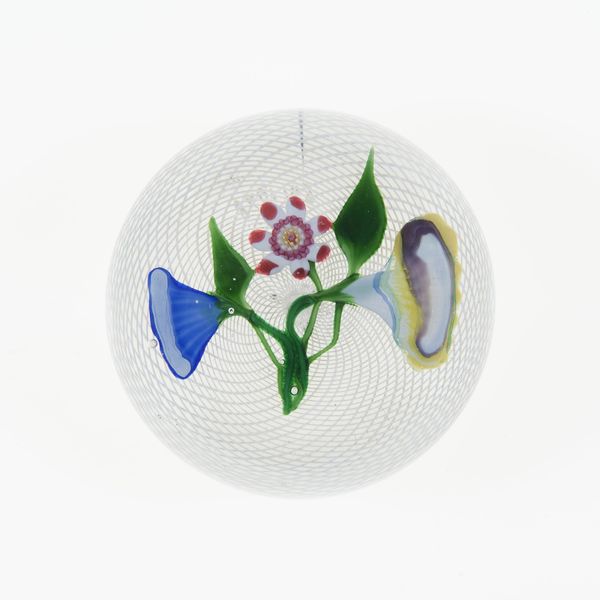
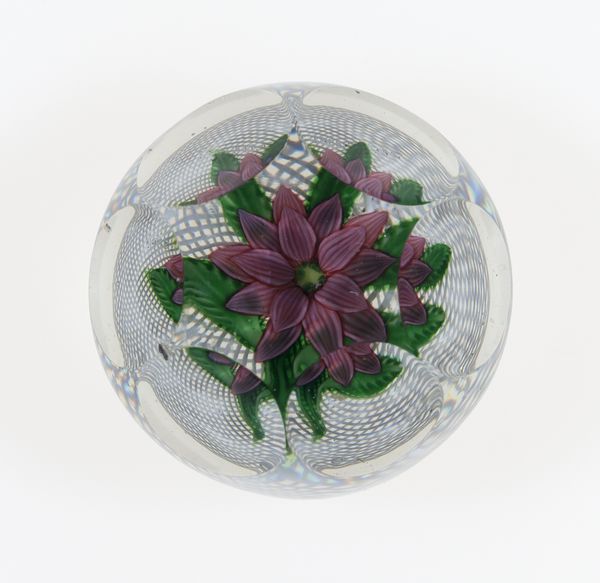
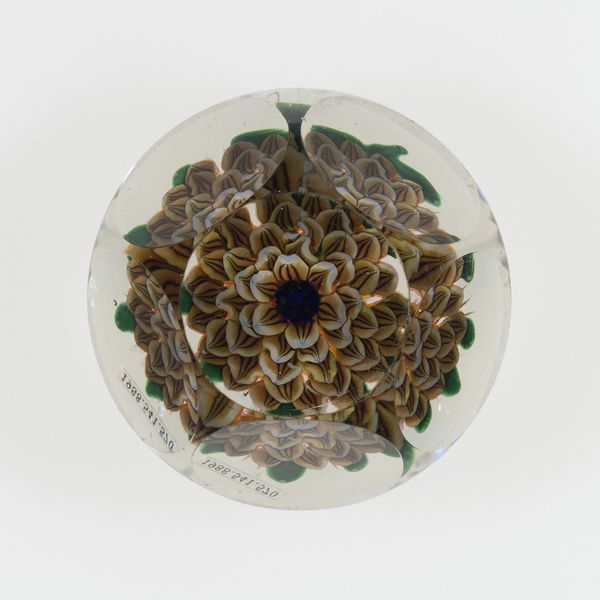
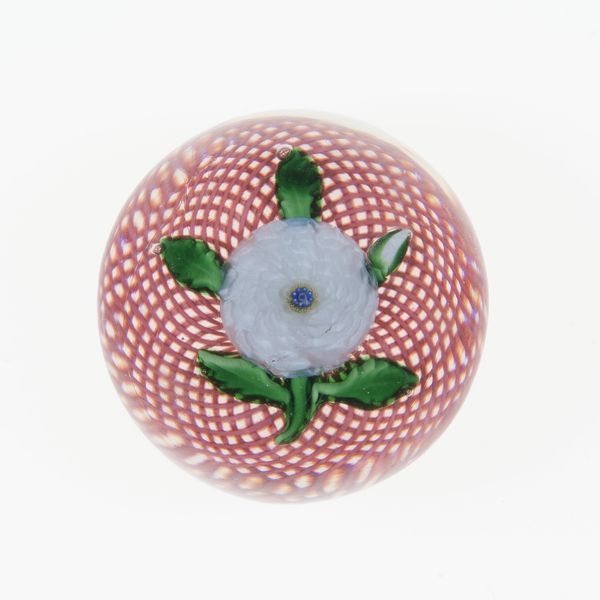
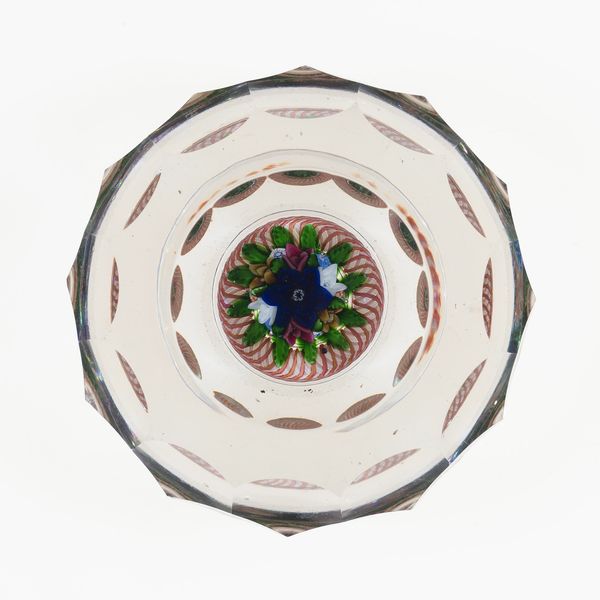
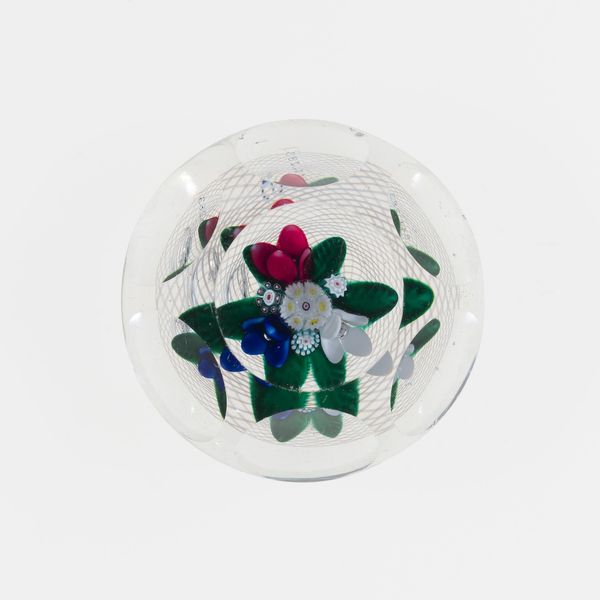
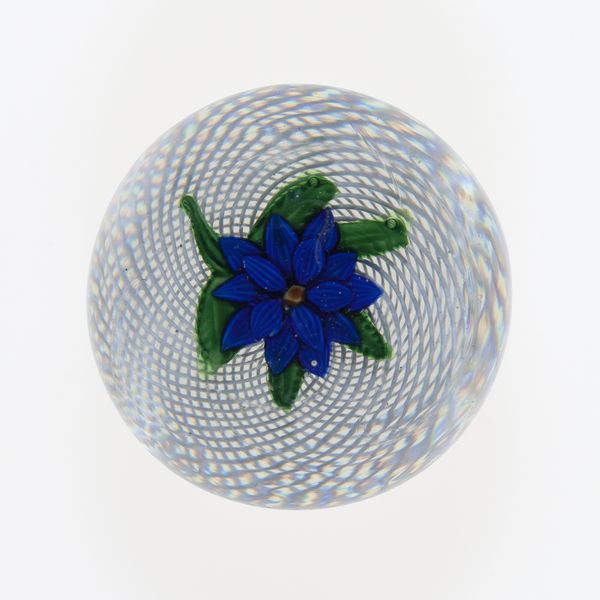
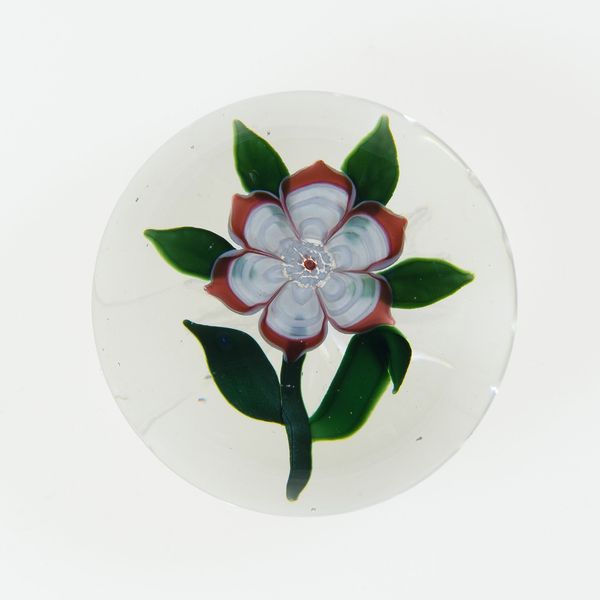
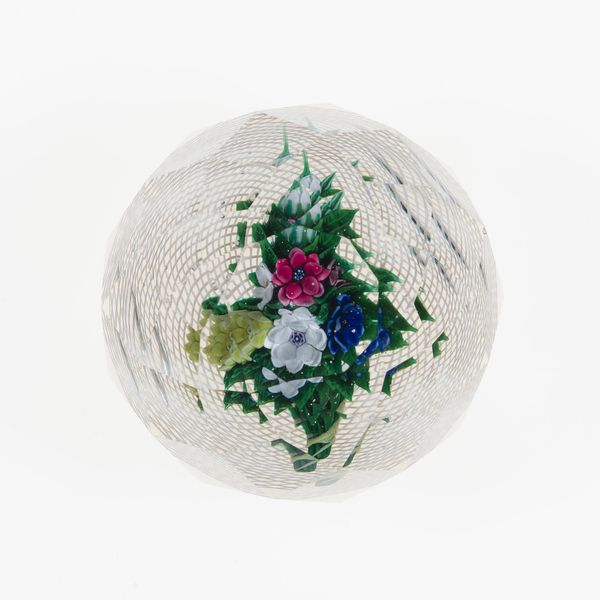
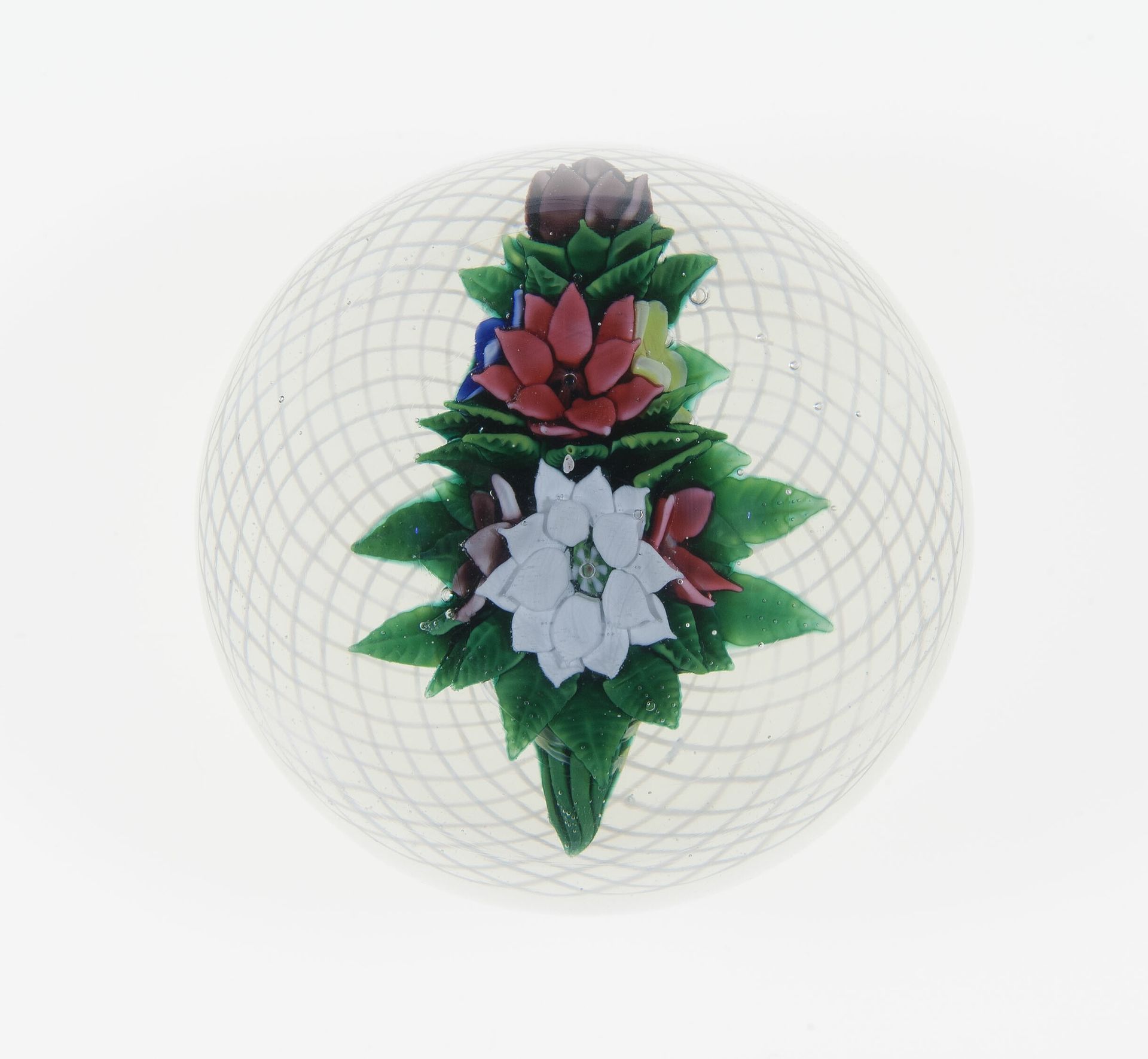
This paperweight was crafted by the New England Glass Company, active during a period of significant industrial and artistic development in the United States. Considered a luxury item, this paperweight reflects the Victorian era's fascination with nature and the burgeoning culture of decorative arts. Encased within clear glass, a colorful bouquet blooms, its meticulous detail speaking to the skills of the glassmakers, many of whom were European immigrants bringing generations of artisanal knowledge. These objects were often marketed towards middle and upper class women, symbols of domesticity and refinement. Yet, the paperweight also existed within a complex socio-economic landscape marked by industrial labor and consumerism. Despite its beauty, the piece is inextricably linked to the factory workers, their identities and stories often obscured by the final gleaming product. The paperweight is more than a simple decorative object; it's a lens through which we can examine the intersections of art, industry, gender, and class in 19th-century America.
Paperweight c. late 19th century


Artwork details
- Medium
- paper, photography, glass
- Dimensions
- Diam. 7.9 cm (3 1/8 in.)
- Location
- The Art Institute of Chicago
- Copyright
- Public Domain
Tags
clear focal point
circular organic
round design
paper
photography
glass
white focal point
decorative-art
Comments
No comments
About this artwork
This paperweight was crafted by the New England Glass Company, active during a period of significant industrial and artistic development in the United States. Considered a luxury item, this paperweight reflects the Victorian era's fascination with nature and the burgeoning culture of decorative arts. Encased within clear glass, a colorful bouquet blooms, its meticulous detail speaking to the skills of the glassmakers, many of whom were European immigrants bringing generations of artisanal knowledge. These objects were often marketed towards middle and upper class women, symbols of domesticity and refinement. Yet, the paperweight also existed within a complex socio-economic landscape marked by industrial labor and consumerism. Despite its beauty, the piece is inextricably linked to the factory workers, their identities and stories often obscured by the final gleaming product. The paperweight is more than a simple decorative object; it's a lens through which we can examine the intersections of art, industry, gender, and class in 19th-century America.
Comments
No comments