About this artwork
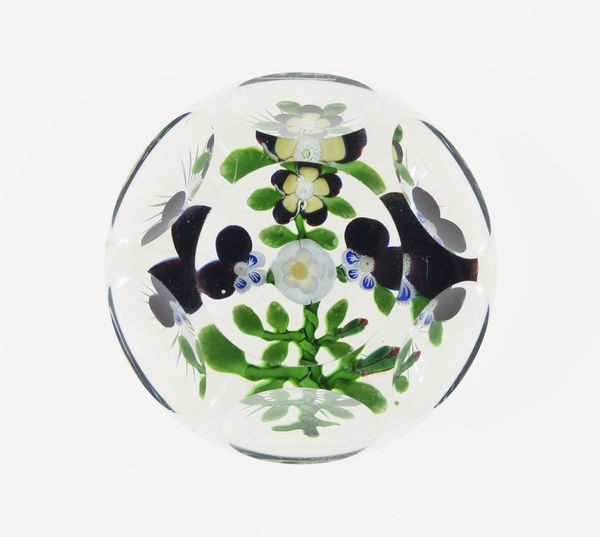
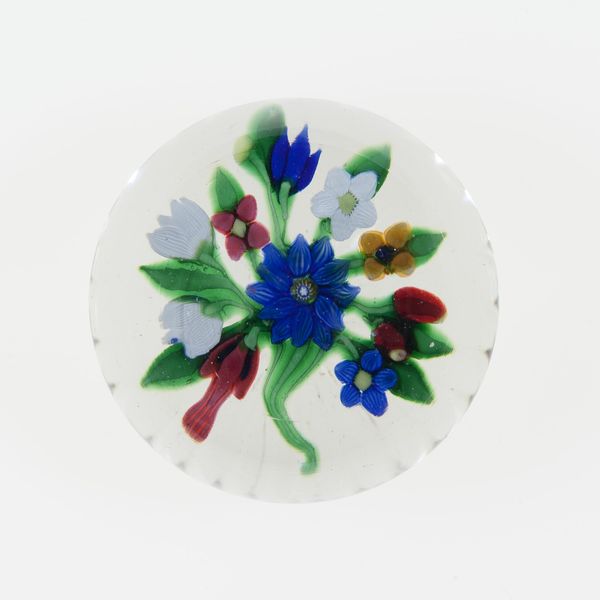
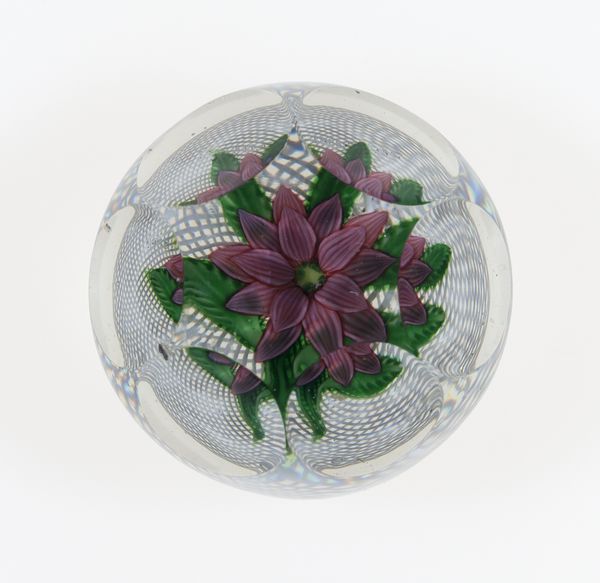
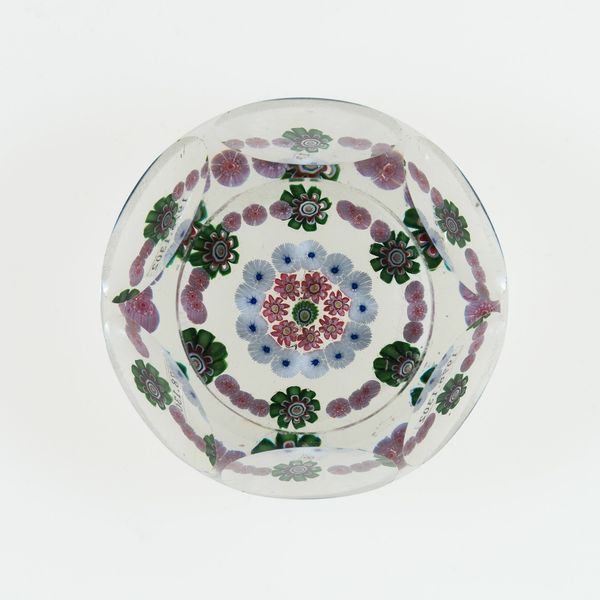
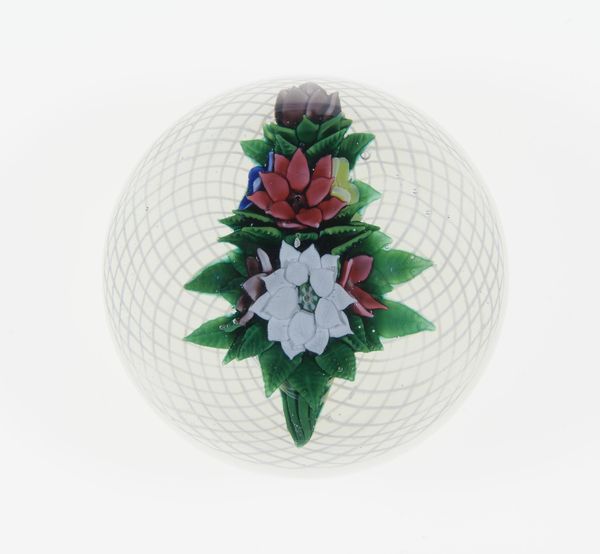
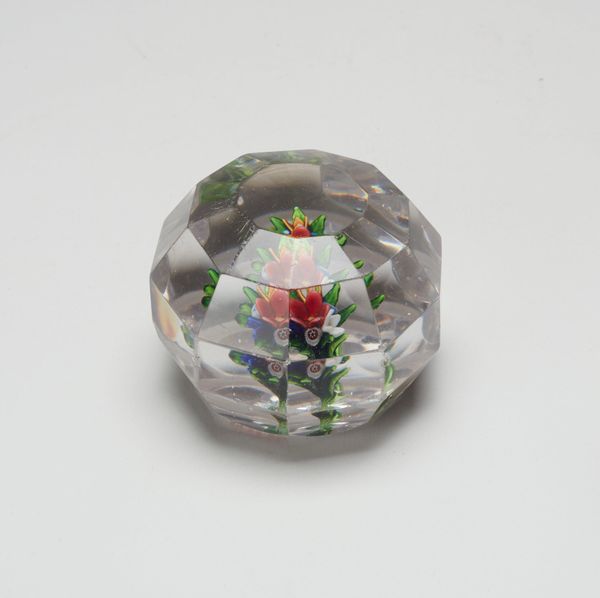
This paperweight was made by the Boston and Sandwich Glass Company, sometime between 1825 and 1888, from molten glass. The process of making it involved embedding lampworked glass components within a clear glass dome. This involved considerable skill in manipulating hot glass, not only to create the individual floral elements, but also to encase them without distortion or breakage. Note the intricate latticino backdrop, a delicate network of fine glass threads. The company was known for its mass production of glassware, and paperweights like this one were luxury items, but made on a significant scale. Their production relied on skilled labor, but also on factory efficiency and marketing. The success of companies like Boston and Sandwich reflects the complex relationship between craft, industrial production, and consumer culture in the 19th century. Considering the materials, making, and context surrounding an artwork challenges traditional distinctions between fine art and craft.
Paperweight
c. late 19th century

Boston and Sandwich Glass Company
1825 - 1888
The Art Institute of Chicago
The Art Institute of ChicagoArtwork details
- Medium
- glass
- Dimensions
- Diam. 6 cm (2 3/8 in.)
- Location
- The Art Institute of Chicago
- Copyright
- Public Domain
Tags
glass
united-states
Comments
Be the first to share your thoughts about this work.
About this artwork
This paperweight was made by the Boston and Sandwich Glass Company, sometime between 1825 and 1888, from molten glass. The process of making it involved embedding lampworked glass components within a clear glass dome. This involved considerable skill in manipulating hot glass, not only to create the individual floral elements, but also to encase them without distortion or breakage. Note the intricate latticino backdrop, a delicate network of fine glass threads. The company was known for its mass production of glassware, and paperweights like this one were luxury items, but made on a significant scale. Their production relied on skilled labor, but also on factory efficiency and marketing. The success of companies like Boston and Sandwich reflects the complex relationship between craft, industrial production, and consumer culture in the 19th century. Considering the materials, making, and context surrounding an artwork challenges traditional distinctions between fine art and craft.
Comments
Be the first to share your thoughts about this work.