About this artwork
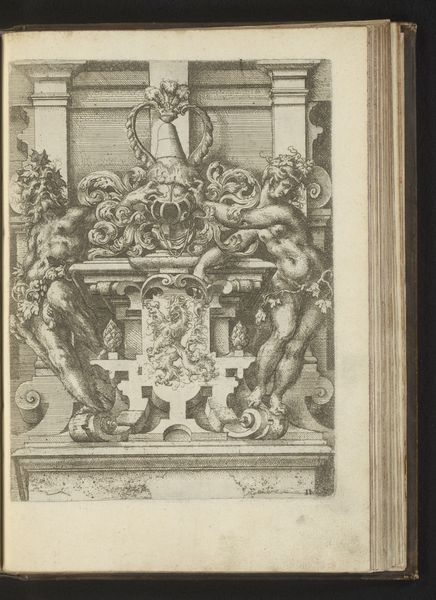
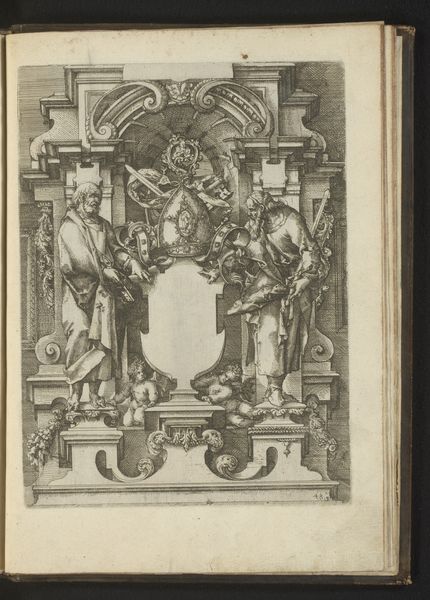
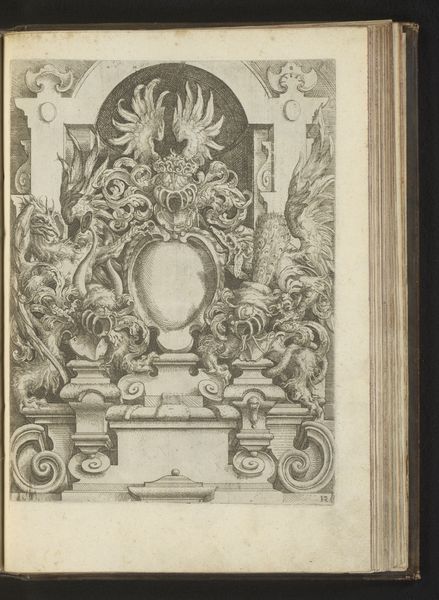
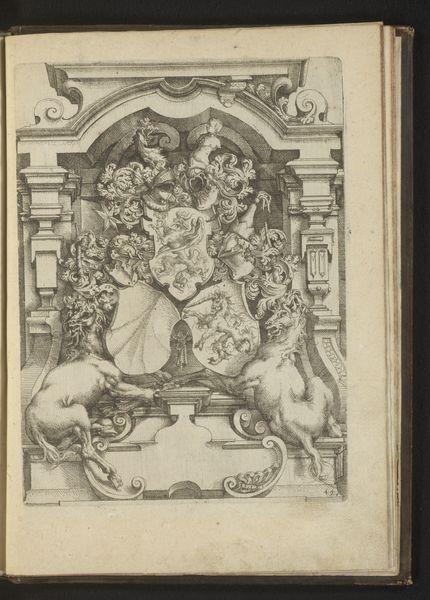
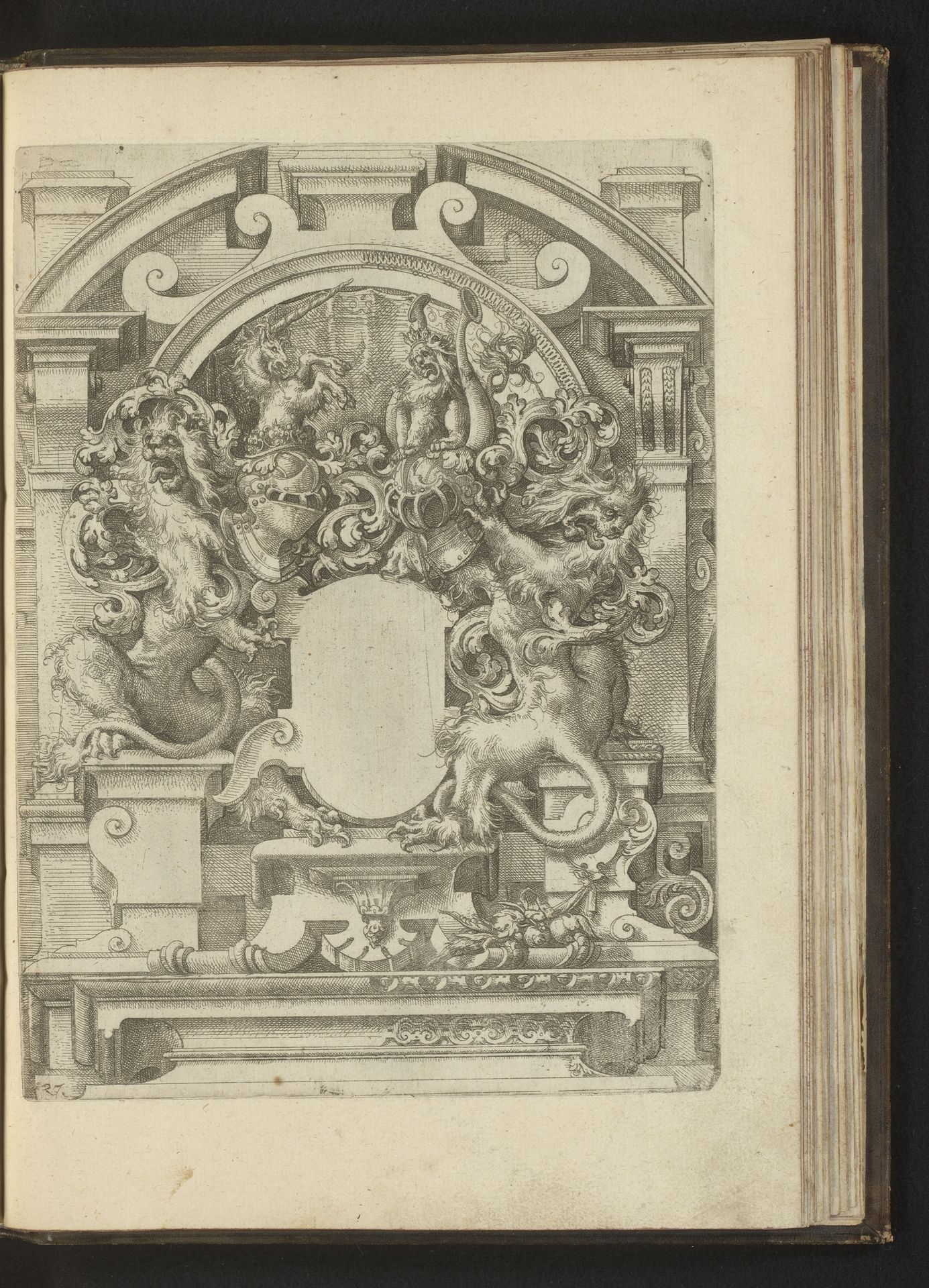
Wendel Dietterlin created this print, titled "Cartouche on a pedestal flanked by lions and a unicorn," likely in the late 16th century. Dietterlin was a mannerist painter and architect, who is best known for his architectural treatise "Architectura." This print, like much of his work, is an exploration of ornamentation and the fantastic. Consider how the artist uses heraldic symbols such as lions and a unicorn, which frequently represented royalty, nobility, or specific families. These symbols are set within an elaborate architectural framework. In this way, Dietterlin blurs the line between the real and the imagined, inviting viewers to consider architecture as a space for both power and fantasy. What might this cartouche have framed? Was it meant to glorify earthly rulers or provide a glimpse into a divine realm? Dietterlin’s detailed and imaginative style reflects the complex social dynamics of his time, where art served as a tool for constructing identity and projecting power.
Cartouche op een sokkel geflankeerd door leeuwen en een eenhoorn
1593 - 1595

Artwork details
- Medium
- drawing, print, engraving
- Dimensions
- height 246 mm, width 186 mm
- Copyright
- Rijks Museum: Open Domain
Tags
Comments
Share your thoughts
About this artwork
Wendel Dietterlin created this print, titled "Cartouche on a pedestal flanked by lions and a unicorn," likely in the late 16th century. Dietterlin was a mannerist painter and architect, who is best known for his architectural treatise "Architectura." This print, like much of his work, is an exploration of ornamentation and the fantastic. Consider how the artist uses heraldic symbols such as lions and a unicorn, which frequently represented royalty, nobility, or specific families. These symbols are set within an elaborate architectural framework. In this way, Dietterlin blurs the line between the real and the imagined, inviting viewers to consider architecture as a space for both power and fantasy. What might this cartouche have framed? Was it meant to glorify earthly rulers or provide a glimpse into a divine realm? Dietterlin’s detailed and imaginative style reflects the complex social dynamics of his time, where art served as a tool for constructing identity and projecting power.
Comments
Share your thoughts