

1593 - 1595
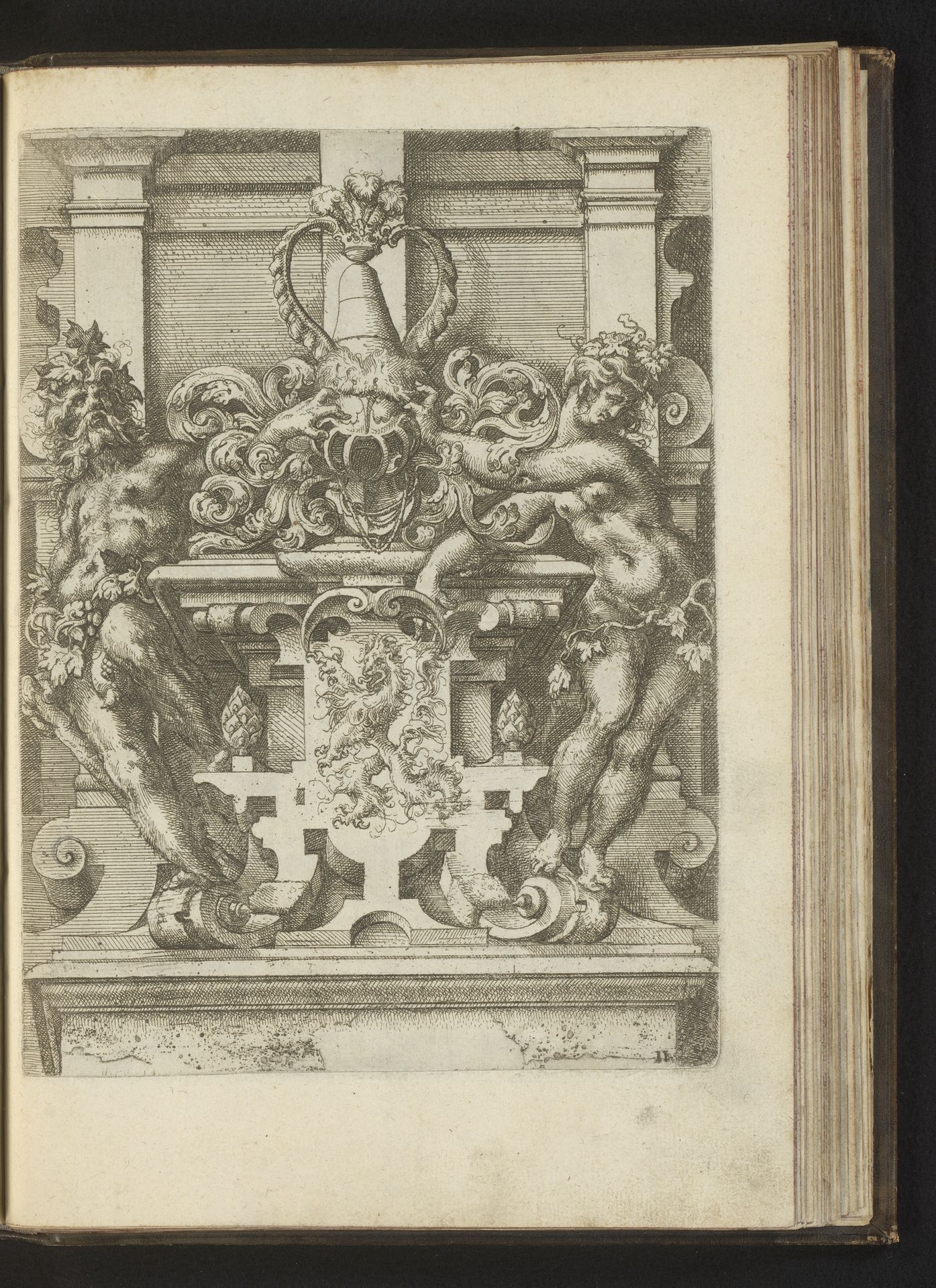
Sokkel met wapenschild geflankeerd door man en vrouw gekleed met bladranken

Listen to curator's interpretation
Curatorial notes
Wendel Dietterlin created this print of a coat-of-arms flanked by figures around 1600. The print's design is a striking example of the Northern Renaissance style, rich with classical motifs and Mannerist tendencies. Consider the context in which Dietterlin was working; he was an architect and artist in Germany during a period of significant social and religious upheaval, marked by the Reformation and the rise of powerful merchant classes. The imagery is infused with symbolism. The male and female figures covered with foliage, for example, represent abundance and fertility. Meanwhile, the coat-of-arms itself would have been a potent symbol of familial power and social status. The rigid symmetry and intricate detail suggests an effort to establish order and structure within the print. By looking at design manuals and books on heraldry from the period, we can better understand how these images functioned within the culture of the time. Art then becomes not just an aesthetic object, but a historical document, reflecting the values and structures of its society.