c. 1942
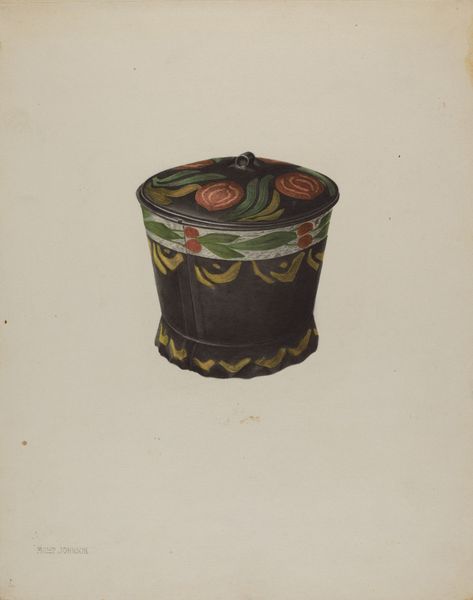
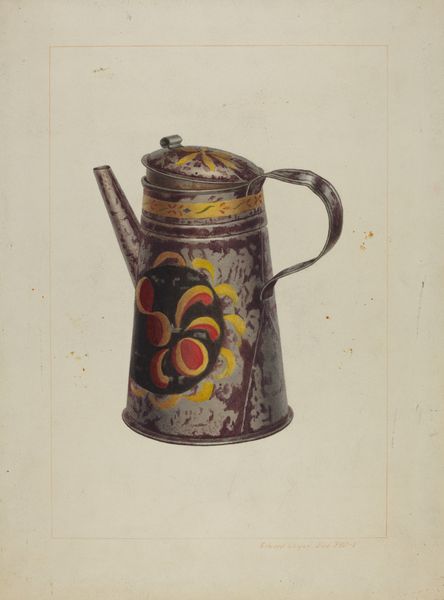
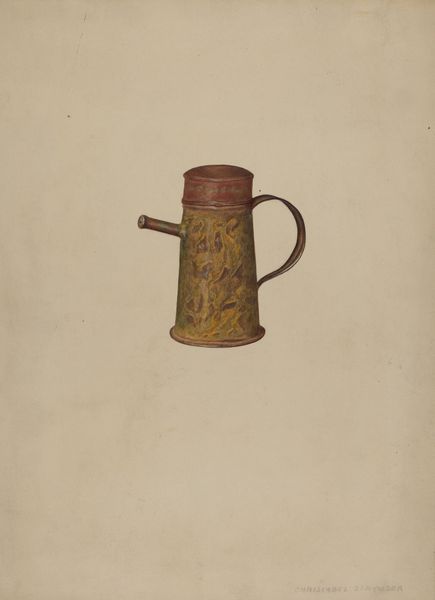
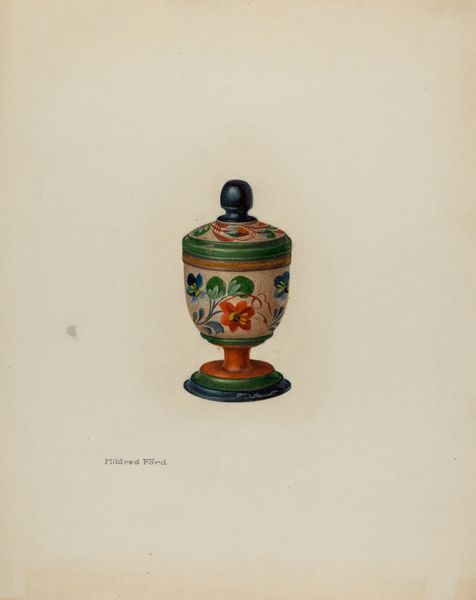
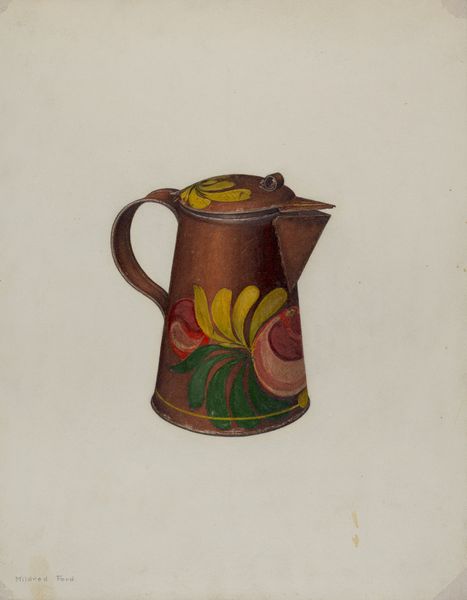
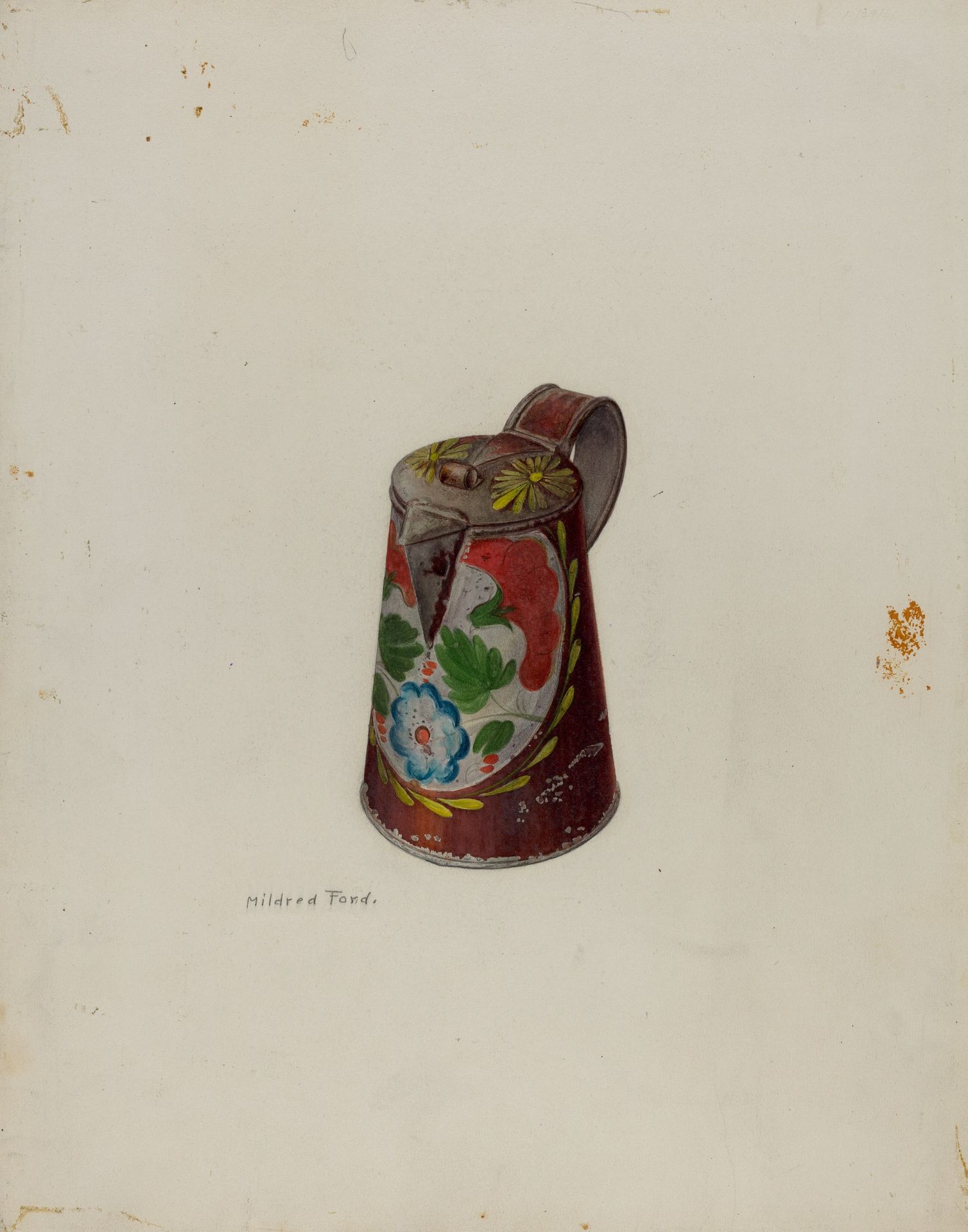
Toleware Syrup Pot


Listen to curator's interpretation
Curatorial notes
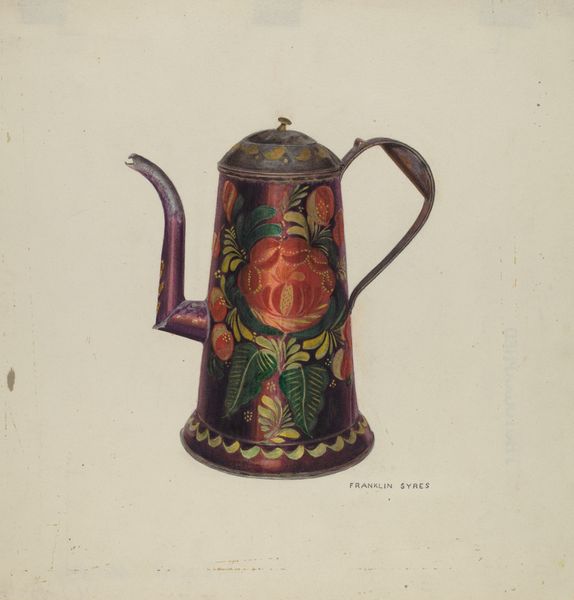
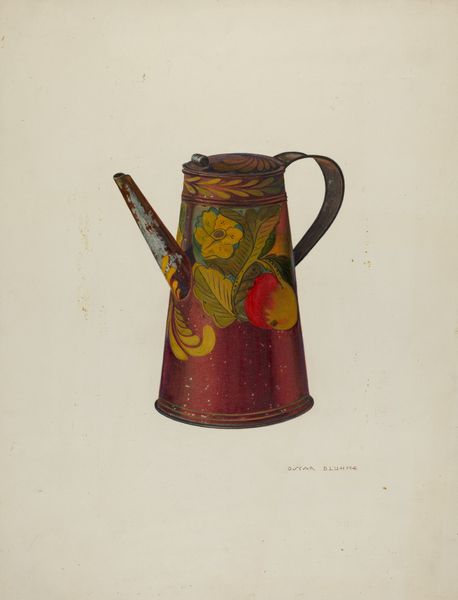
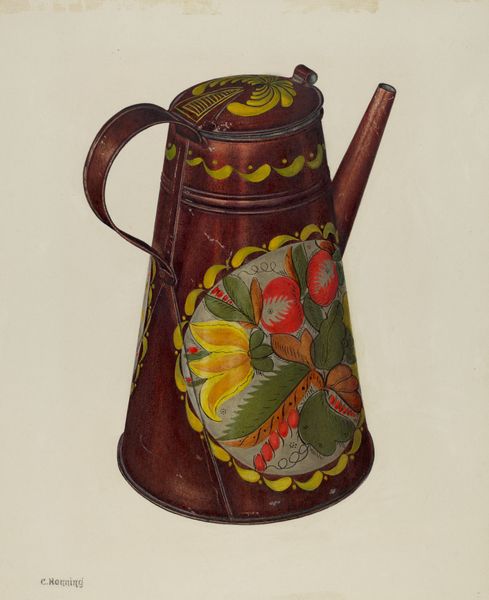
Here we have Mildred Ford's watercolor painting of a Toleware Syrup Pot. Ford was born in 1855, a time when women's roles were largely confined to the domestic sphere, making art production a subversive act of self-expression. During this period, decorative arts, like the toleware featured here, were often relegated to the realm of women's work. However, Ford's choice to depict this everyday object elevates it, giving the syrup pot significance beyond its functional purpose. The floral motifs on the pot might allude to the Victorian era’s intricate language of flowers, where each bloom carried a specific meaning, adding layers of coded communication. Consider that Ford, as a woman artist, was navigating a world where her artistic contributions were often undervalued or overlooked. What does it mean for her to choose this object as a subject? This painting embodies a quiet resistance, turning a simple, functional object into a statement of artistic intent and personal narrative.