About this artwork
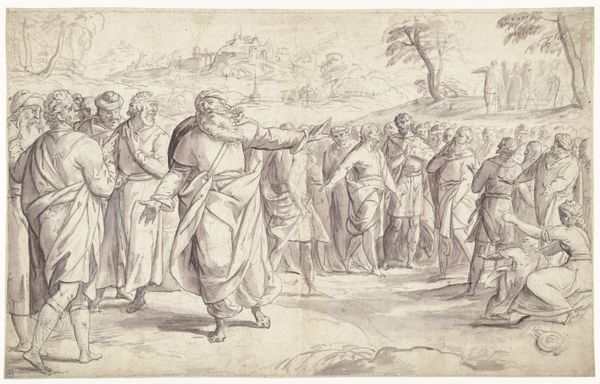
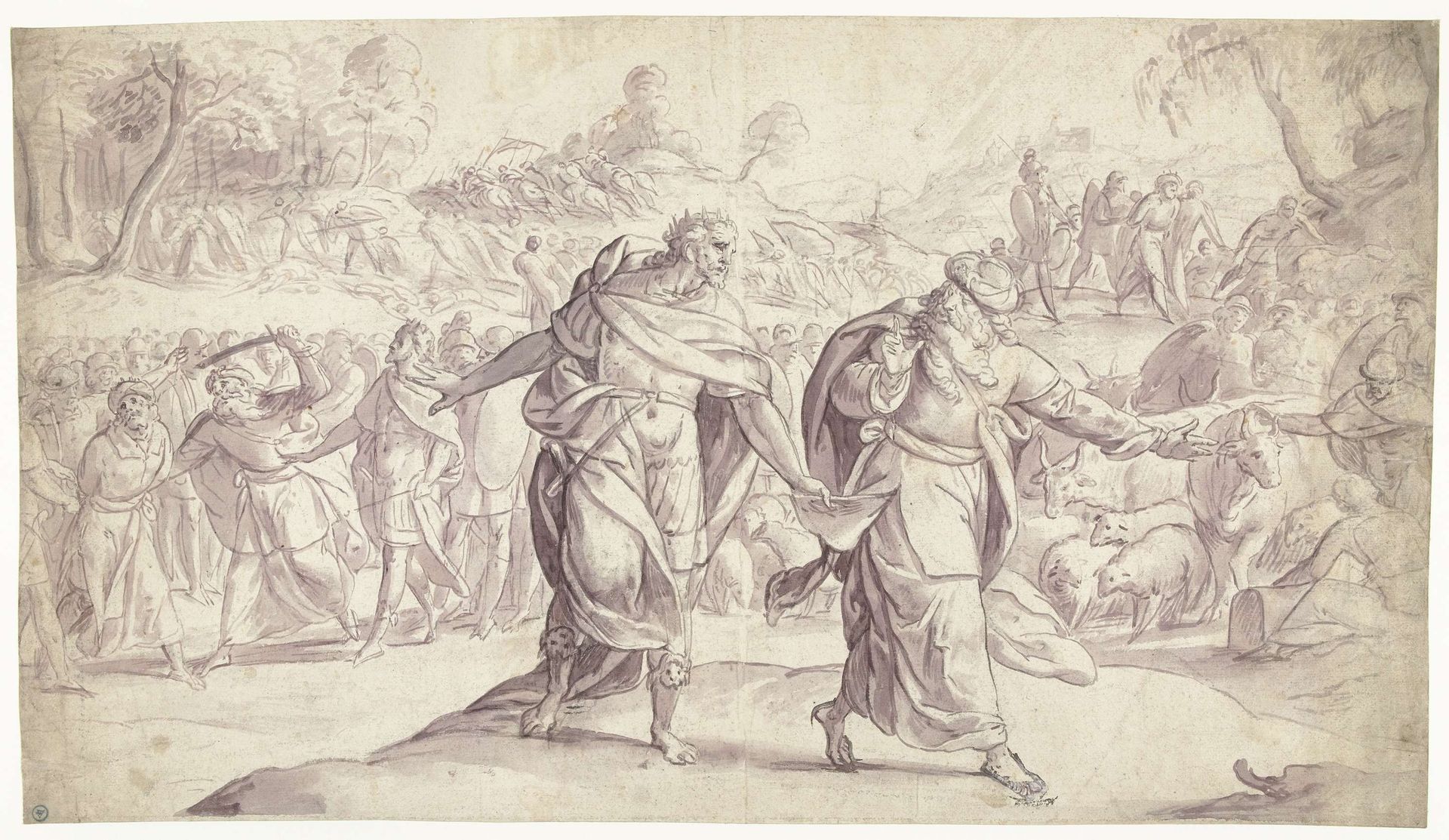
Editor: This is "Jozua laat de vijf koningen van de Ammonieten terechtstellen," or "Joshua Executes the Five Kings of the Amorites," a pen, pencil, and ink drawing on paper by Frans Francken, dating from 1552 to 1616. The image is so full of figures, and the line work creates a feeling of controlled chaos. What story does this drawing tell, and what purpose might it have served? Curator: It depicts a violent episode from the Book of Joshua, reflecting the 16th-century interest in Old Testament narratives as vehicles for moral and political lessons. Drawings like these often served as preparatory sketches for larger paintings or prints, circulating ideas and influencing artistic styles across workshops. How does the composition itself reinforce the narrative’s power dynamics? Editor: Well, Joshua and another robed figure take center stage, directing our eye, while the impending violence is relegated to the margins. There is even livestock depicted being herded into the right lower section of the composition. It is like these subjugated kings are less important than livestock. So, the image promotes this supposed power dynamic between the Israelites and the Amorites. Curator: Exactly. Consider also the Mannerist style, with its exaggerated poses and theatrical gestures. How might that contribute to the emotional impact and ideological message? Editor: I see it! The dramatic poses amplify the scene’s intensity and align with the performative aspects of power and justice during that period. Was the artist commenting on a specific historical event, or was it more about establishing the Israelites as the moral authority? Curator: It is less about a direct historical parallel and more about legitimizing power structures through biblical precedent. These images helped shape perceptions of authority and obedience, influencing the social and political landscape. Editor: That's fascinating; seeing art as a tool for shaping societal views gives me a lot to consider. Thank you. Curator: Indeed, examining the social function of art opens up new avenues for understanding its enduring relevance.
Jozua laat de vijf koningen van de Ammonieten terechtstellen
1552 - 1616

Frans (I) Francken
1542 - 1616Location
RijksmuseumArtwork details
- Medium
- drawing, paper, ink, pencil
- Dimensions
- height 311 mm, width 551 mm
- Location
- Rijksmuseum
- Copyright
- Rijks Museum: Open Domain
Tags
Comments
Share your thoughts
About this artwork
Editor: This is "Jozua laat de vijf koningen van de Ammonieten terechtstellen," or "Joshua Executes the Five Kings of the Amorites," a pen, pencil, and ink drawing on paper by Frans Francken, dating from 1552 to 1616. The image is so full of figures, and the line work creates a feeling of controlled chaos. What story does this drawing tell, and what purpose might it have served? Curator: It depicts a violent episode from the Book of Joshua, reflecting the 16th-century interest in Old Testament narratives as vehicles for moral and political lessons. Drawings like these often served as preparatory sketches for larger paintings or prints, circulating ideas and influencing artistic styles across workshops. How does the composition itself reinforce the narrative’s power dynamics? Editor: Well, Joshua and another robed figure take center stage, directing our eye, while the impending violence is relegated to the margins. There is even livestock depicted being herded into the right lower section of the composition. It is like these subjugated kings are less important than livestock. So, the image promotes this supposed power dynamic between the Israelites and the Amorites. Curator: Exactly. Consider also the Mannerist style, with its exaggerated poses and theatrical gestures. How might that contribute to the emotional impact and ideological message? Editor: I see it! The dramatic poses amplify the scene’s intensity and align with the performative aspects of power and justice during that period. Was the artist commenting on a specific historical event, or was it more about establishing the Israelites as the moral authority? Curator: It is less about a direct historical parallel and more about legitimizing power structures through biblical precedent. These images helped shape perceptions of authority and obedience, influencing the social and political landscape. Editor: That's fascinating; seeing art as a tool for shaping societal views gives me a lot to consider. Thank you. Curator: Indeed, examining the social function of art opens up new avenues for understanding its enduring relevance.
Comments
Share your thoughts