c. 1540 - 1545
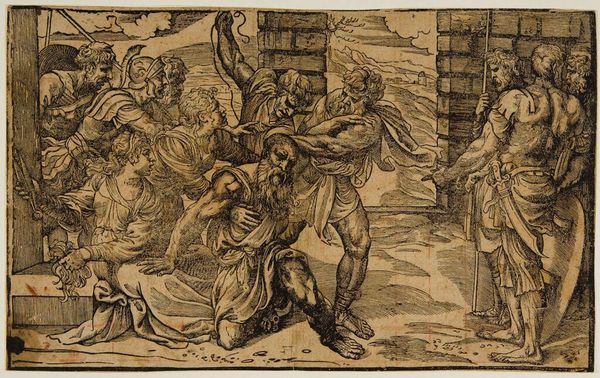
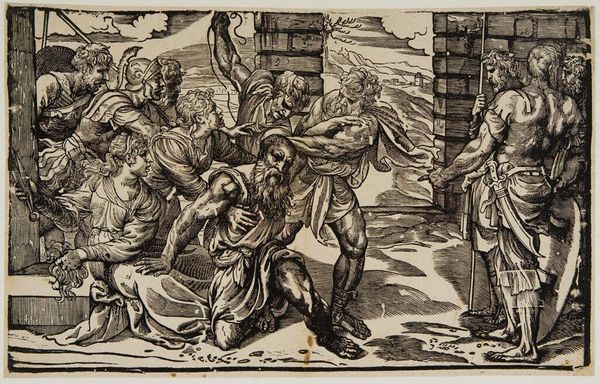
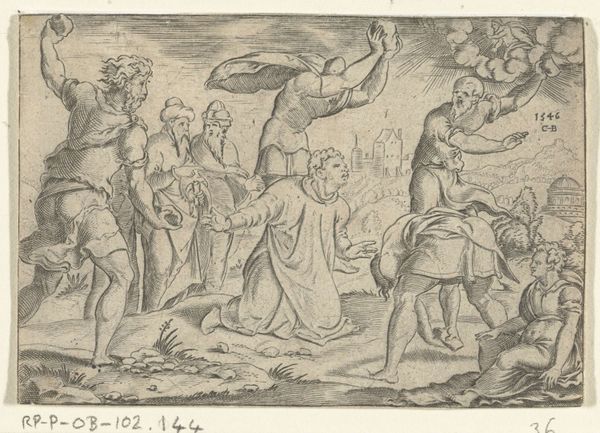
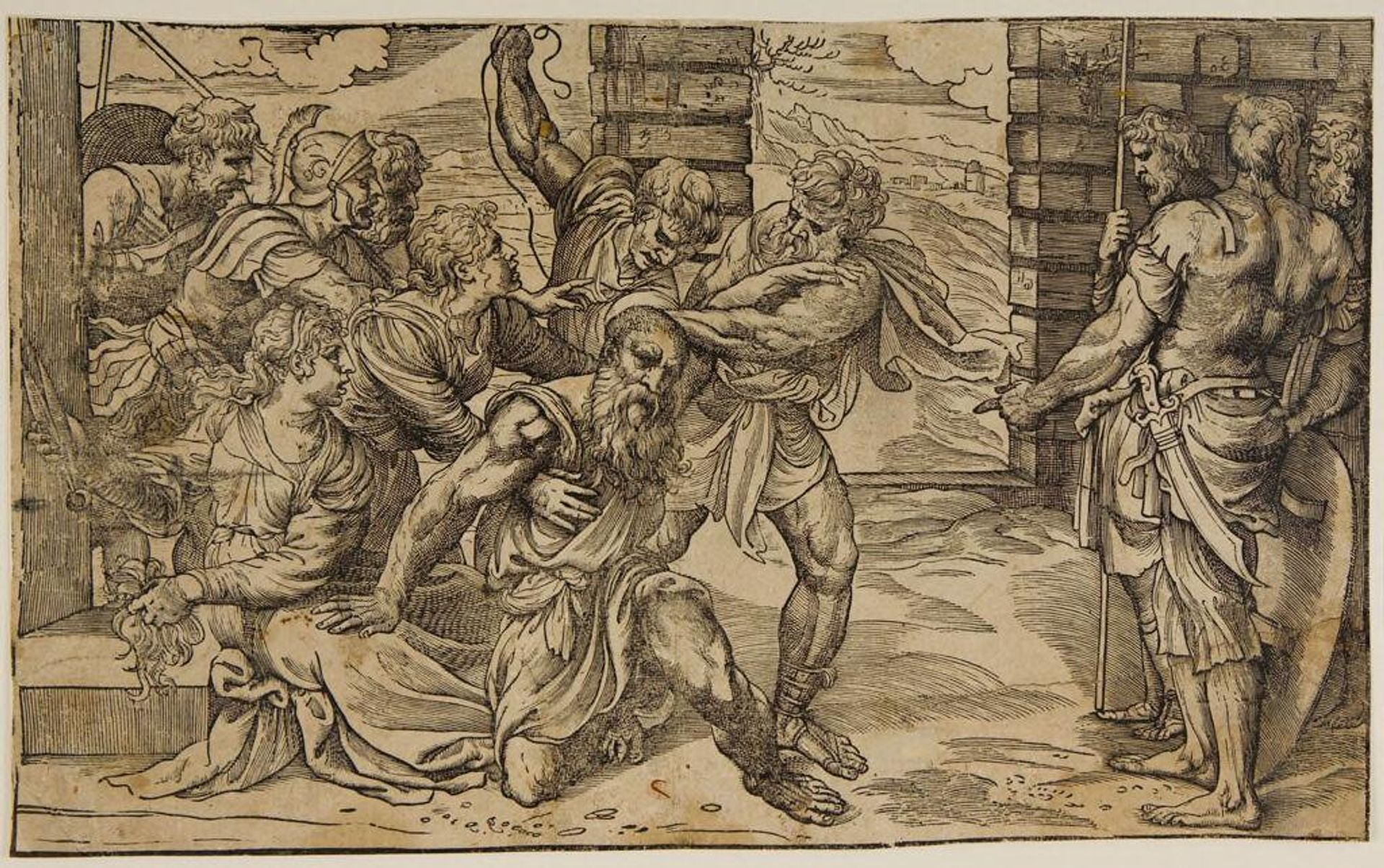
Samson Taken by the Philistines


Curatorial notes
Editor: Nicolò Boldrini's "Samson Taken by the Philistines" is a whirlwind of figures rendered in ink. The scene feels chaotic and brutal. What symbols stand out to you in this piece? Curator: The loss of hair, literally depicted being cut, represents more than just physical weakness; it's a symbolic castration, the loss of power and identity. Notice how Samson cradles himself protectively. What does that gesture tell you about his internal state? Editor: It feels like a fetal position, as if he's regressing to a vulnerable, childlike state. Is that a common reading? Curator: Indeed. Boldrini's choice to show the moment of capture, rather than his imprisonment, emphasizes the psychological trauma of betrayal and loss, echoing throughout history in art. The image becomes a potent symbol of vulnerability. Any thoughts on that? Editor: That makes the image even more compelling; it's not just physical, it's a symbolic representation of lost power. I see it now. Curator: Exactly! It's about the stripping away of more than just strength.