About this artwork
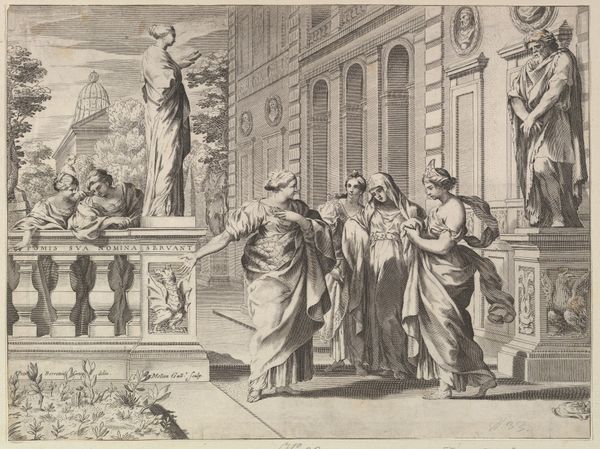
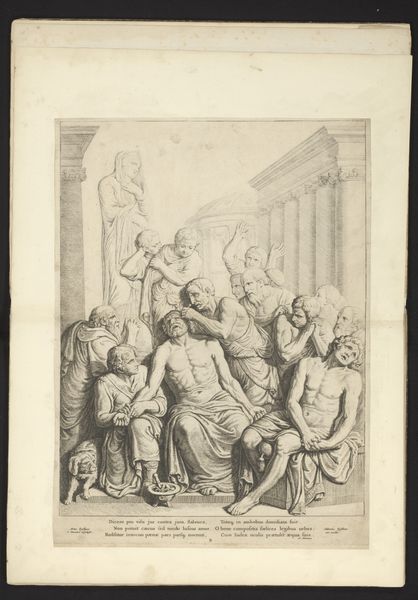
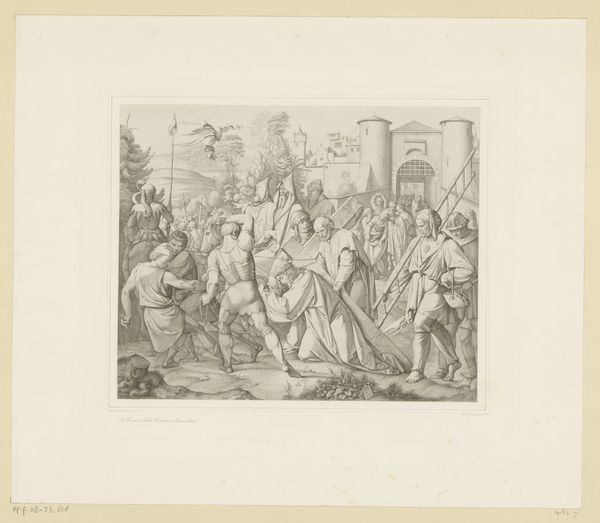
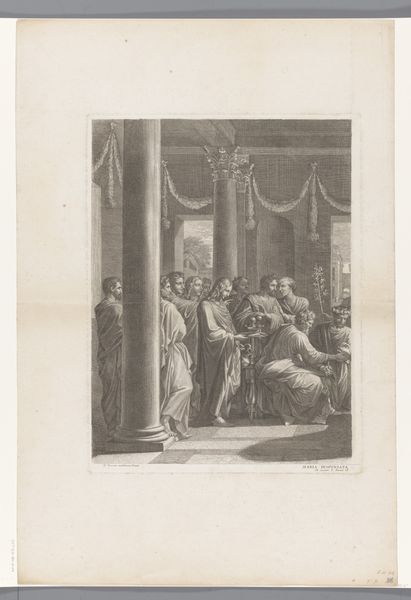
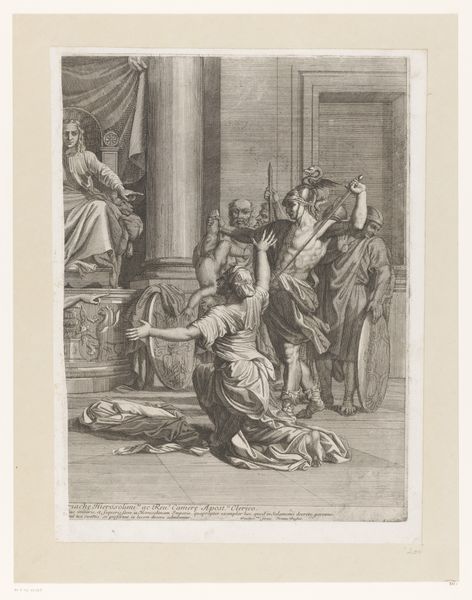
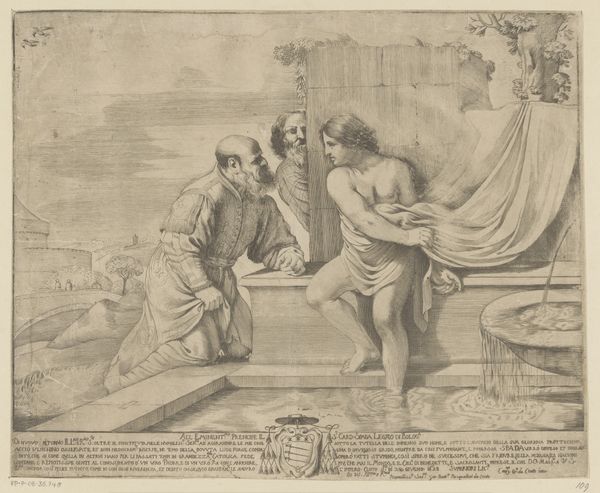
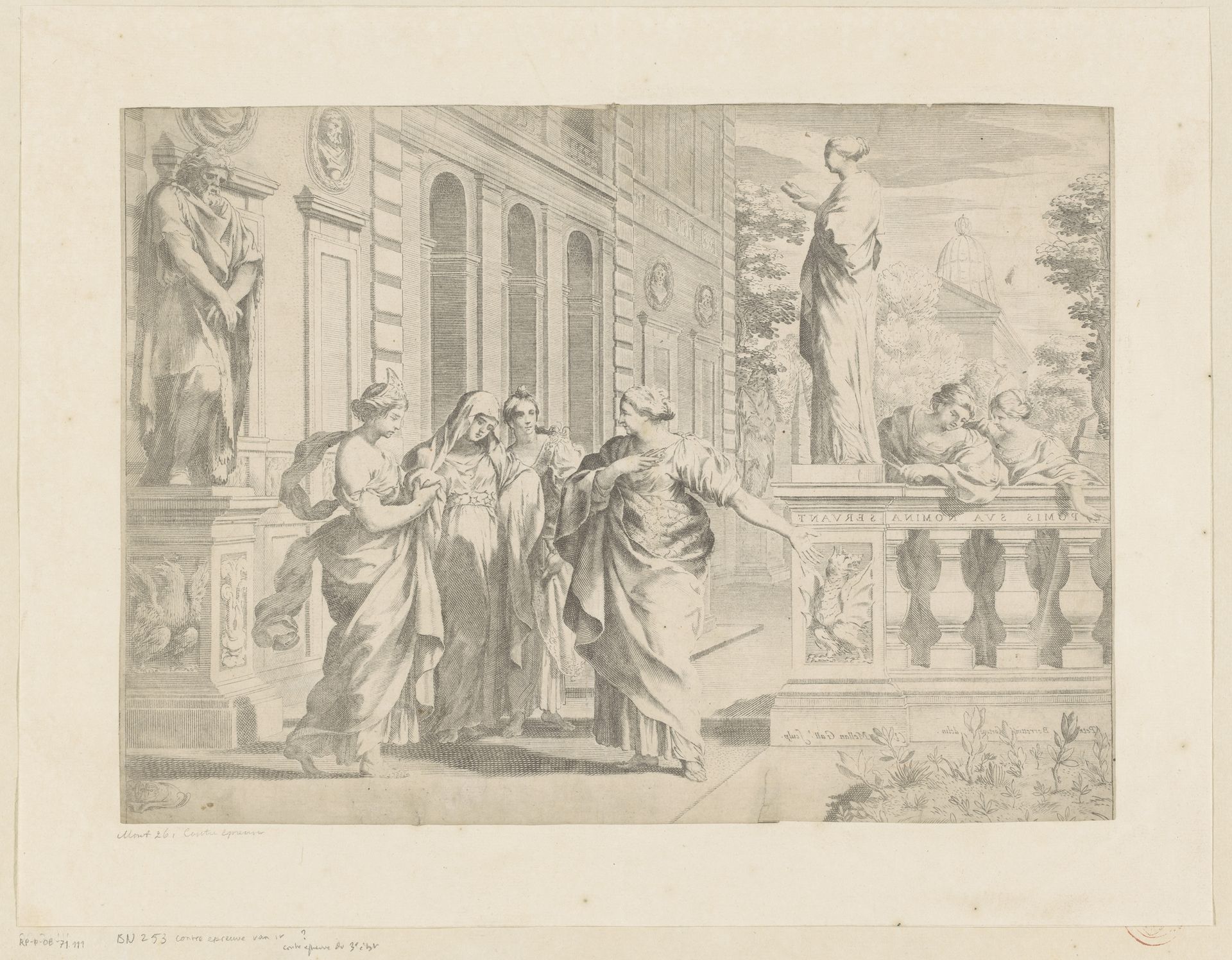
Claude Mellan created this print, "Allegory in honor of the Collegio Romano," using burin in the 17th century. It celebrates the Collegio Romano, an important Jesuit school in Rome. Consider how the image uses classical references to convey the importance of this institution, and how the institution uses classicism to enhance its own status.The figures are draped in classical robes and placed within a courtyard decorated with classical statues. The architectural style, inspired by ancient Rome, emphasizes order, reason, and tradition – values that the Collegio Romano likely sought to associate with itself. To understand this print more fully, we can explore the history of the Jesuit order and its role in education during the Counter-Reformation. Researching the architectural history of Rome during this period would also shed light on the cultural context in which Mellan created this allegory. It is clear that the meaning of art relies heavily on social and institutional context.
Allegorie ter ere van het Collegio Romano
1624 - 1636

Claude Mellan
1598 - 1688Location
RijksmuseumArtwork details
- Medium
- drawing, engraving
- Dimensions
- height 260 mm, width 363 mm
- Location
- Rijksmuseum
- Copyright
- Rijks Museum: Open Domain
Tags
drawing
allegory
classicism
history-painting
engraving
Comments
Be the first to share your thoughts about this work.
About this artwork
Claude Mellan created this print, "Allegory in honor of the Collegio Romano," using burin in the 17th century. It celebrates the Collegio Romano, an important Jesuit school in Rome. Consider how the image uses classical references to convey the importance of this institution, and how the institution uses classicism to enhance its own status.The figures are draped in classical robes and placed within a courtyard decorated with classical statues. The architectural style, inspired by ancient Rome, emphasizes order, reason, and tradition – values that the Collegio Romano likely sought to associate with itself. To understand this print more fully, we can explore the history of the Jesuit order and its role in education during the Counter-Reformation. Researching the architectural history of Rome during this period would also shed light on the cultural context in which Mellan created this allegory. It is clear that the meaning of art relies heavily on social and institutional context.
Comments
Be the first to share your thoughts about this work.