
Curatorial notes
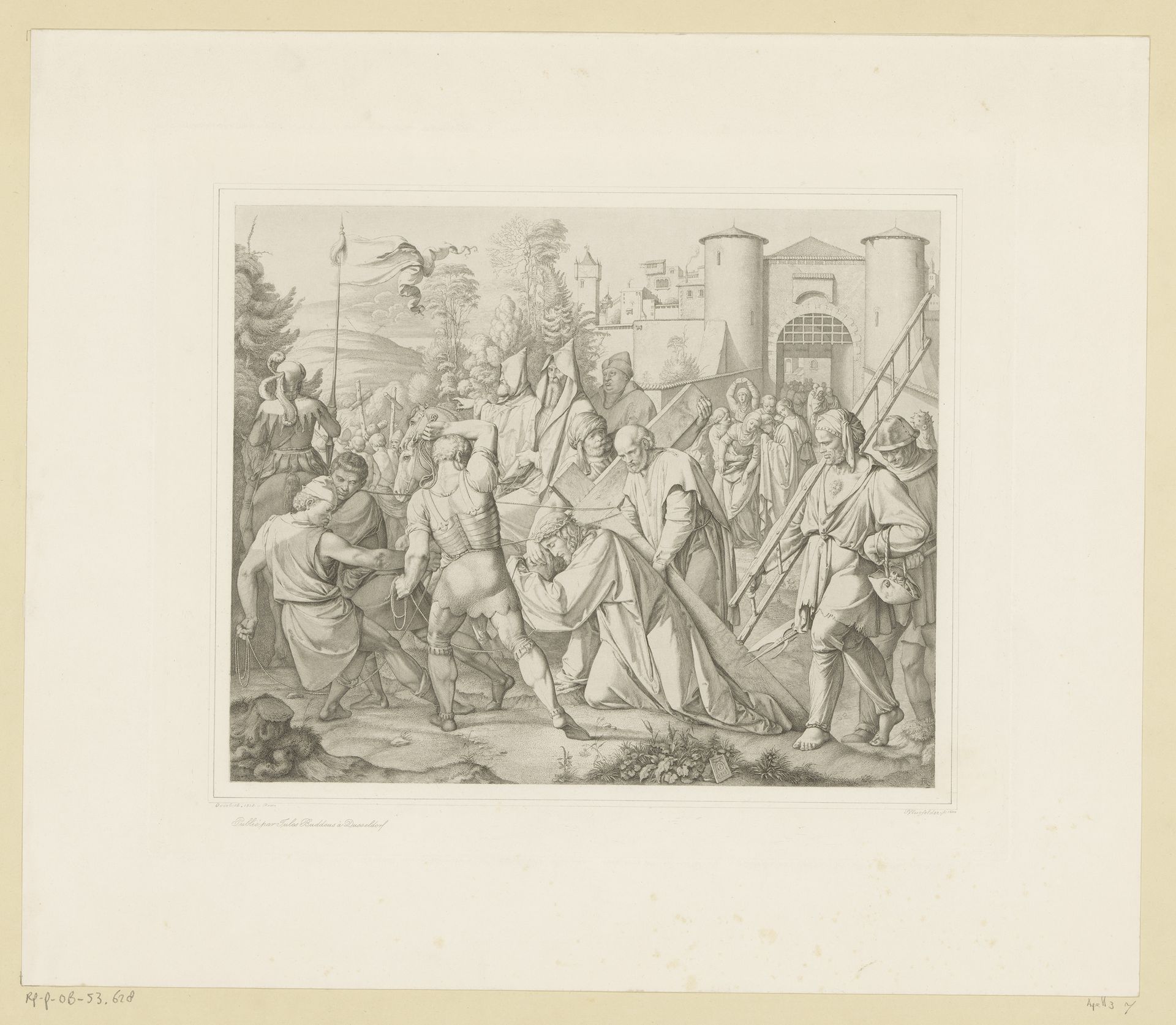
Friedrich August Pflugfelder’s print, “Kruisdraging,” depicts Christ's arduous journey carrying the cross. Notice how Pflugfelder masterfully uses the cross itself—a symbol of immense suffering and sacrifice—as a central motif that commands the viewer's attention. This potent emblem is not unique to Christian iconography; we find similar weighted burdens in ancient myths, such as Atlas bearing the world, each representing a profound endurance test. The motif of bearing a heavy load resonates deeply within the human psyche. In antiquity, it appeared as a symbol of divine punishment, yet, over centuries, it has evolved. Consider the Laocoön group: the writhing figures ensnared by serpents evoke a primal fear and suffering echoed in Christ’s ordeal. Such imagery taps into the collective memory of pain, engaging viewers on a visceral, subconscious level. The cyclical journey of symbols like these shows how they resurface, evolve, and take on new meanings in different historical contexts, binding our past with our present.