print, etching, engraving
#
narrative-art
#
baroque
#
dutch-golden-age
# print
#
etching
#
line
#
cityscape
#
history-painting
#
engraving
Dimensions: height 84 mm, width 116 mm
Copyright: Rijks Museum: Open Domain
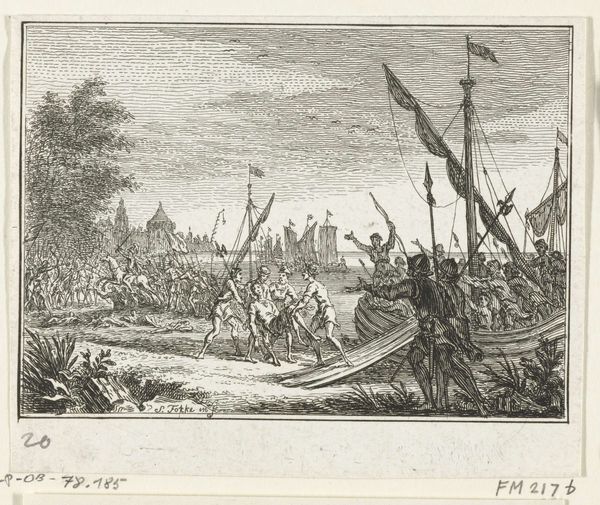
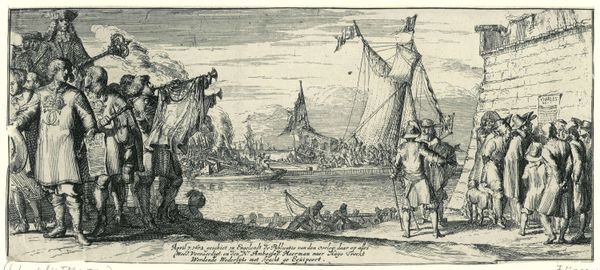
This etching by Romeyn de Hooghe immortalizes Cornelis de Witt leading the attack on Sheerness in 1667. At the heart of the image, de Witt extends his arm, a forceful gesture of command that transcends mere direction. It evokes the Roman emperors, whose outstretched arms signified power and dominion. We find echoes of this gesture across epochs. In Renaissance paintings, the arm points toward divine inspiration or decisive action. Yet, its roots delve deeper, to ancient Egyptian art, where pharaohs wielded similar postures, embodying their divine right to rule. Consider the psychological weight carried by this seemingly simple gesture. Is it not a primal assertion of control? Does it tap into our collective memory of leaders who have guided and sometimes misled us? The subconscious allure of such symbols underscores how art, like the human psyche, is layered with historical resonances. The echoes of this symbol persist, a testament to the enduring power of images to shape our perceptions and stir our deepest emotions.
Comments
No comments
Be the first to comment and join the conversation on the ultimate creative platform.
 Collect
 React
React Comment
More like this