print, engraving
#
baroque
# print
#
pen illustration
#
pen sketch
#
old engraving style
#
line
#
cityscape
#
history-painting
#
engraving
Dimensions: height 205 mm, width 450 mm
Copyright: Rijks Museum: Open Domain
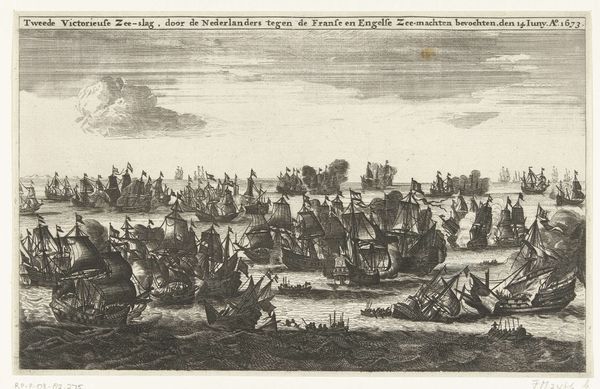
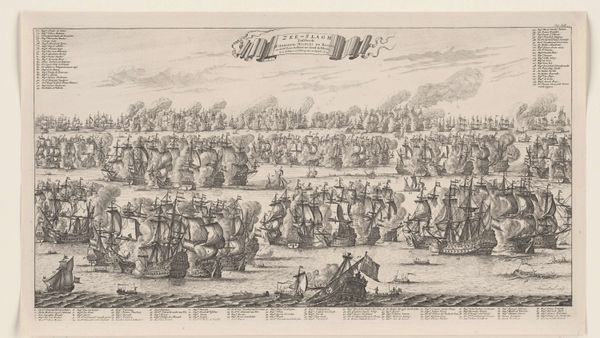
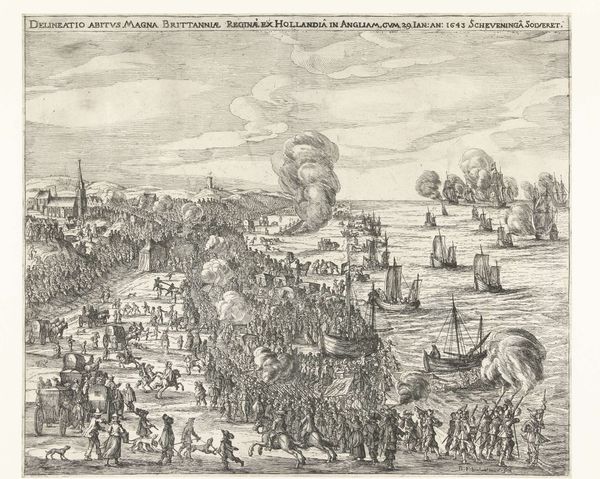
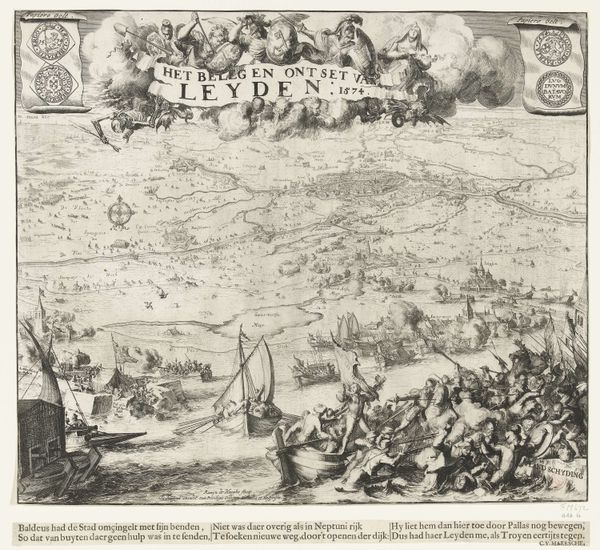
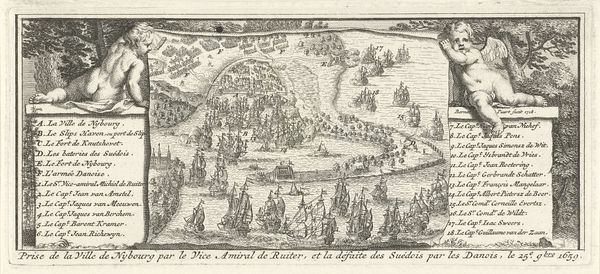
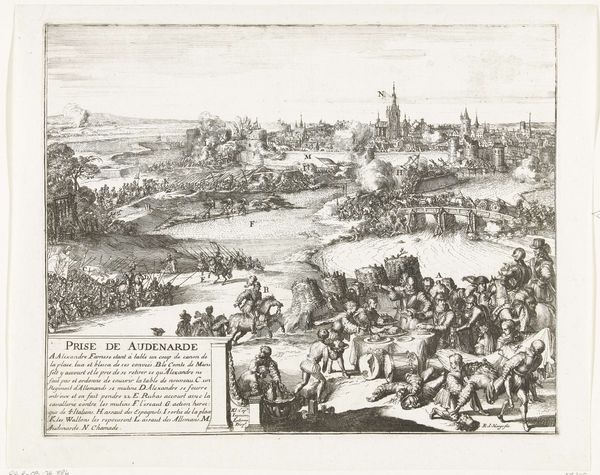
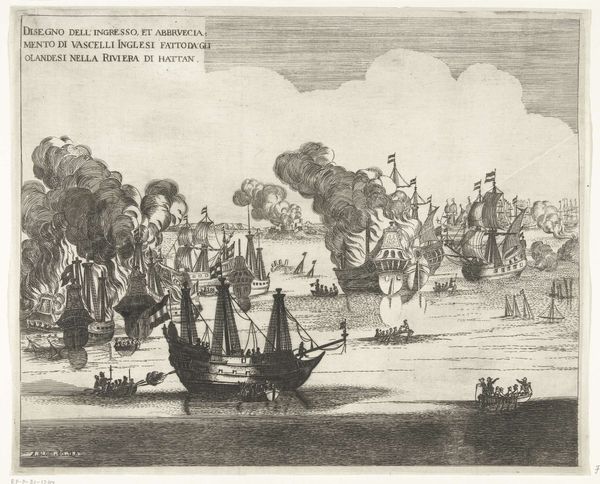
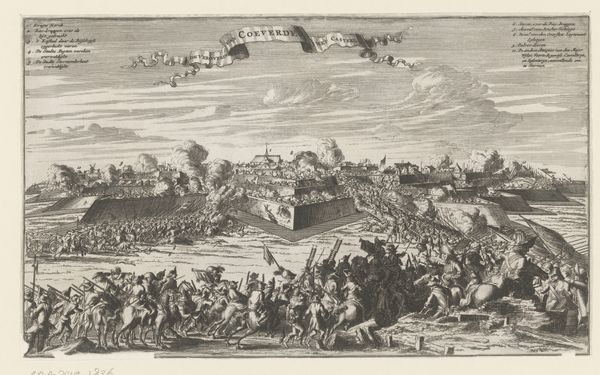
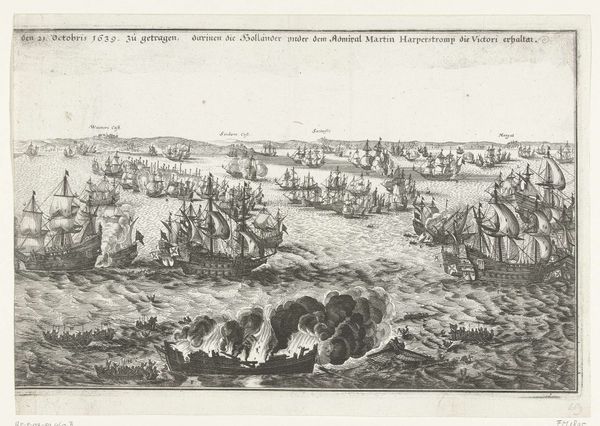
Editor: This engraving, dating from 1692 to 1758, depicts the Destruction of French Ships at Saint-Malo in 1758. The artist is Romeyn de Hooghe, and it's part of the Rijksmuseum collection. My goodness, what a cataclysm. It almost looks like hellfire on water, doesn't it? Curator: Precisely. Observe how the linear composition creates an overwhelming sense of chaos, yet each element—ships, figures, smoke—maintains its distinct visual identity through the precision of the engraving technique. The contrasting diagonals drive the viewer's eye across the scene of absolute destruction. Editor: Destruction, indeed! But consider the deeper symbolism. Ships, historically, represent nations and power, and their destruction here signifies not just a naval defeat, but also a deep-seated psychological assault on French national pride and aspirations for maritime dominance. The burning ships—the plumes of smoke—become metaphors for shattered dreams. Curator: I understand. However, the composition guides our perception regardless of cultural symbolism; let's explore the artist’s calculated use of the single viewpoint perspective. Doesn't it emphasize the systematic rendering that dominates Baroque sensibilities of representation? Editor: I see your point. Yet, consider the perspective in relation to collective memory. Saint-Malo wasn't just any port. It was a strategic and symbolic place. The obliteration is an act with enduring repercussions, etched not just in copperplate, but on cultural identity. This image carries a historical load—it embodies something profound. Curator: Undeniably, its representational quality serves both aesthetic and historical records; both operate to transmit what many would perceive of symbolic "power". The graphic dynamism captures both the real-world destructive event with formal grace and calculated control that serves as both the piece's form and function. Editor: It is rather impressive, isn't it? One can almost feel the heat and sense the deep historical undercurrents rippling from it even now. Curator: It stands as testament to formal skill married perfectly to its cultural period of representational intent.
Comments
No comments
Be the first to comment and join the conversation on the ultimate creative platform.
 Collect
 React
React Comment
More like this