About this artwork
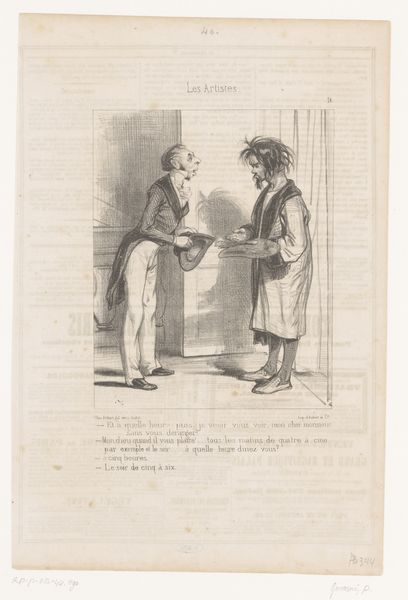
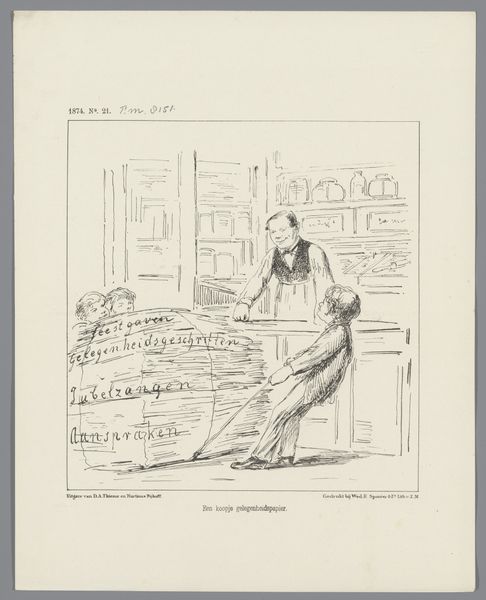
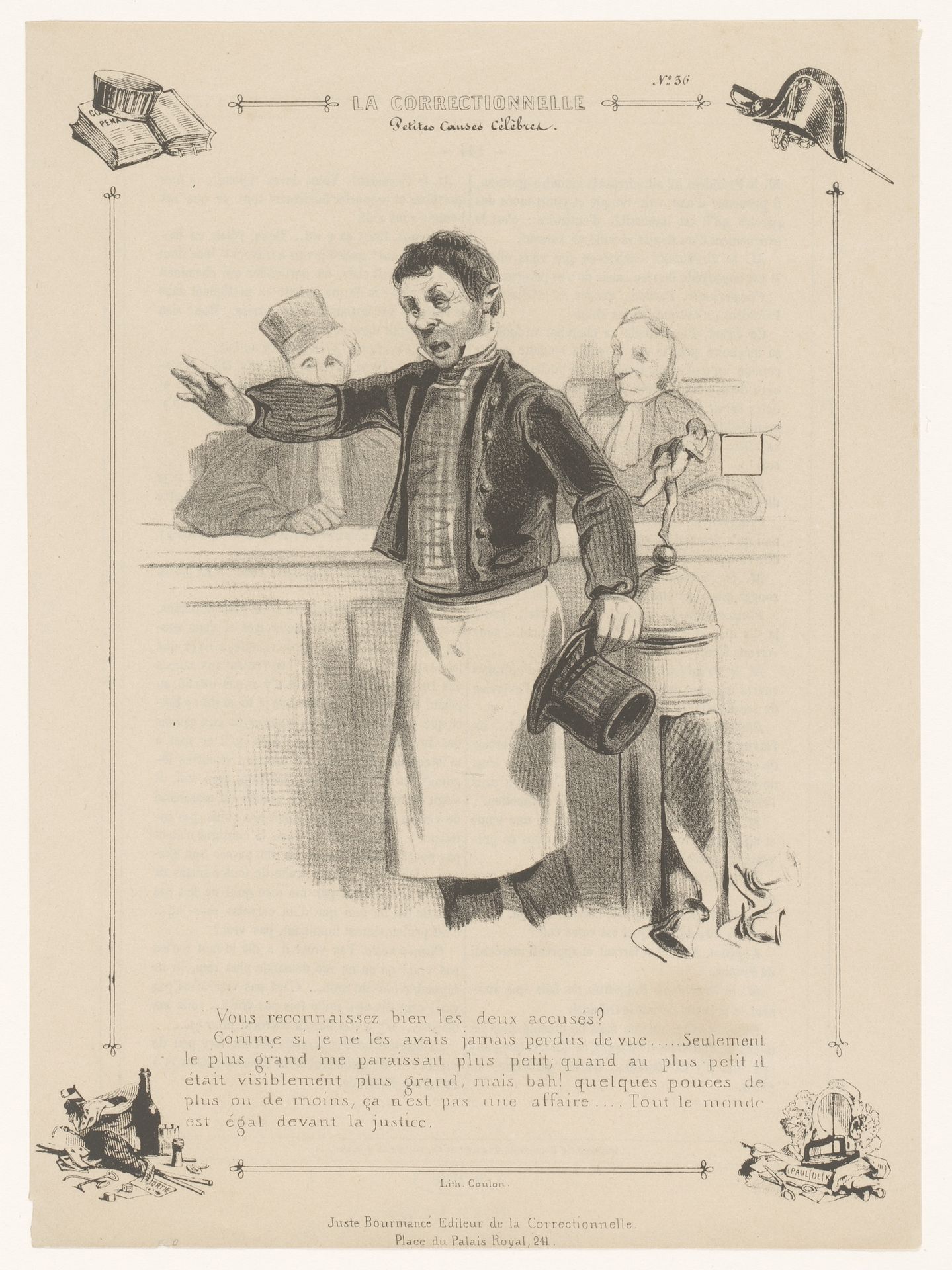
Paul Gavarni made this lithograph called ‘Planchette getuigt voor de rechtbank’ in France. This translates to ‘Planchette testifies in court’. Gavarni was commenting on the social structures of his time, particularly the fascination with spiritualism and its intersection with the legal system. The image shows a man, presumably Planchette, testifying in court, possibly under the influence of a séance. Planchette was a small, flat piece of wood equipped with castors and a pencil, used to produce automatic writing through spiritualism. The judge and other parties seem skeptical. Gavarni critiques the absurdity of relying on such methods in a formal setting like a court of law. The print suggests a deeper commentary on the gullibility of society and the blurring lines between belief and evidence. We can consult publications of the time, legal documents, and popular spiritualist texts to fully understand the social context. In doing so, we can appreciate the power of art to challenge social norms and expose the contradictions of its time.

Artwork details
- Medium
- drawing, lithograph, print
- Dimensions
- height 252 mm, width 184 mm
- Location
- Rijksmuseum
- Copyright
- Rijks Museum: Open Domain
Tags
Comments
Share your thoughts
About this artwork
Paul Gavarni made this lithograph called ‘Planchette getuigt voor de rechtbank’ in France. This translates to ‘Planchette testifies in court’. Gavarni was commenting on the social structures of his time, particularly the fascination with spiritualism and its intersection with the legal system. The image shows a man, presumably Planchette, testifying in court, possibly under the influence of a séance. Planchette was a small, flat piece of wood equipped with castors and a pencil, used to produce automatic writing through spiritualism. The judge and other parties seem skeptical. Gavarni critiques the absurdity of relying on such methods in a formal setting like a court of law. The print suggests a deeper commentary on the gullibility of society and the blurring lines between belief and evidence. We can consult publications of the time, legal documents, and popular spiritualist texts to fully understand the social context. In doing so, we can appreciate the power of art to challenge social norms and expose the contradictions of its time.
Comments
Share your thoughts