About this artwork
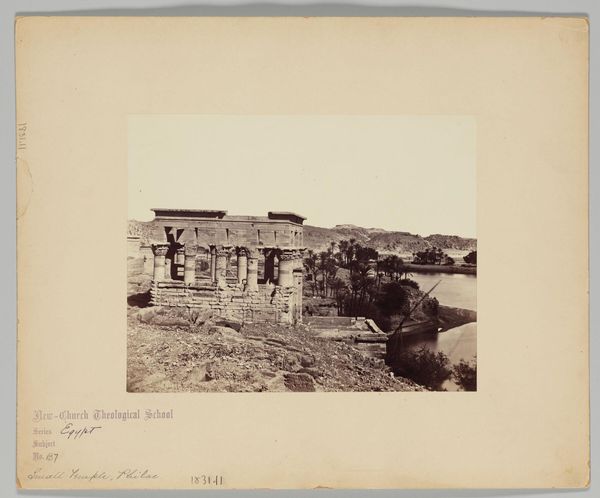
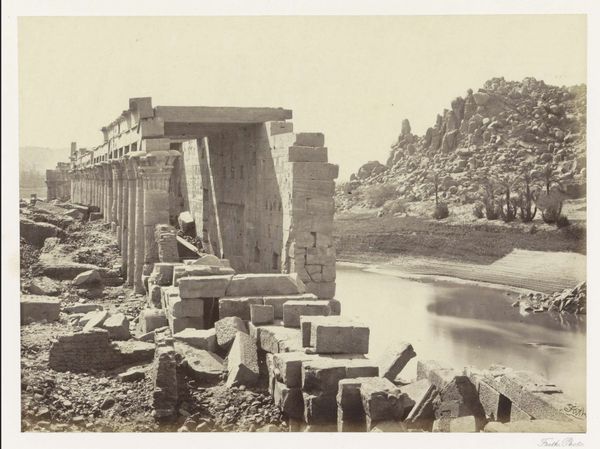
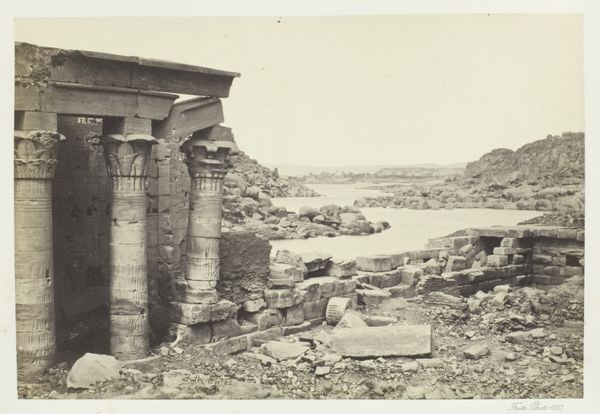
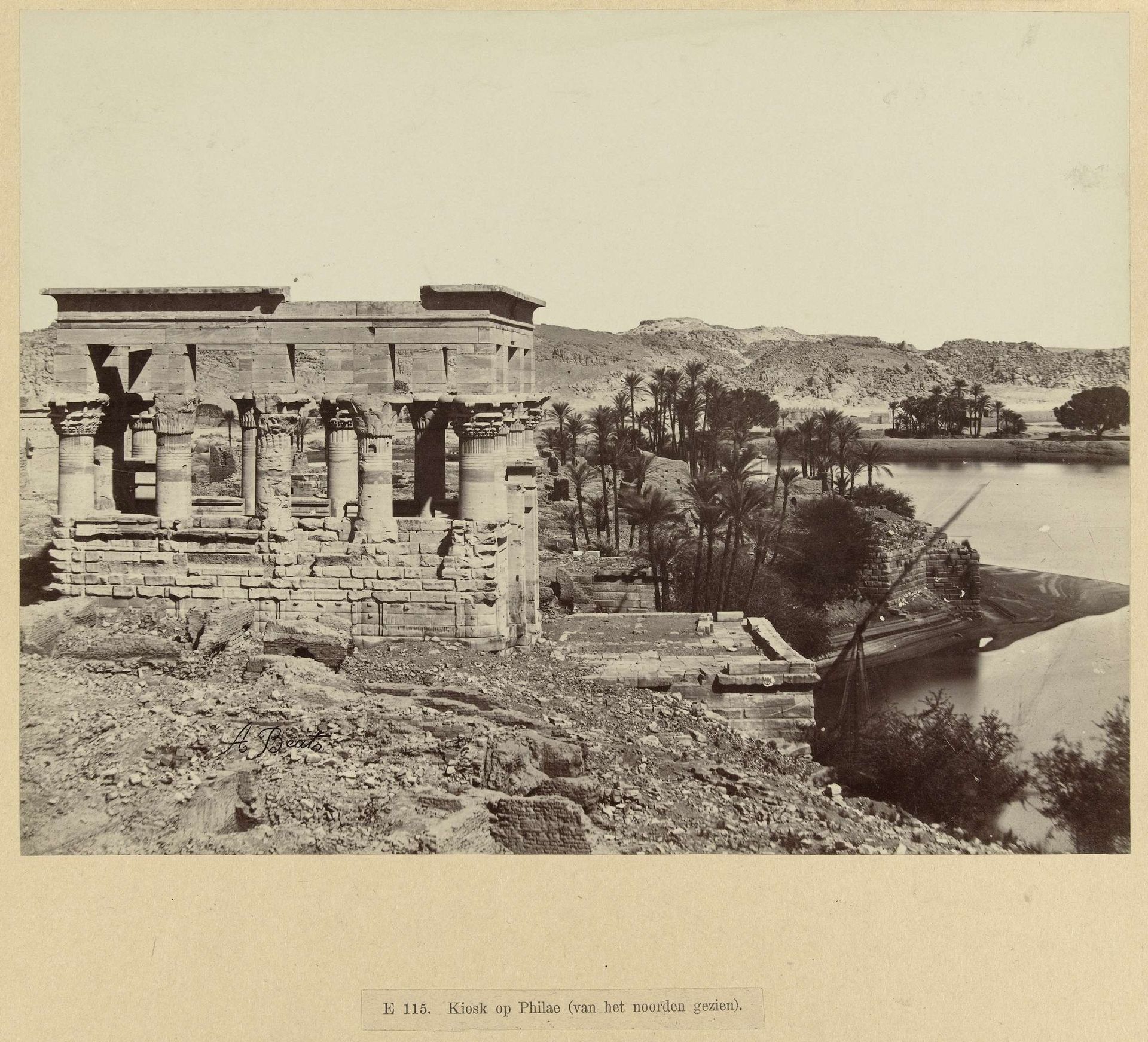
This photograph by Antonio Beato captures the Kiosk of Trajan at Philae, revealing a structure adorned with columns bearing intricate floral capitals, symbols of life and fertility in ancient Egyptian culture. The Kiosk, built during Roman Emperor Trajan’s reign, incorporates pharaonic and Greco-Roman elements. The columns, though Roman in structure, feature Egyptian motifs, connecting to a much older tradition. Think of the palm capital, its fronds mimicking the date palm tree, sacred to the Egyptians and a symbol of triumph and eternal life. We see it echoed in later Christian art, symbolizing martyrdom and victory over death. The image itself is a palimpsest, revealing layers of meaning and influence. It engages us on a subconscious level, evoking a sense of timelessness and the cyclical nature of history. This powerful image underscores how cultural symbols persist, constantly reshaped by collective memory.
Kiosk van Trajanus op het eiland Philae
1862 - 1895

Antonio Beato
1834 - 1906Location
RijksmuseumArtwork details
- Medium
- photography, gelatin-silver-print
- Dimensions
- height 197 mm, width 259 mm, height 469 mm, width 558 mm
- Location
- Rijksmuseum
- Copyright
- Rijks Museum: Open Domain
Tags
Comments
Share your thoughts
About this artwork
This photograph by Antonio Beato captures the Kiosk of Trajan at Philae, revealing a structure adorned with columns bearing intricate floral capitals, symbols of life and fertility in ancient Egyptian culture. The Kiosk, built during Roman Emperor Trajan’s reign, incorporates pharaonic and Greco-Roman elements. The columns, though Roman in structure, feature Egyptian motifs, connecting to a much older tradition. Think of the palm capital, its fronds mimicking the date palm tree, sacred to the Egyptians and a symbol of triumph and eternal life. We see it echoed in later Christian art, symbolizing martyrdom and victory over death. The image itself is a palimpsest, revealing layers of meaning and influence. It engages us on a subconscious level, evoking a sense of timelessness and the cyclical nature of history. This powerful image underscores how cultural symbols persist, constantly reshaped by collective memory.
Comments
Share your thoughts