1862 - 1895
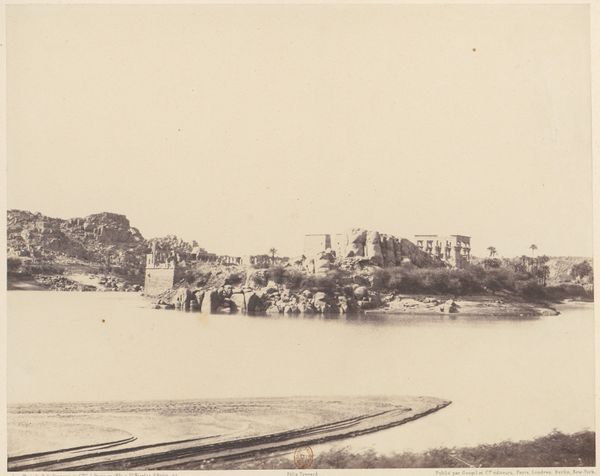
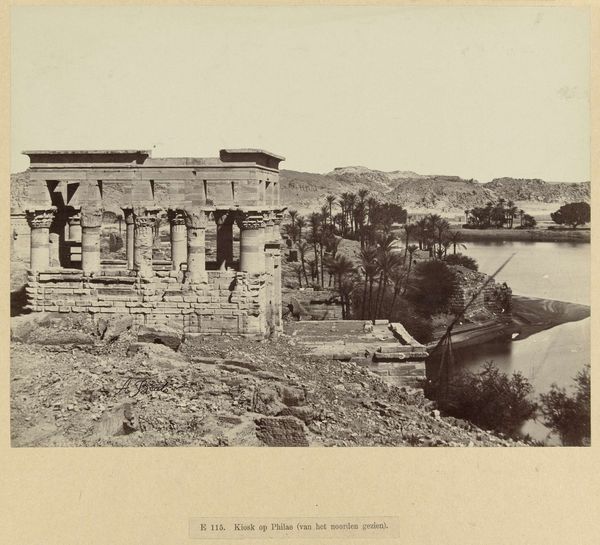
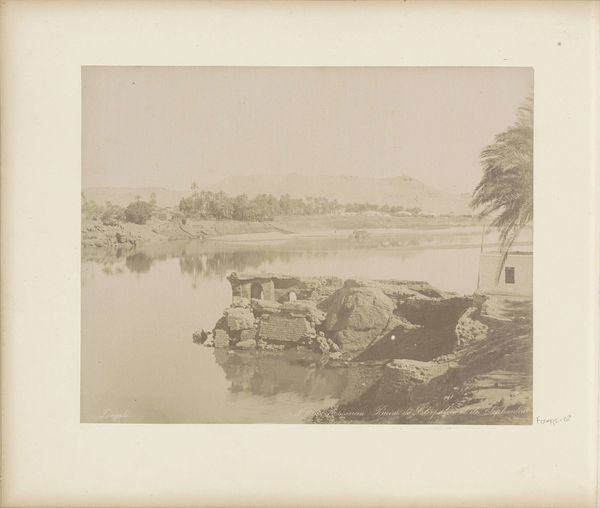
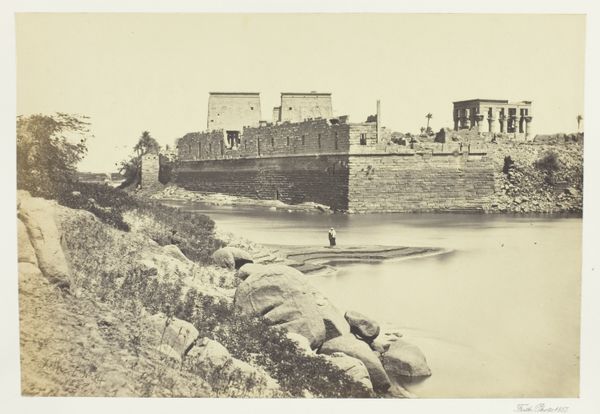
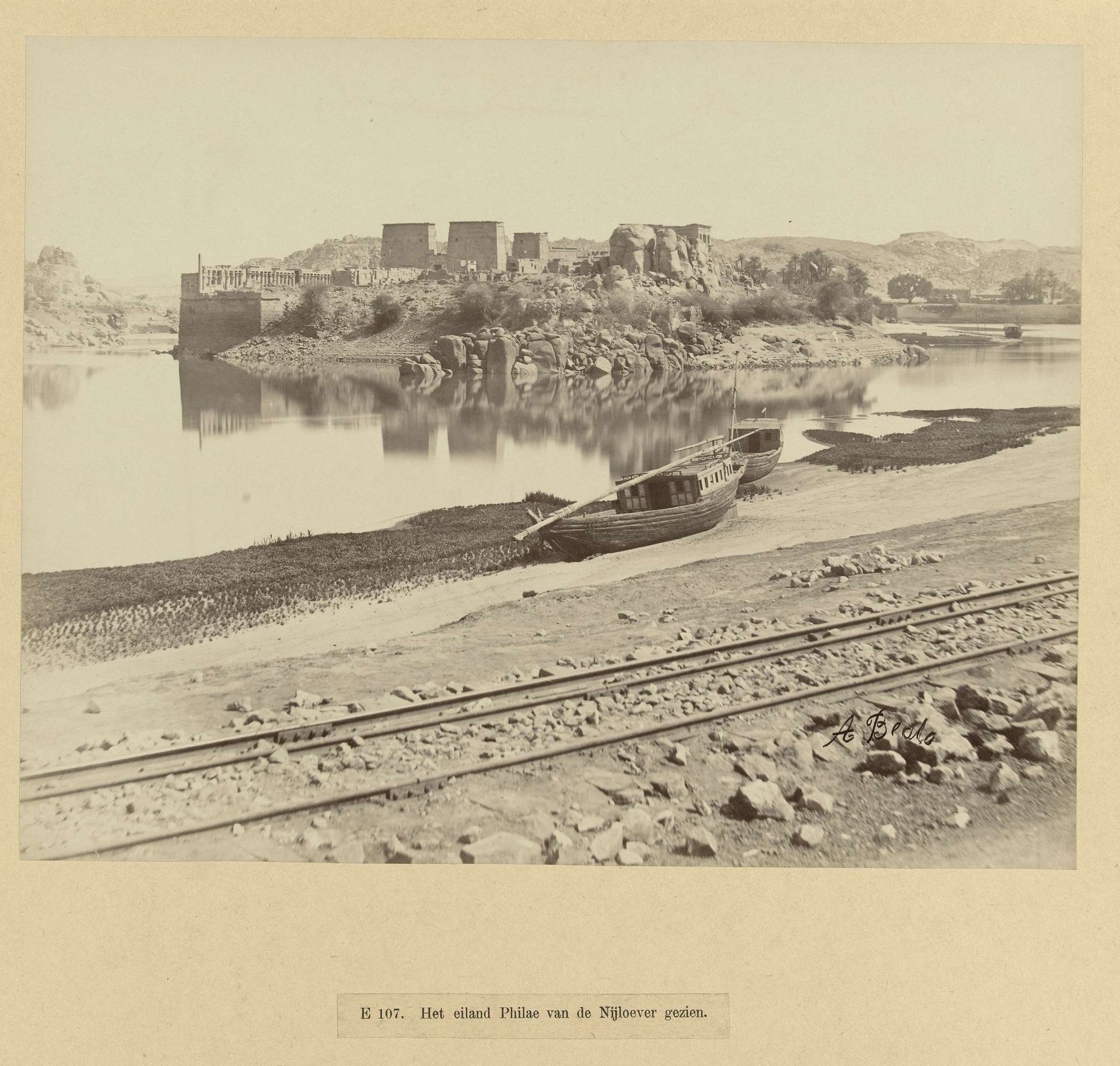
Gezicht op het eiland Philae in de Nijl

Antonio Beato
1834 - 1906Location
RijksmuseumListen to curator's interpretation
Curatorial notes
This albumen print, "View of the Island of Philae on the Nile," was created by Antonio Beato. The image's sepia tones are a direct result of the traditional photographic process used at the time. Albumen, derived from egg whites, was coated on paper to create a smooth surface for the light-sensitive chemicals. This material not only defined the print's visual qualities but also its longevity. Consider the labor involved: from preparing the albumen to carefully developing the image in a darkroom. Beato's work represents a transition in visual culture. Photography, in its reproducible form, democratized access to imagery, challenging the dominance of painting. At the same time, the work embodies a colonial gaze, framing Egypt as an exotic and timeless land. The railways in the foreground suggest the intrusion of modernity and commerce, subtly hinting at the profound social and economic shifts impacting the region. By appreciating Beato’s photographic process, we recognize how deeply intertwined his image is with the technologies, labor, and historical context of its creation.