About this artwork
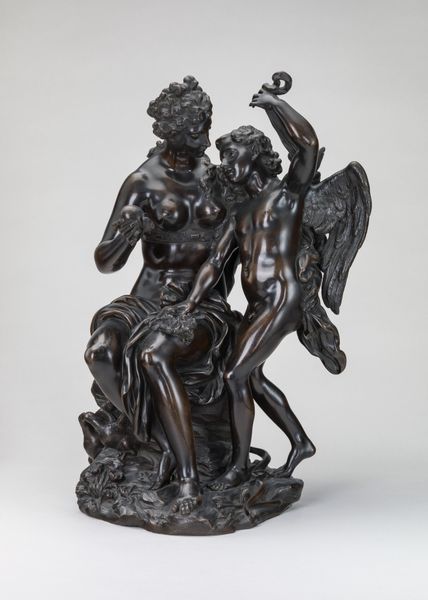
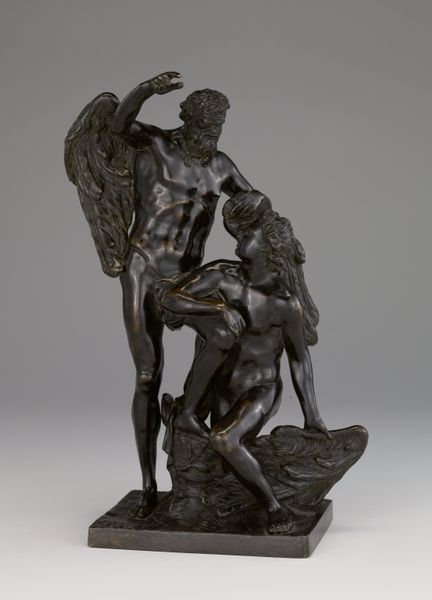
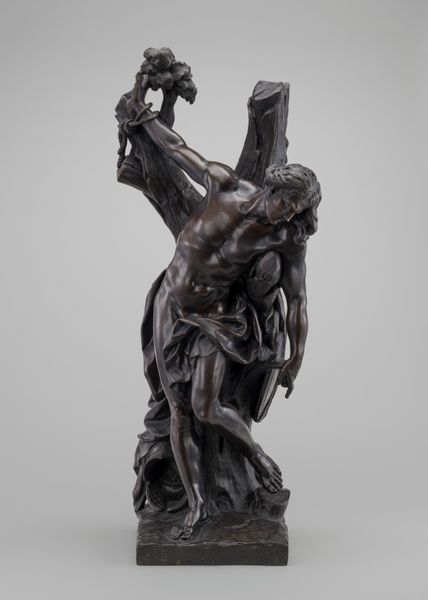
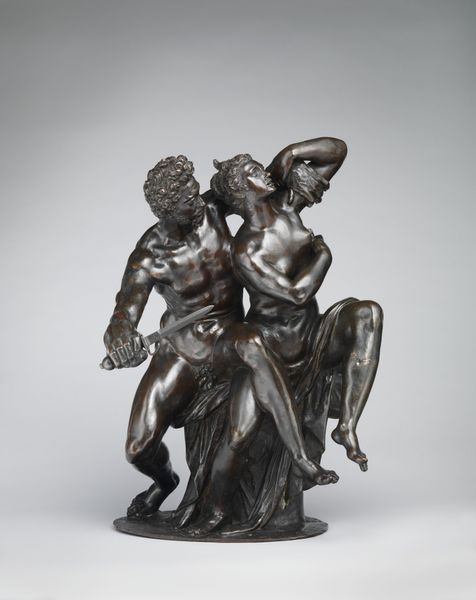
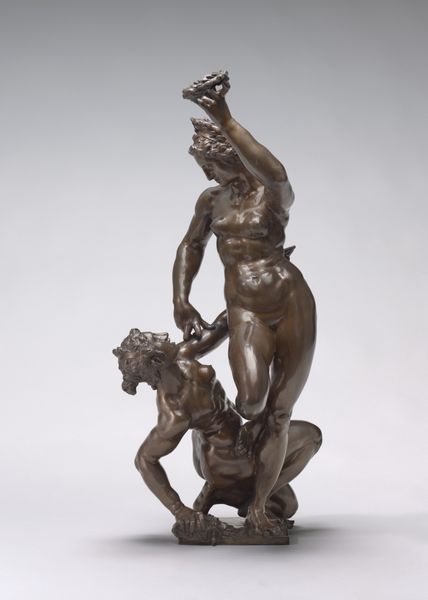
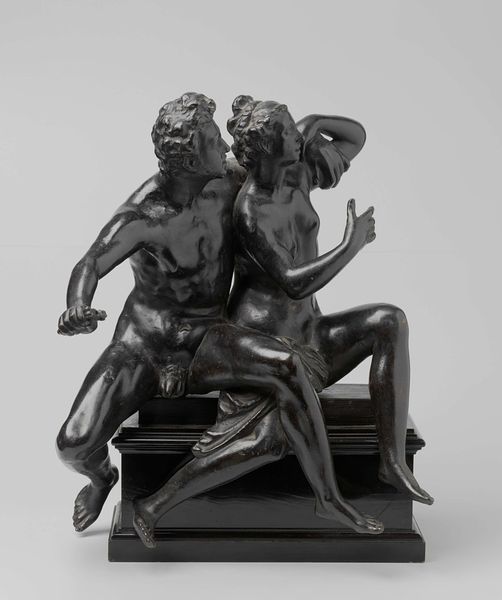
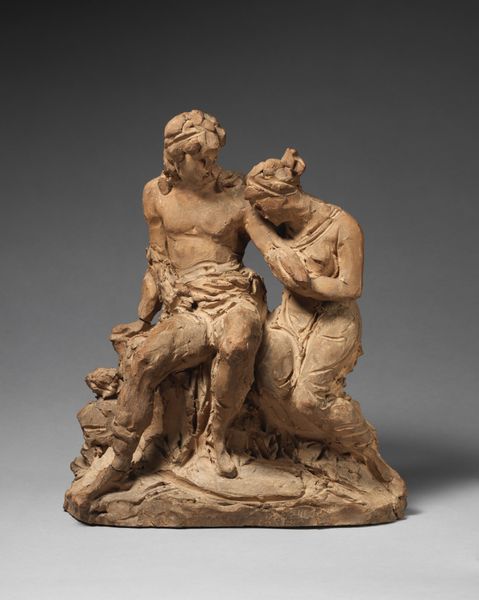
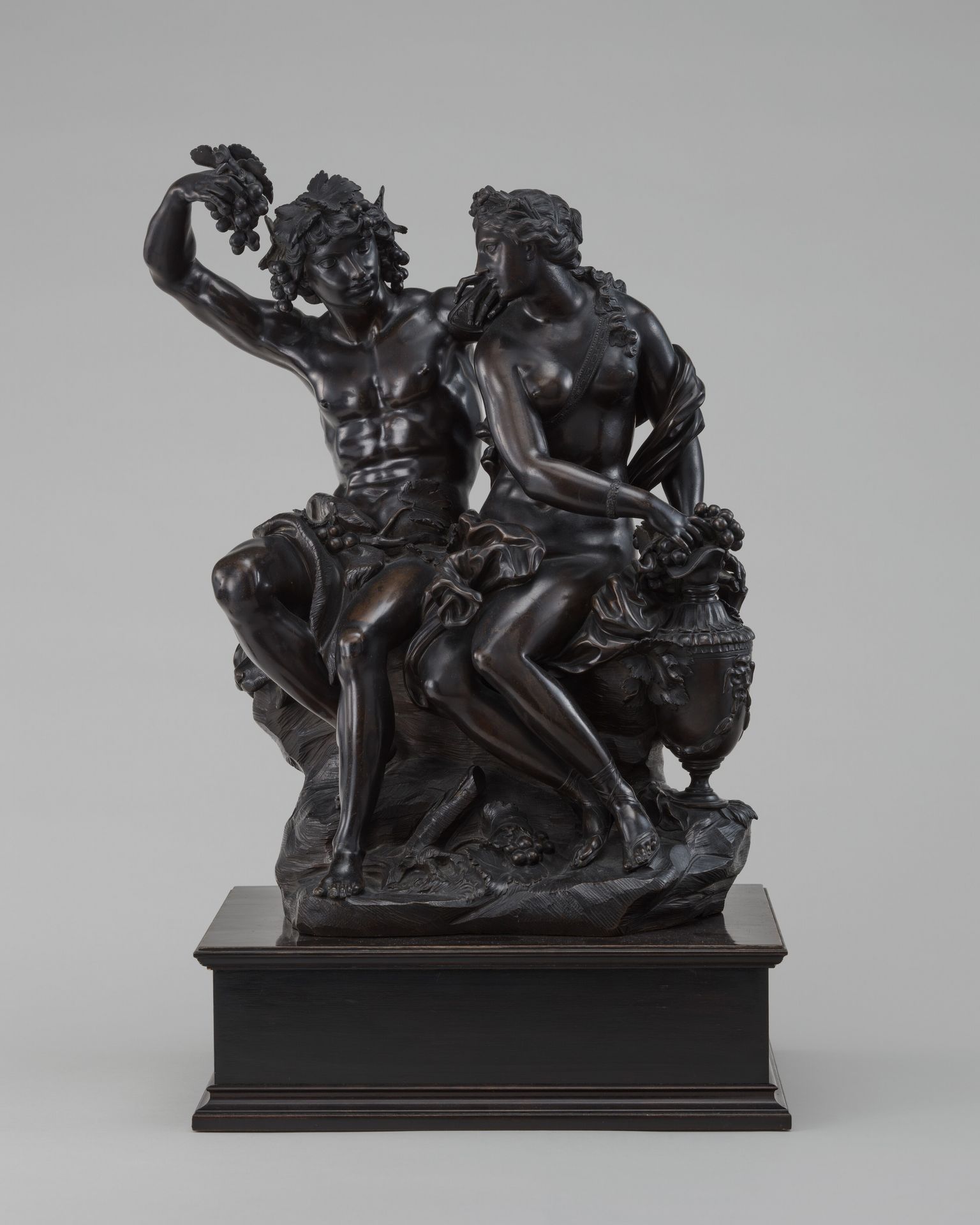
Giovanni Battista Foggini created this bronze sculpture, Bacchus and Ariadne. The rich, dark patina of the bronze invites our eyes to trace the fluid contours of the figures. Foggini masterfully uses the medium to create a sense of dynamic movement. Consider how the intertwined figures of Bacchus and Ariadne form a complex structure. The composition features diagonal lines created by Bacchus' raised arm and Ariadne's leaning posture, drawing the eye upwards and across the sculpture, while the vase grounds the figures. The artist challenges traditional notions of classical sculpture by infusing it with a dramatic flair, evident in the expressive gestures and intricate details of the hair and drapery. The sculpture challenges conventional perceptions of form and narrative, inviting us to reconsider the boundaries between classical mythology and baroque dynamism. The work’s complexity allows for continuous reinterpretation, ensuring its relevance in contemporary dialogues about art and culture.
Bacchus and Ariadne
1711 - 1724


Artwork details
- Medium
- bronze, sculpture
- Dimensions
- overall: 39.1 x 32.9 x 23.9 cm (15 3/8 x 12 15/16 x 9 7/16 in.)
- Copyright
- National Gallery of Art: CC0 1.0
Tags
Comments
Share your thoughts
About this artwork
Giovanni Battista Foggini created this bronze sculpture, Bacchus and Ariadne. The rich, dark patina of the bronze invites our eyes to trace the fluid contours of the figures. Foggini masterfully uses the medium to create a sense of dynamic movement. Consider how the intertwined figures of Bacchus and Ariadne form a complex structure. The composition features diagonal lines created by Bacchus' raised arm and Ariadne's leaning posture, drawing the eye upwards and across the sculpture, while the vase grounds the figures. The artist challenges traditional notions of classical sculpture by infusing it with a dramatic flair, evident in the expressive gestures and intricate details of the hair and drapery. The sculpture challenges conventional perceptions of form and narrative, inviting us to reconsider the boundaries between classical mythology and baroque dynamism. The work’s complexity allows for continuous reinterpretation, ensuring its relevance in contemporary dialogues about art and culture.
Comments
Share your thoughts