1917
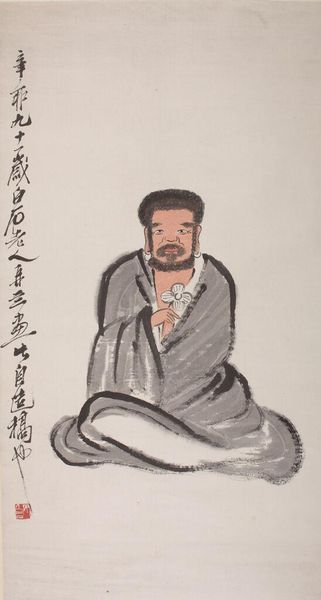
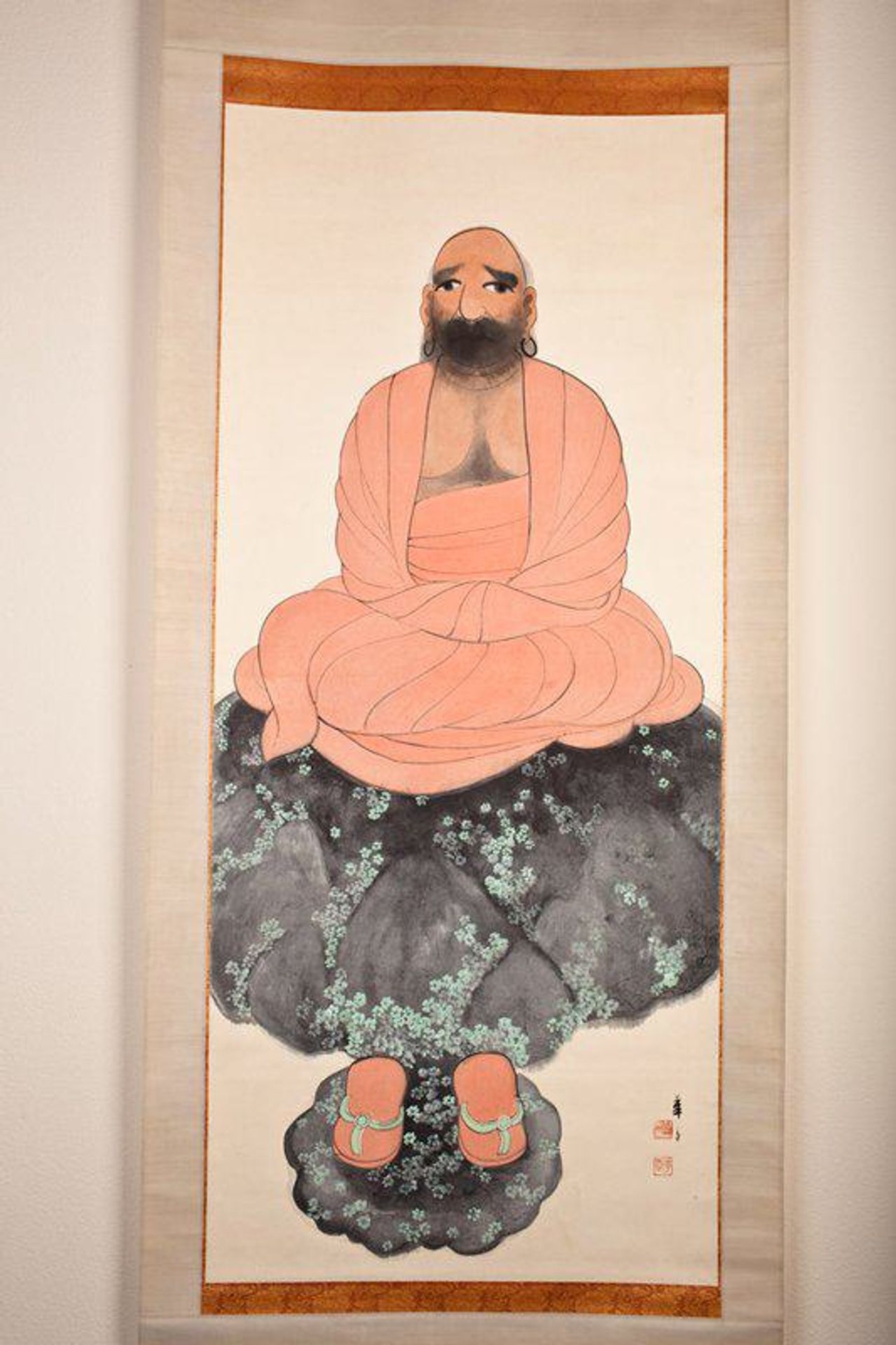
Daruma


Listen to curator's interpretation
Curatorial notes
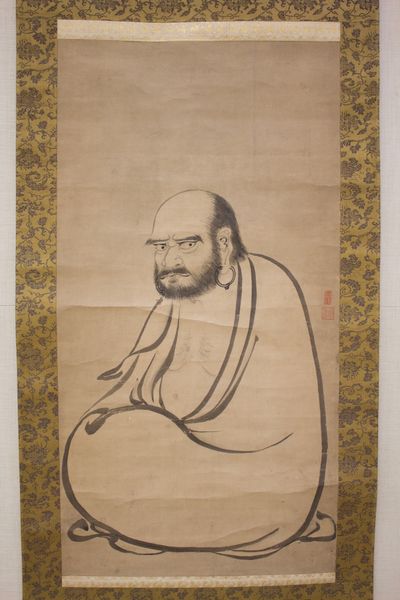
Tsuji Kakō made this painting of Daruma, sometime before 1931, presumably with ink and colour on silk. There's something really lovely in the way the robe is described with thin, peach-coloured lines – so simple, yet it gives a real sense of weight and volume. Look at how those lines almost disappear in places, letting the figure blend into the background. It’s as if Kakō is exploring the very essence of form, reducing it to the bare minimum. And then there's that dark, brooding rock beneath him, punctuated with these tiny green flowers. It's a beautiful contrast, this tension between the solid, grounded rock and the delicate, almost ephemeral flowers. The textures in the rock have a real sense of depth, with a kind of rough, uneven quality, which gives the piece a tactile feel. There's something of Odilon Redon’s dreamscapes in the surreal juxtaposition of forms in this painting, and like Redon, Kakō seems to be searching for something beyond the surface, tapping into a deeper, more spiritual realm. It's this ambiguity, this invitation to interpret and reimagine, that makes art so endlessly fascinating.