Possibly 1702 - 1722
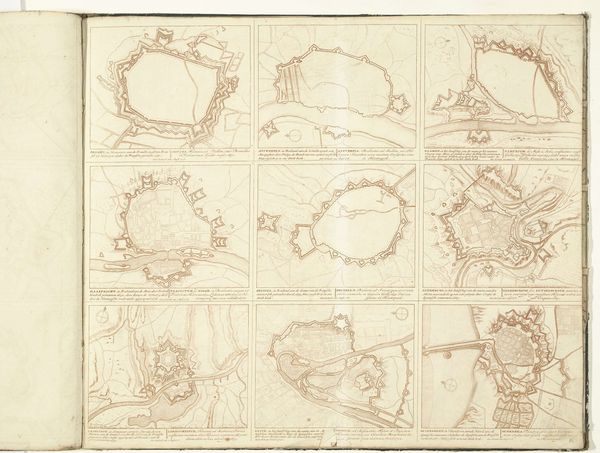
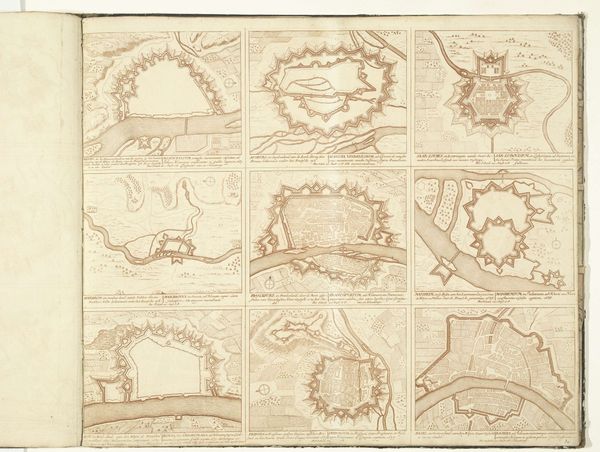
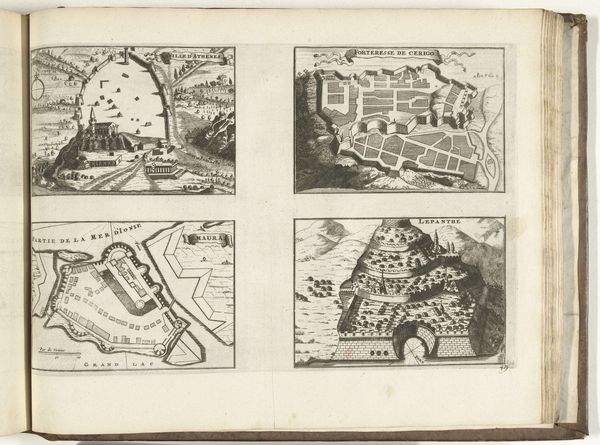
Schouwburg van den oorlog (blad II), 1701-1702

Pieter Schenk
1660 - 1711Location
RijksmuseumListen to curator's interpretation
Curatorial notes
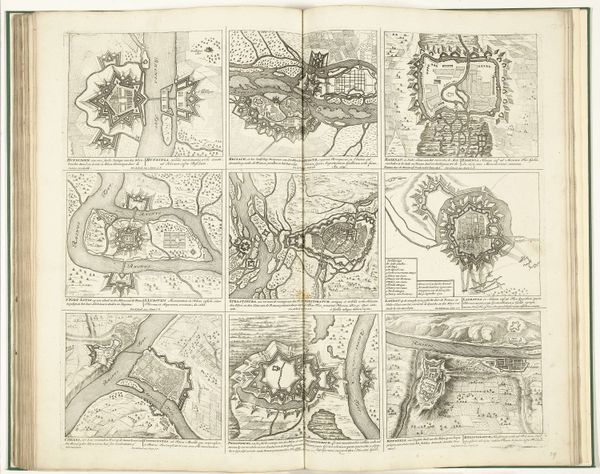
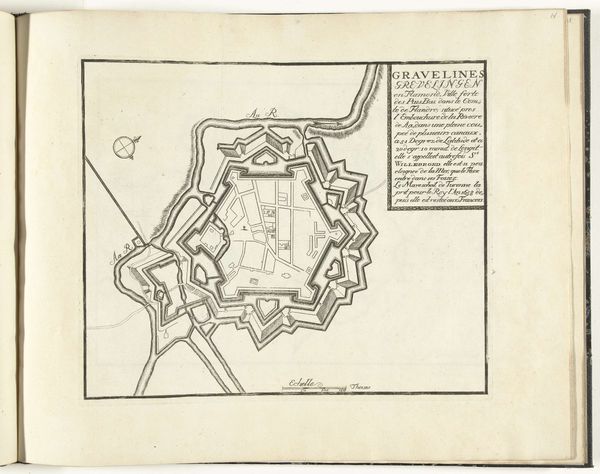
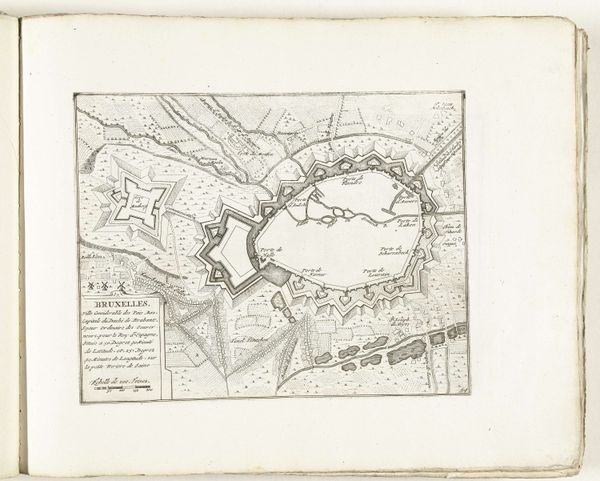
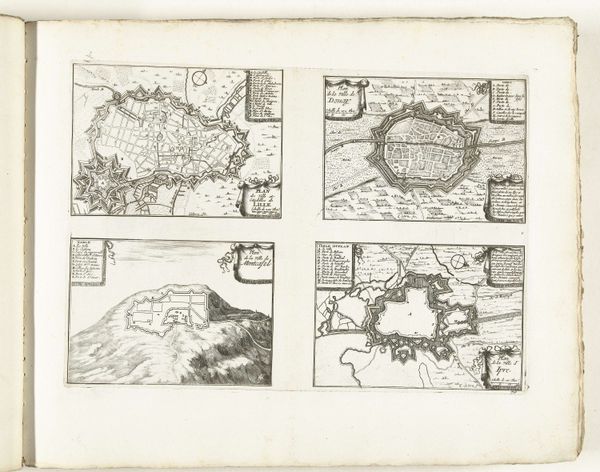
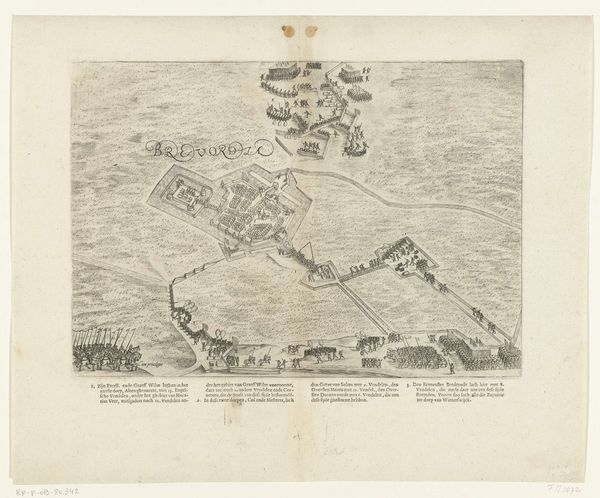
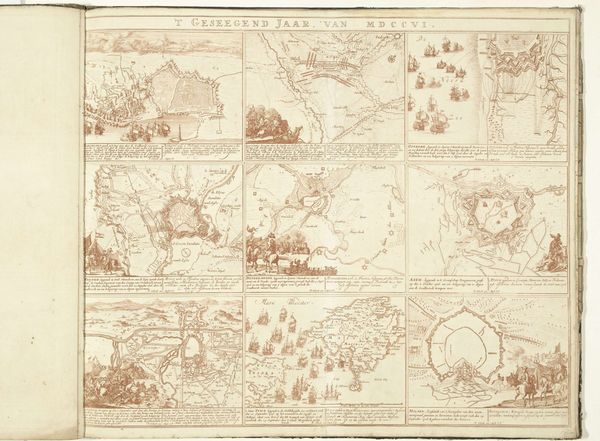
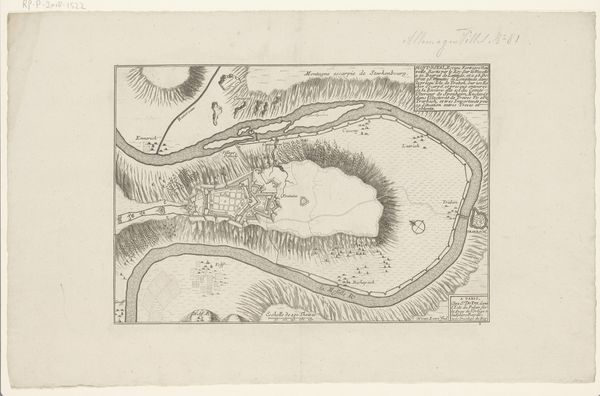
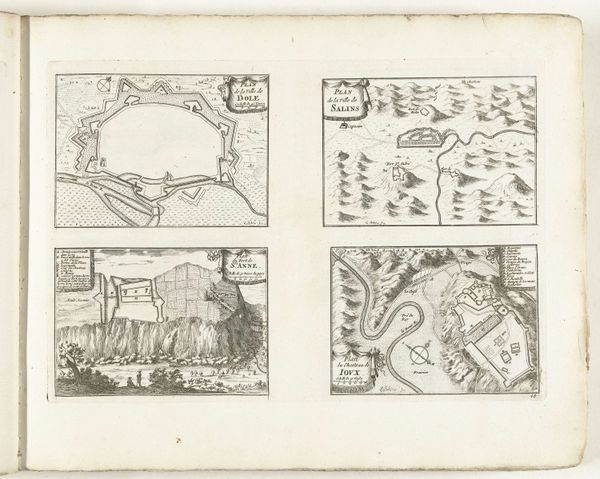
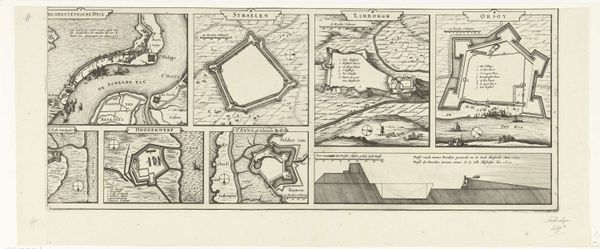
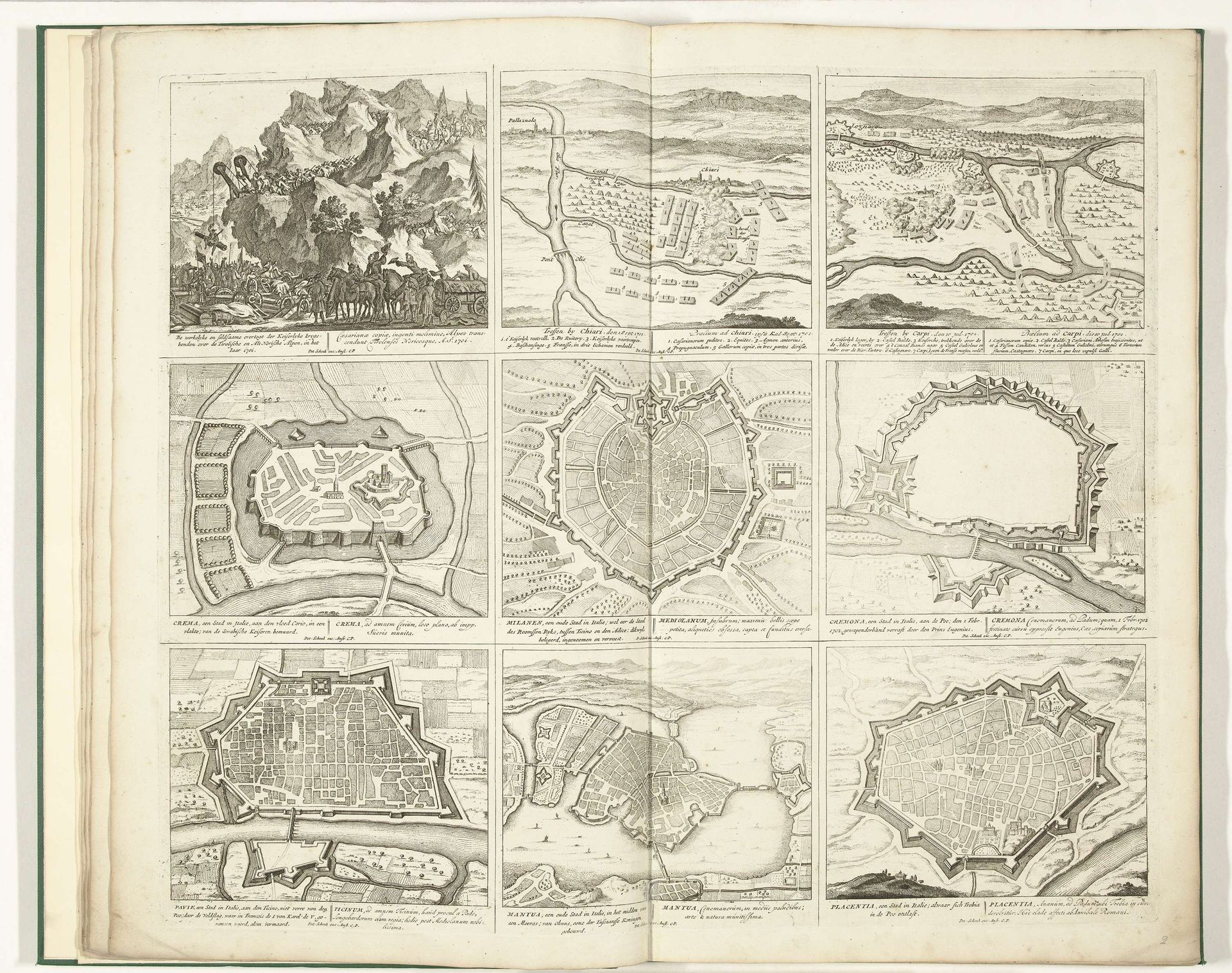
Editor: Here we have Pieter Schenk’s “Schouwburg van den oorlog (blad II)”, likely from around 1702 to 1722. It's a drawing, a print, with ink and engraving. The images, a collection of cityscapes, are intricate, and the entire page spread gives the feeling of looking into an old atlas. How would you interpret this work? Curator: It's fascinating to consider how maps, such as these, function beyond mere representations of space. These are images imbued with power, strategic planning, and a cultural understanding of the city as a defended space. Think about the title itself – “Theatre of War.” Do you notice how that reframes our perception? Editor: Yes, "theatre" suggests something staged, almost performative, but also a site of dramatic events. Curator: Precisely. And look closely at the imagery. You have scenes of battles juxtaposed with neat, almost clinical plans of cities. It speaks to the Baroque era's interest in order amidst chaos. Each element—the fortifications, the rivers, the troop placements—carry symbolic weight. This isn’t just about showing what's there, but conveying the *idea* of strategic power. What emotions do these cityscapes evoke for you, knowing their purpose was military? Editor: There's a tension, I think, between the artistry and the destructive intent. I see the beauty in the precise lines, the patterns, but there is that awareness of their association with war, destruction and suffering. It definitely changes the mood. Curator: It’s this intersection where art meets historical reality that interests me most. The enduring power of symbols lies in their ability to encapsulate complex narratives, both aesthetic and sociopolitical. Editor: I never really considered how emotionally charged maps can be. This piece gave me a whole new appreciation for the cultural meanings behind seemingly simple illustrations.