print, etching
baroque
dutch-golden-age
etching
landscape
Dimensions: 122 mm (height) x 230 mm (width) (bladmaal)
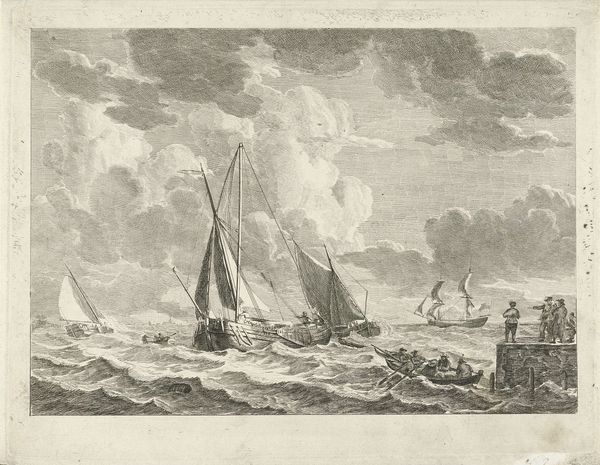
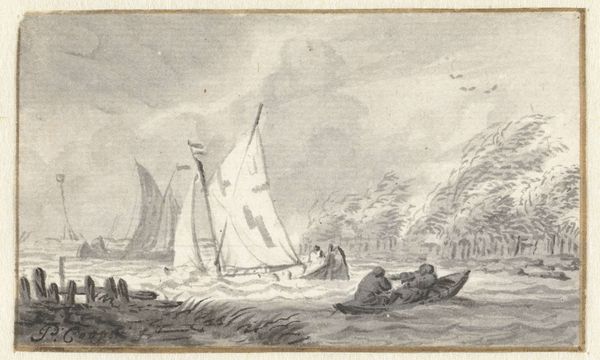
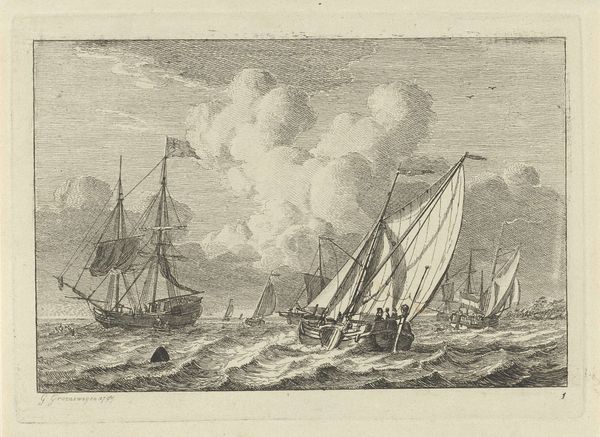
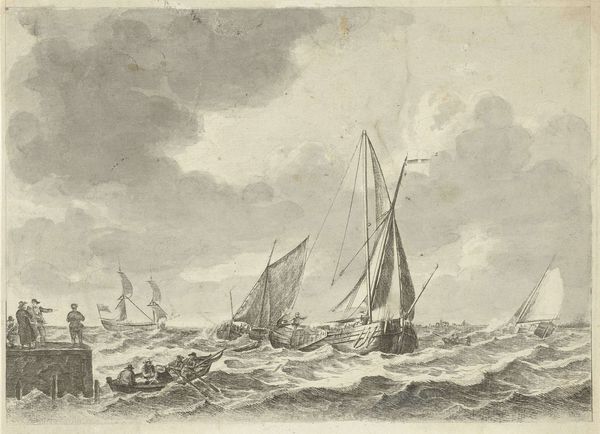
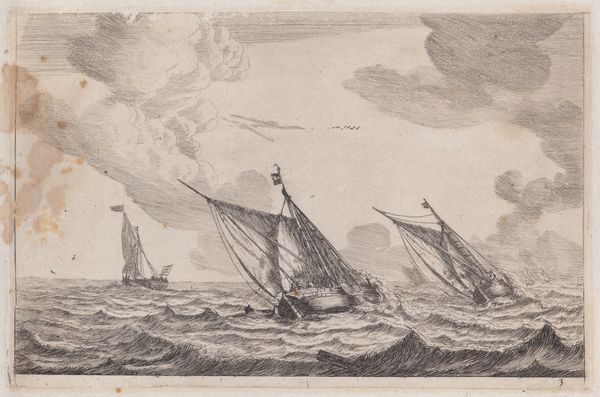
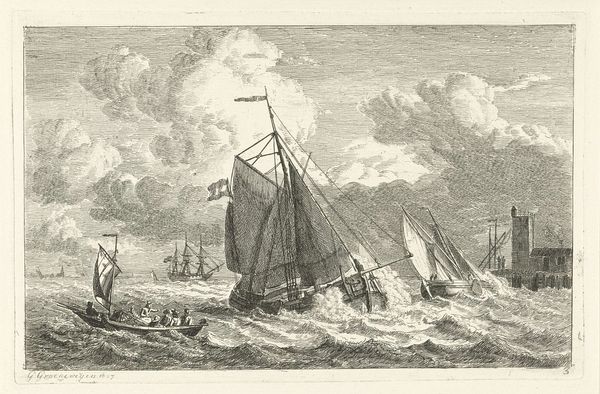
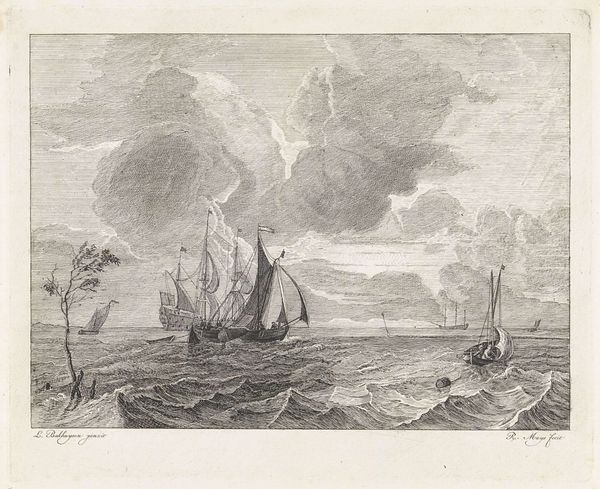
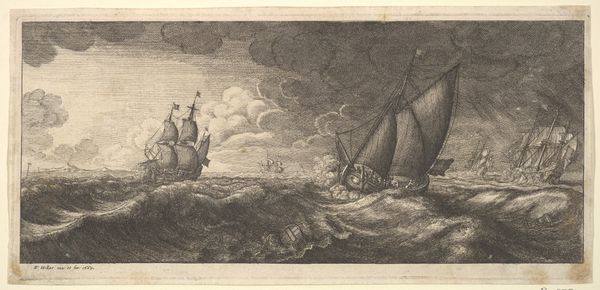
Curator: What a dramatic little scene! It feels like being tossed around in a tempest. Editor: Indeed! Let’s explore "Rødspættepramme (scholschuiten) på havet", a print by Reinier Nooms created between 1652 and 1654. Nooms, also known as Zeeman, was a master of marine scenes, often focusing on the daily lives of those who worked on the water. Curator: The 'daily lives' part is really interesting here. I mean, just look at the waves. Those aren't gentle swells, those are hungry beasts wanting to swallow those boats whole. Gives you a real sense of the harshness, the ever-present risk for these sailors, doesn’t it? Editor: Precisely! The etching process itself is important to note here too, etching allowed for detailed lines that capture the texture of the sea and the frantic movement implied by the composition, think about how different this looks compared to paintings by Dutch masters in this period! Curator: Speaking of lines, it's fascinating how a fairly simple printmaking technique can convey so much about this environment and experience. The labor involved in even a "simple" etching is far from minimal! Imagine the skill and practice it took to wield that needle! Editor: Absolutely! And that leads us to the question of audience. These prints were commodities, made for a market that craved scenes of maritime life, both romantic and, as you say, fraught with risk. The commercial expansion of the Dutch Golden Age went hand in hand with developments in printmaking and artistic distribution. Curator: It makes you consider, who exactly purchased these scenes of tumultuous seas? Landlocked merchants in comfortable houses, perhaps? The piece offers a potent mixture of empathy, maybe a bit of vicarious thrill for people who experienced it that way. Editor: So true! Ultimately, this print serves as a tangible artifact representing how early modern Dutch society negotiated its relationship with its most valuable resource—the sea itself. The sea that provided their commerce and trade! Curator: I love that so much! Thanks, that makes me feel completely different about the waves.
Comments
No comments
Be the first to comment and join the conversation on the ultimate creative platform.
 React
React Comment