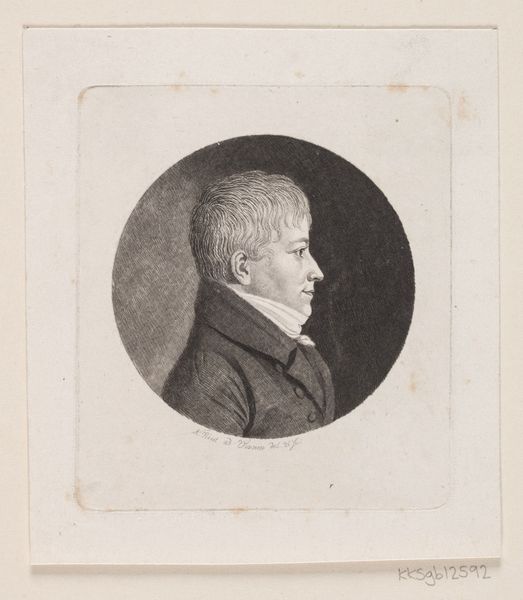
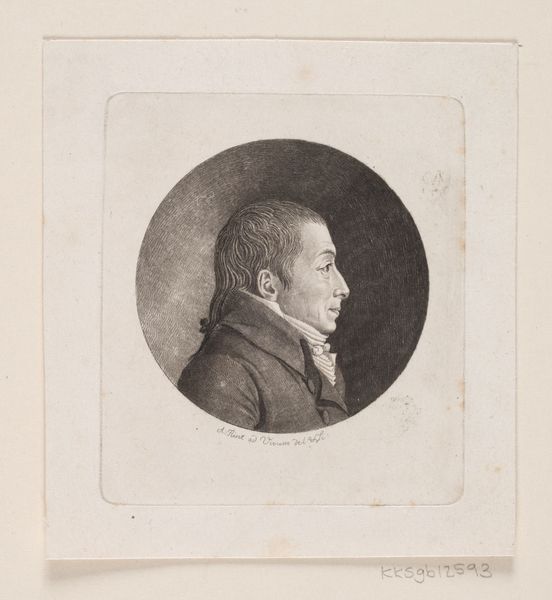
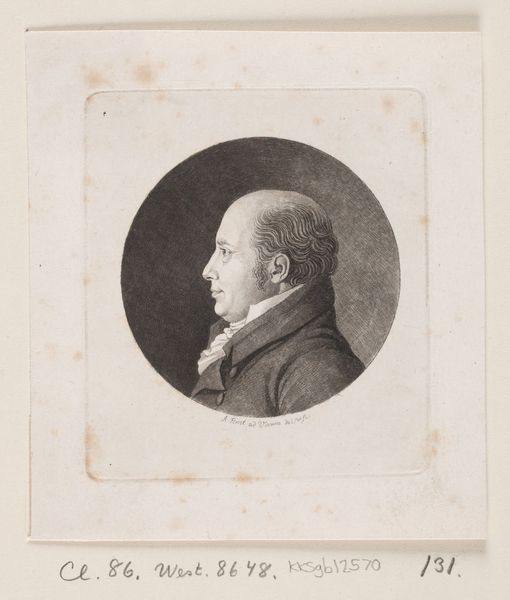
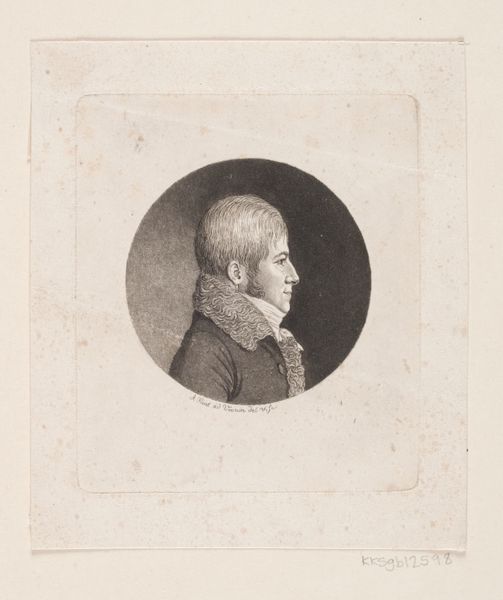
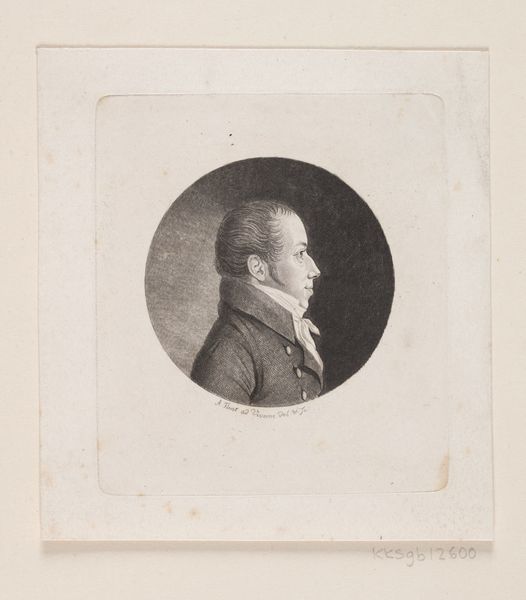
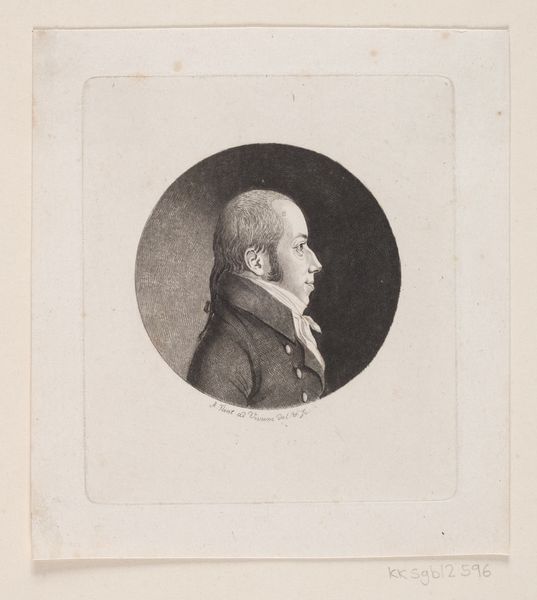
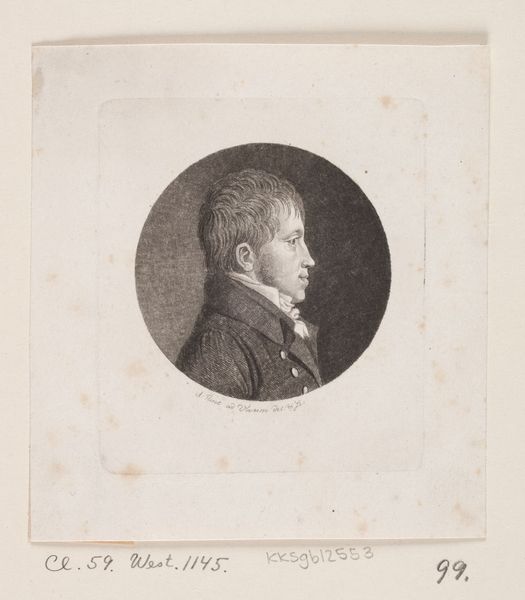
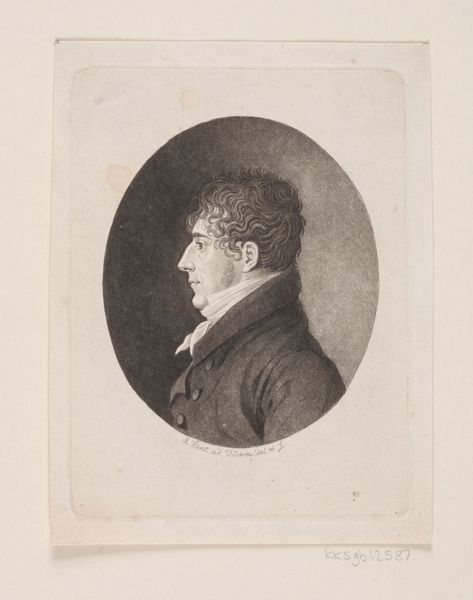
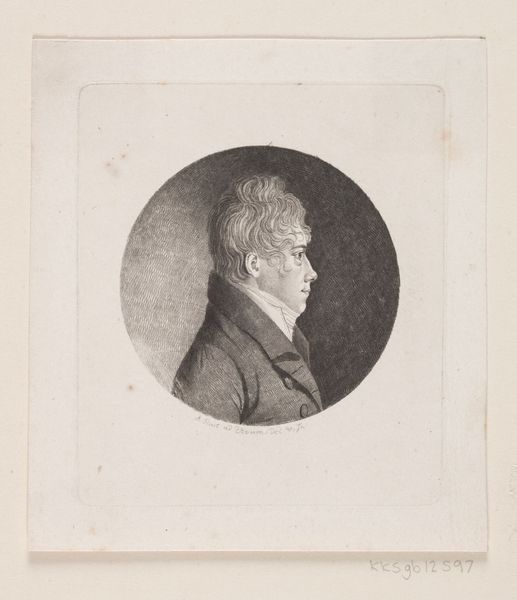
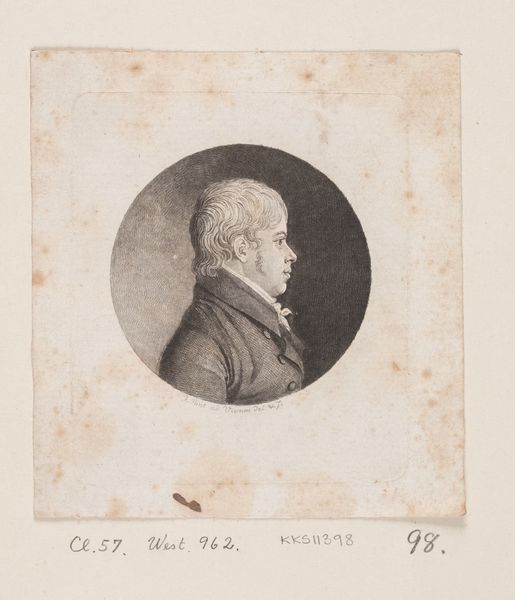
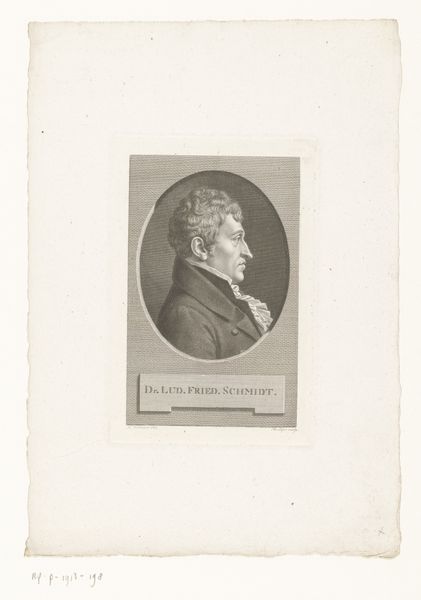
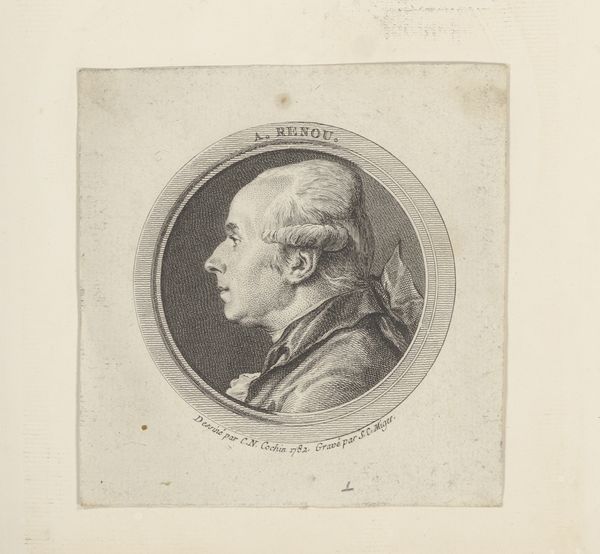
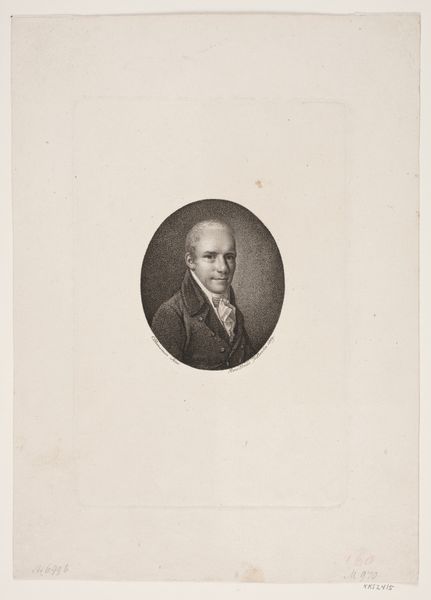
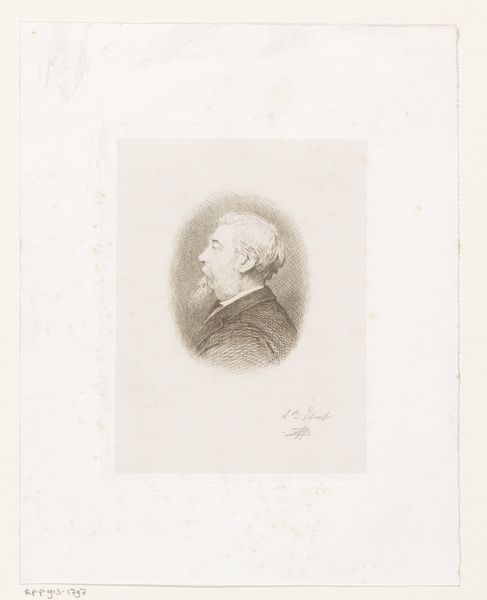
print, engraving
portrait
15_18th-century
history-painting
engraving
Dimensions: 62 mm (None) (billedmaal), 85 mm (height) x 75 mm (width) (plademaal)
Editor: Here we have "Unknown Man’s Portrait" by Andreas Flint, likely made between 1767 and 1824. It’s a print, an engraving. It feels very formal, very much a product of its time. What do you see in this piece? Curator: Beyond the formal conventions of portraiture, I see a man defined by the socio-political context of his era. Consider the French Revolution and its impact. How does the subject, with his conservative attire, fit into this revolutionary fervor? Editor: That's an interesting point. He does seem very proper, even constrained, which I hadn't fully considered in light of revolutionary periods. Curator: Exactly. Notice his profile – so carefully rendered. Who was he? Was he an aristocrat clinging to power, or a member of the rising bourgeoisie carefully constructing his image? This portrait, then, becomes a statement about class and identity during a time of immense upheaval. What does it mean to have your image preserved, at this specific moment in history? Editor: So, the “unknown” aspect pushes us to consider larger societal questions, beyond just who he was as an individual? Curator: Precisely. The act of representation itself becomes a political act. The image isn’t just a likeness, it's enmeshed within power structures of the time. The deliberate nature of an engraving in that era is inherently tied to the propagation of ideals. Editor: I never really thought about portraits as being so involved with politics and power! I’ll definitely look at these images differently now. Curator: And I am now looking at how artistic identity and artistic value becomes inscribed in such engravings and what gets missed out through their processes! Thank you.
Comments
No comments
Be the first to comment and join the conversation on the ultimate creative platform.
 React
React Comment