About this artwork
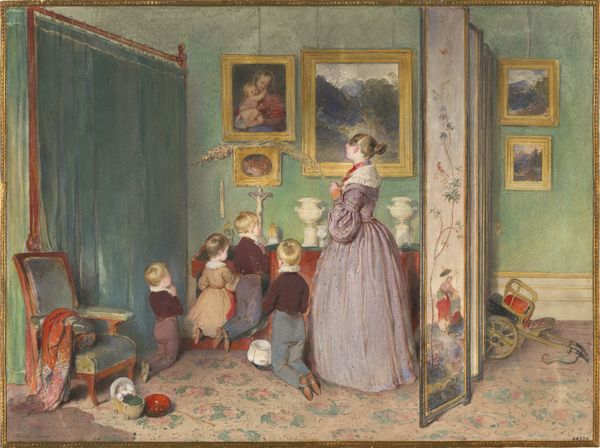
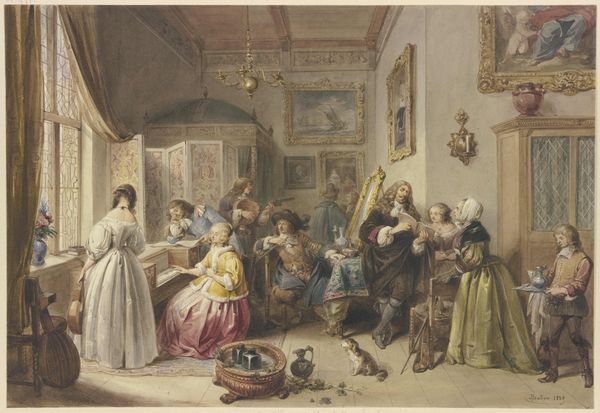
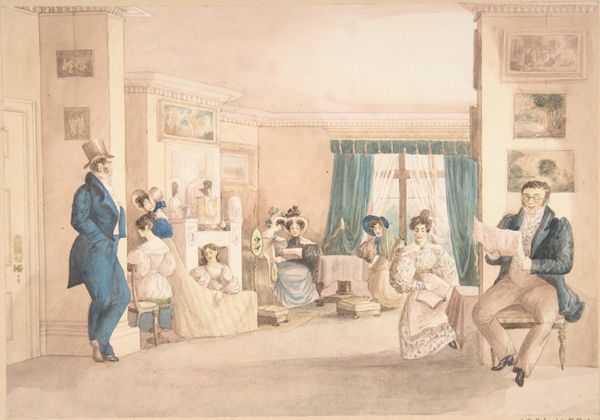
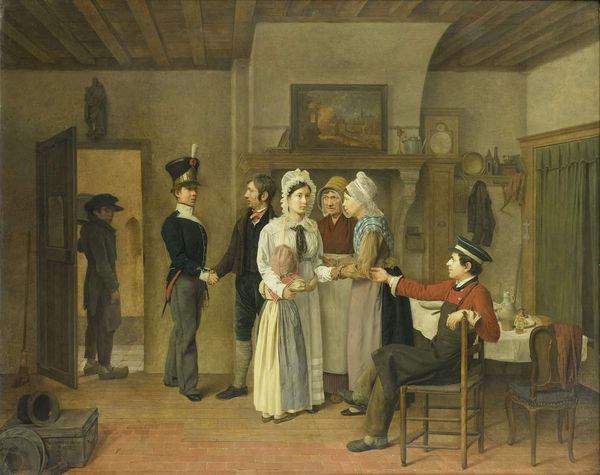
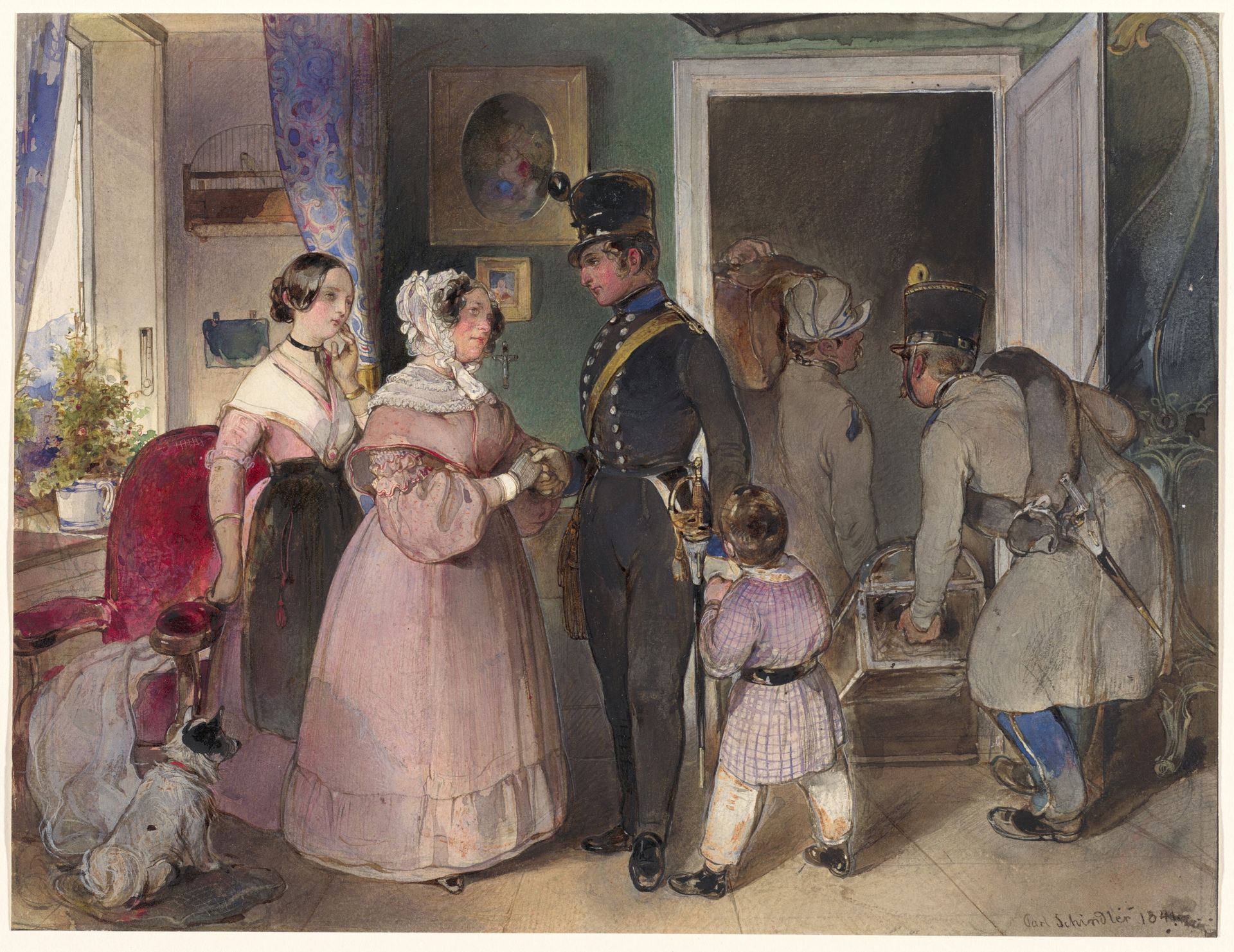
Carl Schindler created this watercolor painting on paper, titled *A Young Officer Saying Farewell to His Family*, sometime in the 1840s. Schindler’s choice of watercolor, a medium prized for its delicate washes and translucent quality, lends an intimate and nostalgic air to the depicted scene. Watercolors are created by suspending fine pigment particles in a water-based solution. The artist manipulates the flow and concentration of pigment, creating subtle gradations of tone and color. The absorbent quality of the paper further enhances the soft, luminous effect. Schindler's use of watercolor is very telling. Typically, watercolor paintings were easier to produce in multiples. These images were a method of communication to share with family and friends. However, the laborious nature of painting in watercolor would’ve still taken a considerable amount of time. The act of painting in watercolor elevates the image from a mere method of communication, to a cherished family heirloom. In the 19th century, watercolor painting was often associated with amateurism and femininity. Yet, in Schindler’s skilled hands, the medium becomes a powerful tool for evoking emotion and capturing fleeting moments of life.
A Young Officer Saying Farewell to His Family
1841


Artwork details
- Medium
- drawing, watercolor
- Dimensions
- sheet: 25.1 x 33 cm (9 7/8 x 13 in.)
- Copyright
- National Gallery of Art: CC0 1.0
Tags
Comments
Share your thoughts
About this artwork
Carl Schindler created this watercolor painting on paper, titled *A Young Officer Saying Farewell to His Family*, sometime in the 1840s. Schindler’s choice of watercolor, a medium prized for its delicate washes and translucent quality, lends an intimate and nostalgic air to the depicted scene. Watercolors are created by suspending fine pigment particles in a water-based solution. The artist manipulates the flow and concentration of pigment, creating subtle gradations of tone and color. The absorbent quality of the paper further enhances the soft, luminous effect. Schindler's use of watercolor is very telling. Typically, watercolor paintings were easier to produce in multiples. These images were a method of communication to share with family and friends. However, the laborious nature of painting in watercolor would’ve still taken a considerable amount of time. The act of painting in watercolor elevates the image from a mere method of communication, to a cherished family heirloom. In the 19th century, watercolor painting was often associated with amateurism and femininity. Yet, in Schindler’s skilled hands, the medium becomes a powerful tool for evoking emotion and capturing fleeting moments of life.
Comments
Share your thoughts