About this artwork
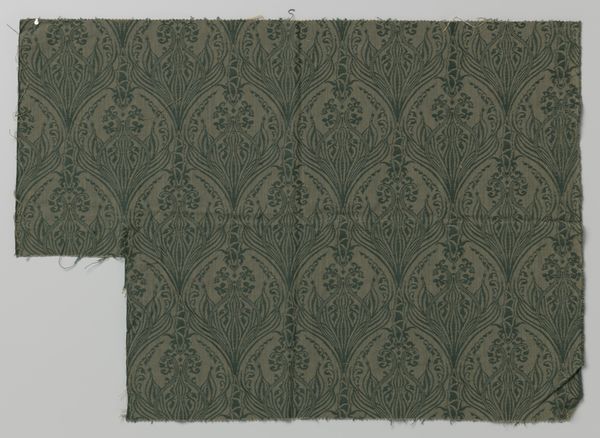
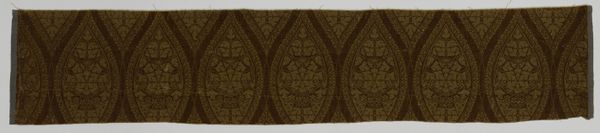
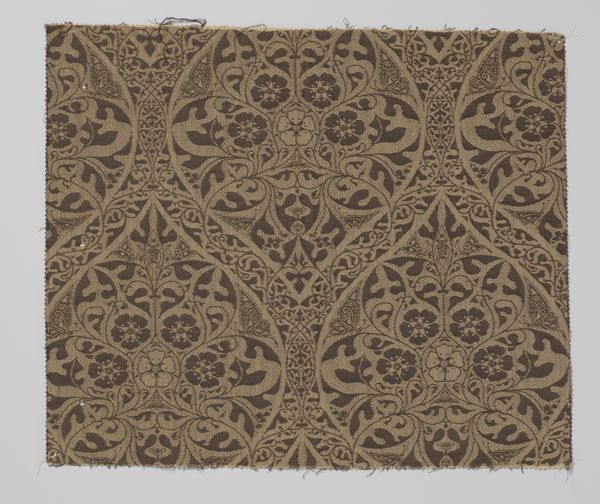
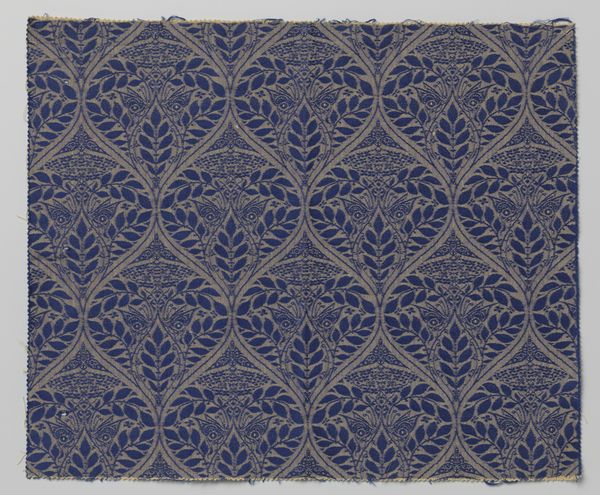
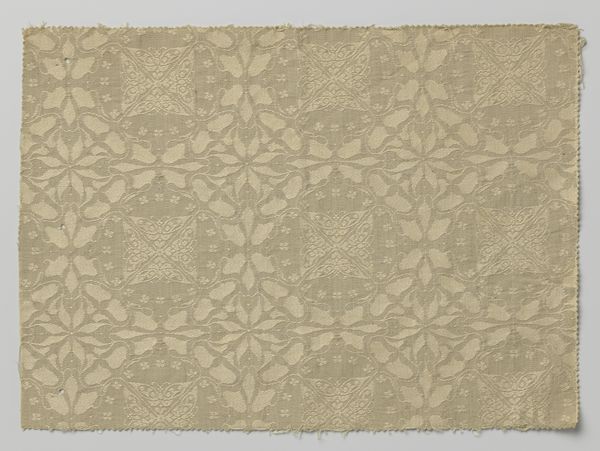
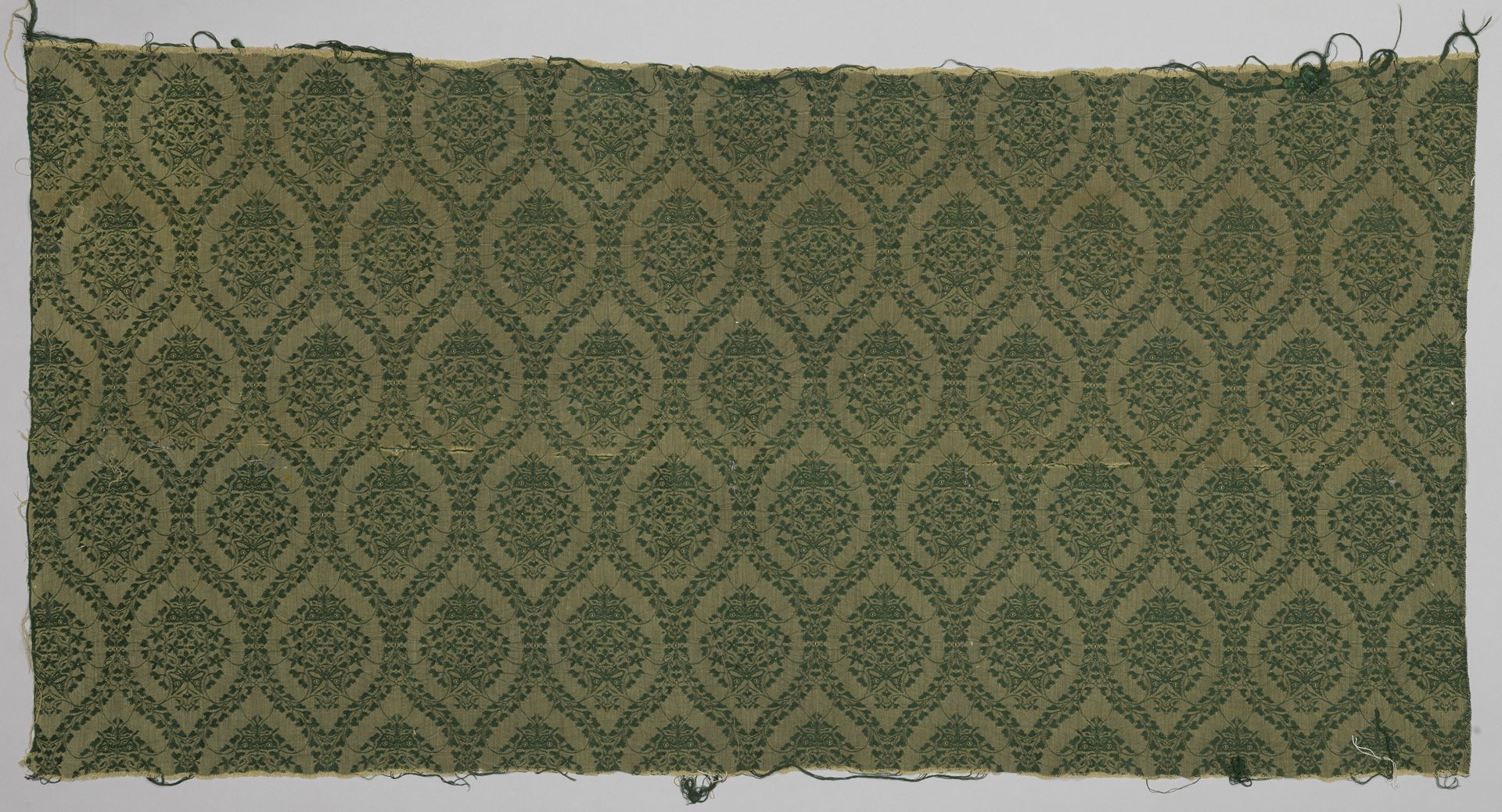
Theo Nieuwenhuis made this jacquard-woven fabric, a *Bespanningstof*, with a dark green pattern on a soft yellow ground, but we don’t know when. What grabs me about this piece is the intimacy of the woven process; how the artist has built up the pattern slowly, thread by thread. You can almost feel the artist’s hand guiding the shuttle back and forth. The dark green design, with its pointy oval shapes filled with leafy sprigs, contrasts with the gentle yellow underneath, creating a subtle tension. Imagine running your fingers across the surface – the slight variations in texture, the tiny imperfections in the weave. If you look closely, you’ll see how each leafy oval is subtly different, as if the weaver was improvising as they went along. It reminds me of some of the pattern paintings of the 70’s – think of Joyce Kozloff maybe – but rendered with a textile sensibility. Ultimately, it speaks to the beauty of handmade objects and the endless possibilities of artmaking.
Bespanningsstof, jacquardweefsel met patroon van spitsovale velden met bladranken, donkergroene inslag op zachtgele ketting
c. 1920 - 1930

Theo Nieuwenhuis
1866 - 1951Location
RijksmuseumArtwork details
- Dimensions
- height 61.5 cm, width 124.0 cm, width 1.0
- Location
- Rijksmuseum
- Copyright
- Rijks Museum: Open Domain
Comments
Share your thoughts
About this artwork
Theo Nieuwenhuis made this jacquard-woven fabric, a *Bespanningstof*, with a dark green pattern on a soft yellow ground, but we don’t know when. What grabs me about this piece is the intimacy of the woven process; how the artist has built up the pattern slowly, thread by thread. You can almost feel the artist’s hand guiding the shuttle back and forth. The dark green design, with its pointy oval shapes filled with leafy sprigs, contrasts with the gentle yellow underneath, creating a subtle tension. Imagine running your fingers across the surface – the slight variations in texture, the tiny imperfections in the weave. If you look closely, you’ll see how each leafy oval is subtly different, as if the weaver was improvising as they went along. It reminds me of some of the pattern paintings of the 70’s – think of Joyce Kozloff maybe – but rendered with a textile sensibility. Ultimately, it speaks to the beauty of handmade objects and the endless possibilities of artmaking.
Comments
Share your thoughts