About this artwork
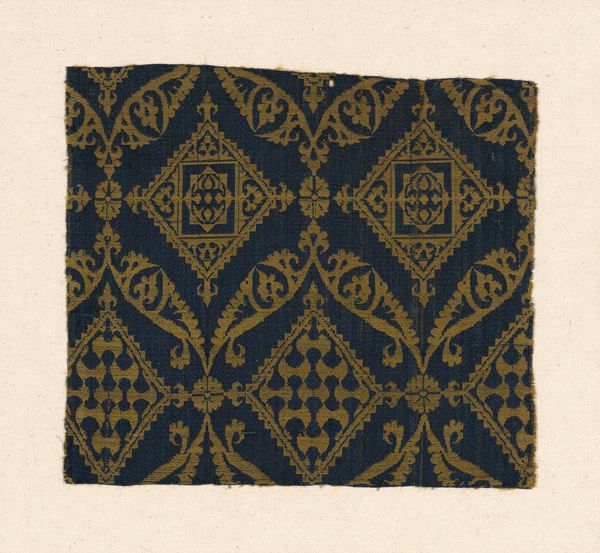
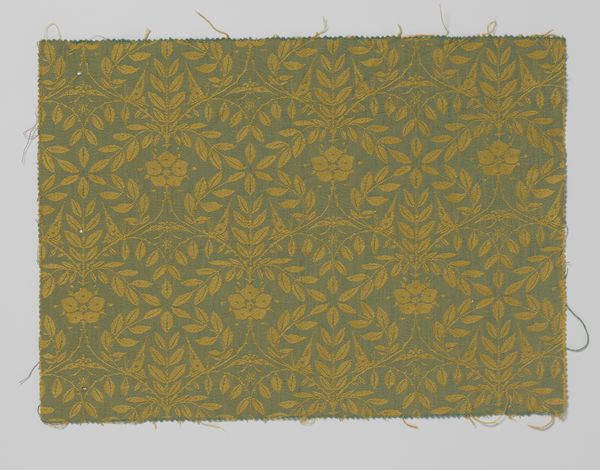
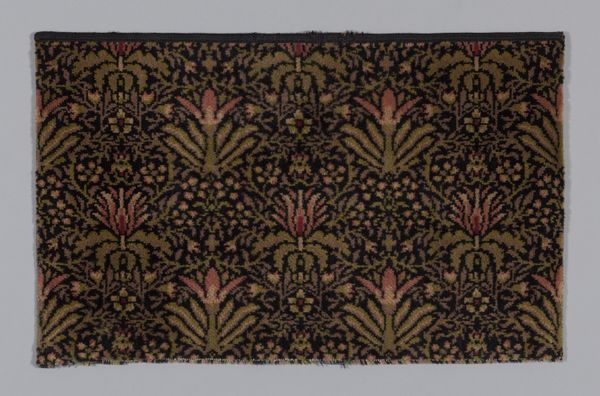
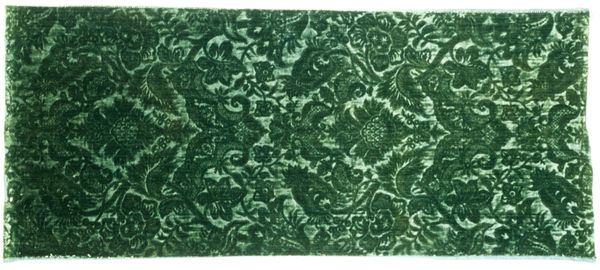
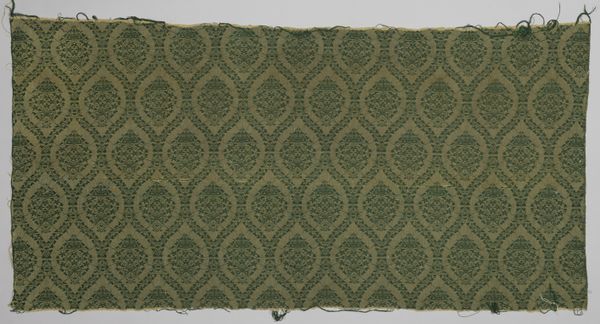
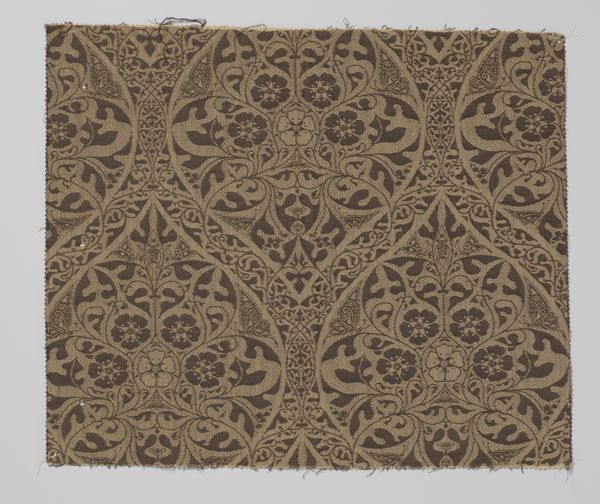
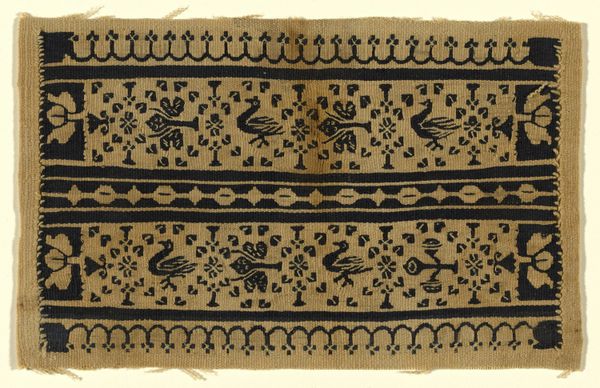
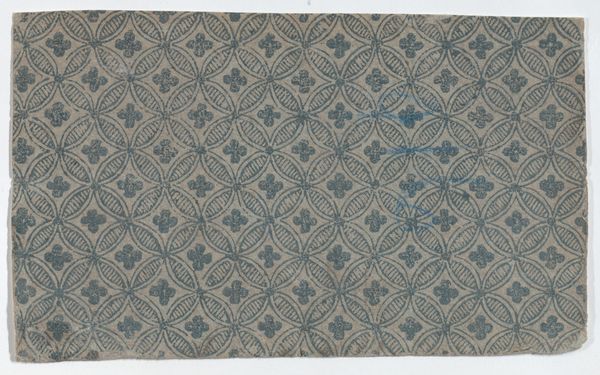
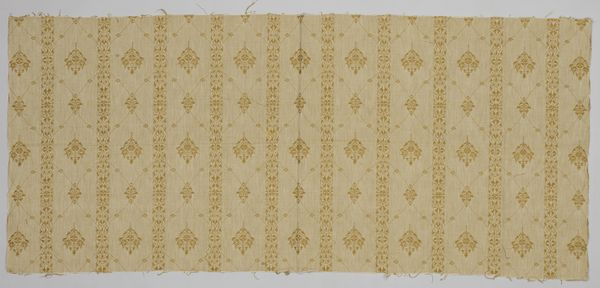
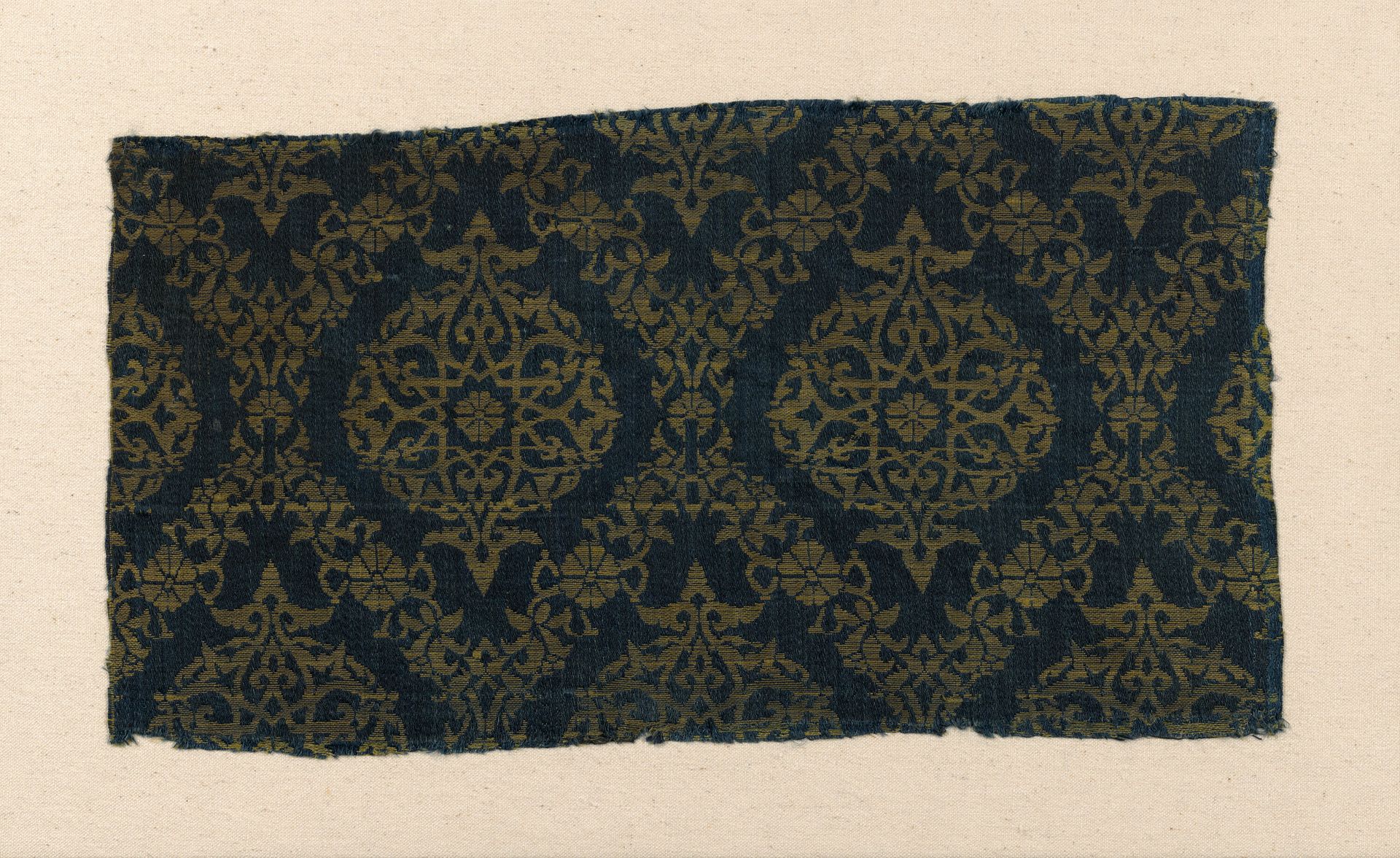
This textile fragment, of unknown origin and date, is made of woven silk. The elaborate repeat pattern, with its mirrored palmettes and stylized floral motifs, would have required a drawloom to produce. Looking closely, you can appreciate the material qualities of the silk. Note its subtle sheen, the way it catches the light, and the tight weave structure, giving crispness to the pattern. But remember, this fragment is just a snippet of something that would have been far larger and more impressive. It's not just the aesthetic qualities of this textile that are important, but also the social and economic context of its production. Silk was a valuable commodity, and the labor-intensive process of weaving it meant that it was often associated with wealth and status. By appreciating the material and making of this fragment, we can better understand the world in which it was created.
Fragment
Mamluk period (1250–1517), 14th/15th century


Artwork details
- Medium
- fibre-art, weaving, textile
- Dimensions
- 20.8 × 38.2 cm (8 1/4 × 15 in.) Weft repeat: 14.2 cm (5 5/8 in.)
- Location
- The Art Institute of Chicago
- Copyright
- Public Domain
Tags
Comments
Share your thoughts
About this artwork
This textile fragment, of unknown origin and date, is made of woven silk. The elaborate repeat pattern, with its mirrored palmettes and stylized floral motifs, would have required a drawloom to produce. Looking closely, you can appreciate the material qualities of the silk. Note its subtle sheen, the way it catches the light, and the tight weave structure, giving crispness to the pattern. But remember, this fragment is just a snippet of something that would have been far larger and more impressive. It's not just the aesthetic qualities of this textile that are important, but also the social and economic context of its production. Silk was a valuable commodity, and the labor-intensive process of weaving it meant that it was often associated with wealth and status. By appreciating the material and making of this fragment, we can better understand the world in which it was created.
Comments
Share your thoughts