c. 1756 - 1778
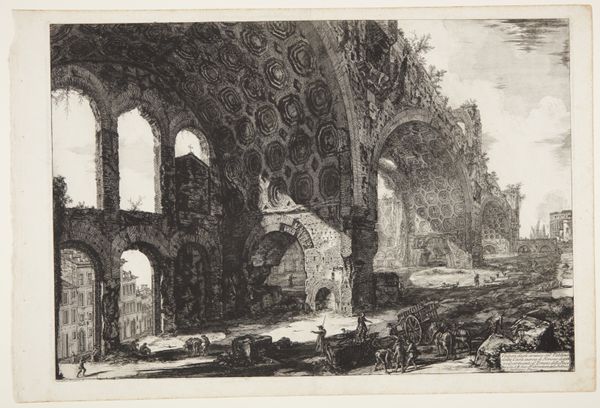
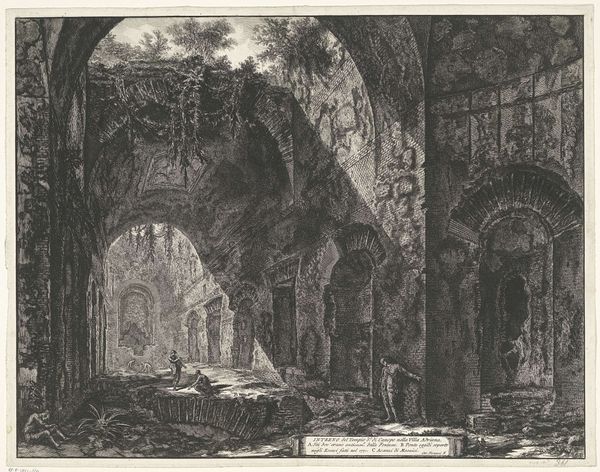
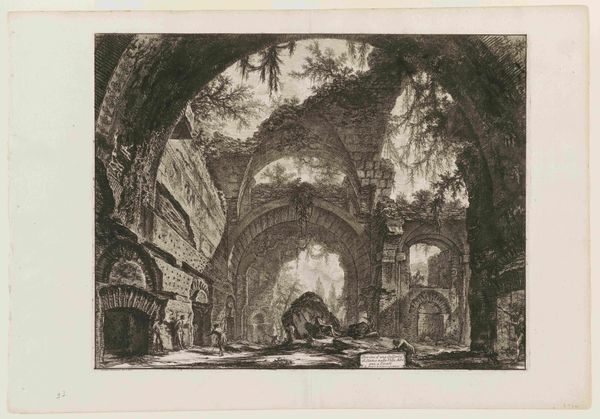
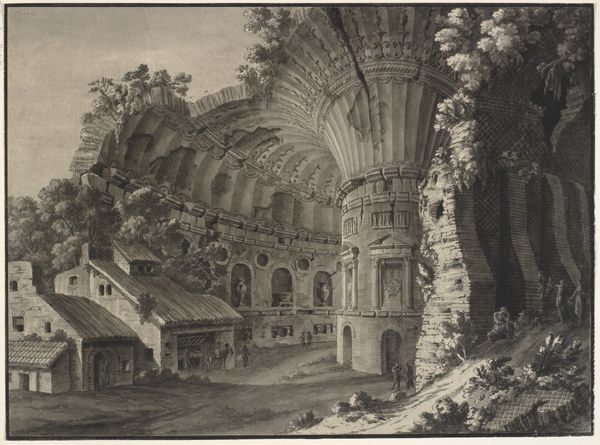
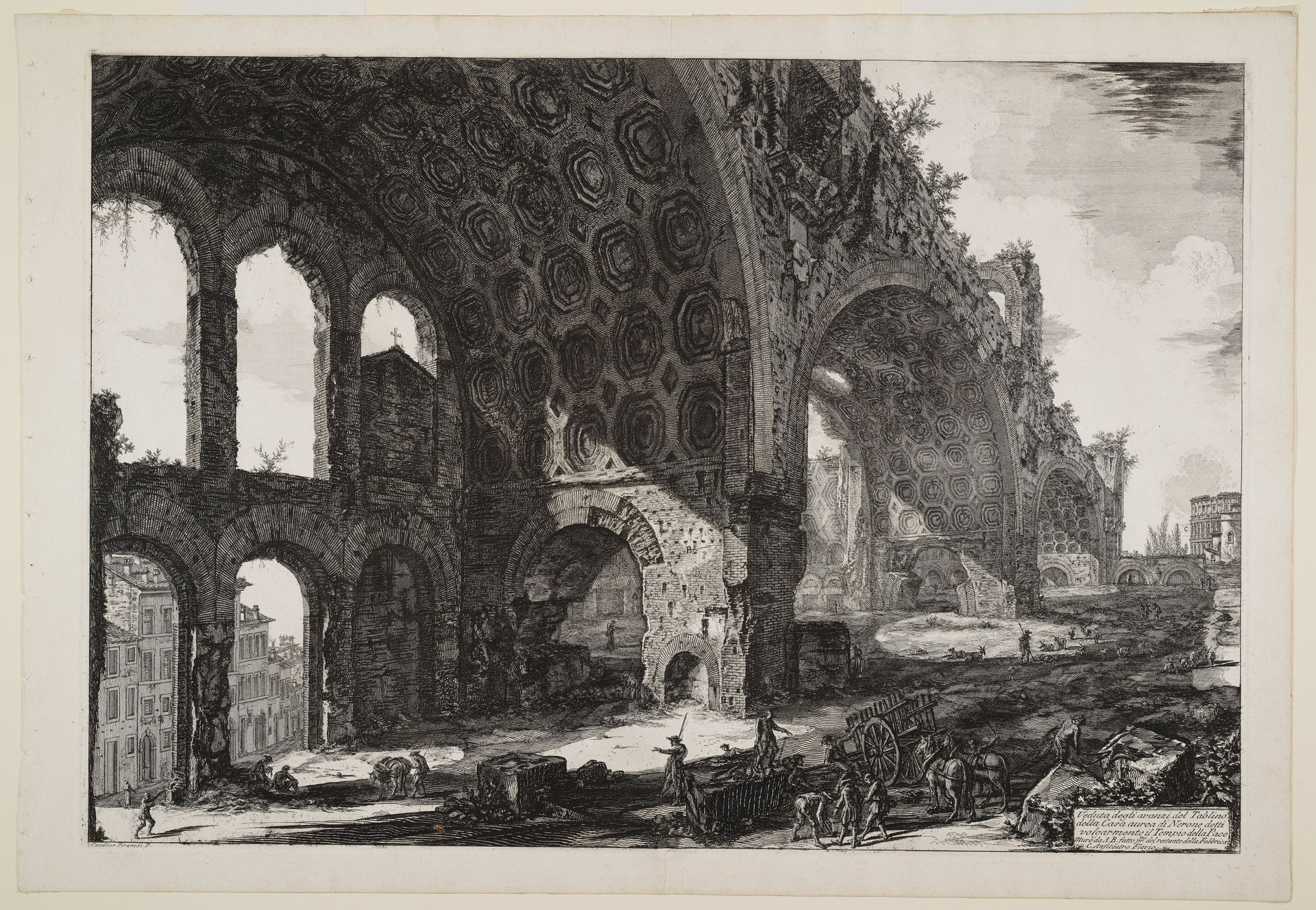
View of the Remains of the Dining Room of Nero's Golden House


Listen to curator's interpretation
Curatorial notes
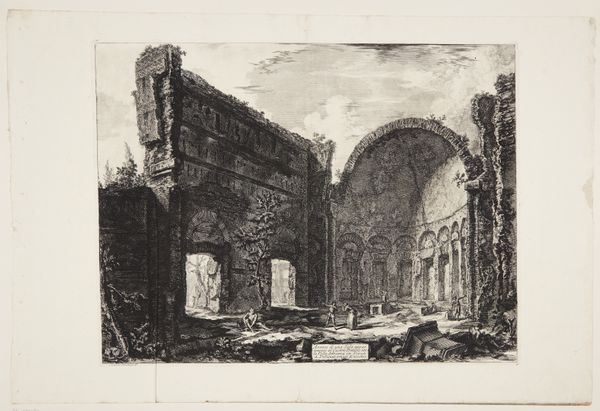
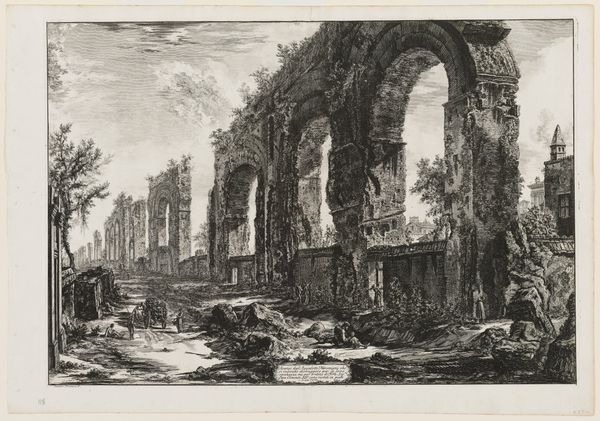
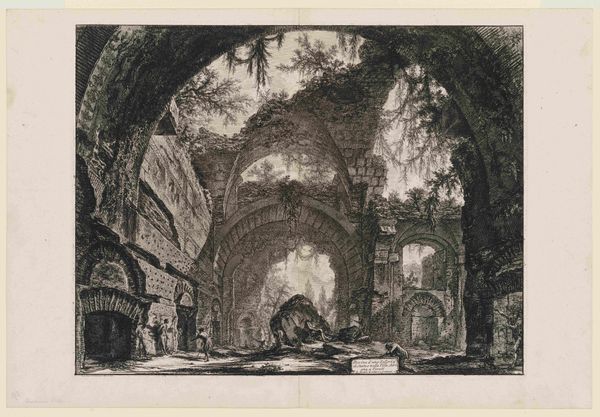
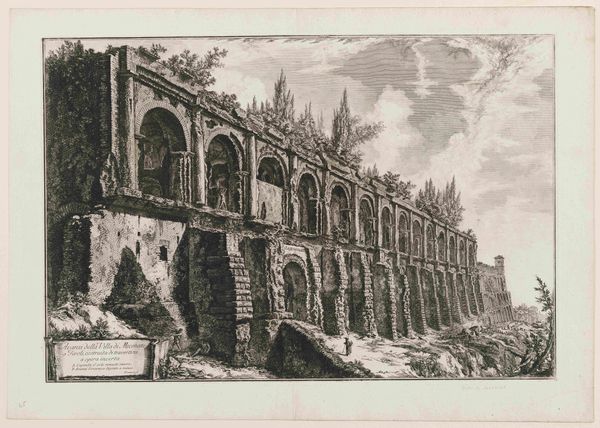
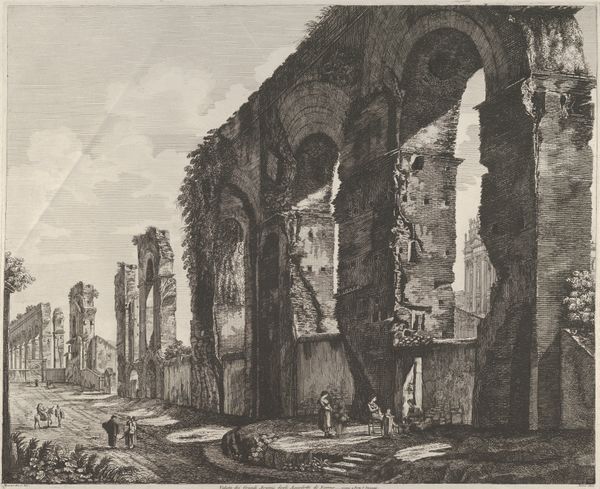
Giovanni Battista Piranesi created this etching, "View of the Remains of the Dining Room of Nero's Golden House," using black ink on paper. The scene overwhelms with its cavernous interior space and detailed rendering of decay. Look at how Piranesi uses the contrast between light and shadow to direct our gaze, creating a dramatic and theatrical space. The elaborate coffered ceiling, though partially ruined, still conveys the opulence of Nero's palace. The architectural forms—arches, vaults, and crumbling walls—evoke a sense of the sublime, reflecting the 18th-century fascination with ruins and the passage of time. Piranesi's use of perspective, combined with the intricate detail, encourages reflection on themes of power, impermanence, and the relationship between past and present. Through this formal arrangement, Piranesi destabilizes traditional notions of architectural grandeur, suggesting a world where even the mightiest structures are subject to decay.