drawing, pencil
#
drawing
#
landscape
#
pencil
#
academic-art
#
realism
Copyright: Rijks Museum: Open Domain
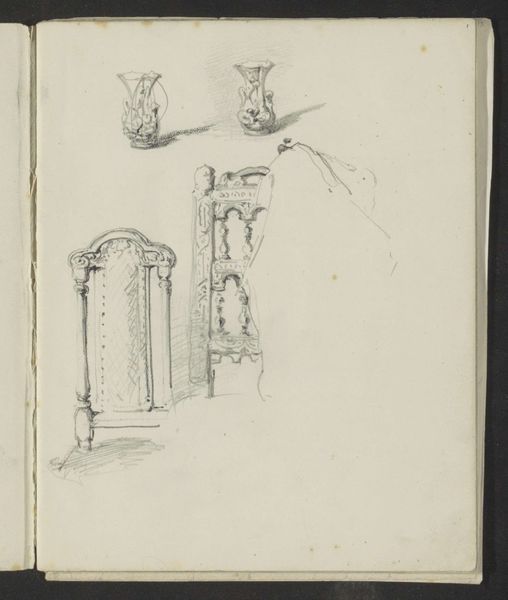
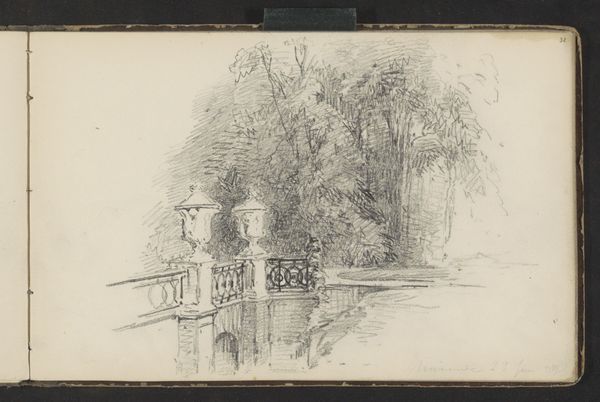
Maria Vos made this sketch of the Vestibule van Kasteel Duivenvoorde with graphite on paper, likely en plein air, in 1875. The softness of the graphite allows for delicate gradations of tone, defining the architectural space, a collection of medieval arms. Vos’s choice of graphite – a readily available, relatively inexpensive material – signals a departure from traditional fine art practices that would typically employ paint or more precious metals. Graphite emphasizes the immediacy of the creative process. The slight smudging and the visible, tentative lines all speak to the artist's direct engagement with the subject, capturing the atmosphere of the castle interior with spontaneity. The drawing emphasizes the materiality of the armaments themselves: the cold, hard steel of the swords and spears. These instruments of war contrast with the soft domesticity of the drawing, transforming the martial display into something approachable, even charming. By focusing on process and making, we see how Vos democratizes art, bridging the gap between the grand subject matter of weaponry and the humble medium of graphite.
Comments
No comments
Be the first to comment and join the conversation on the ultimate creative platform.
 Collect
 React
React Comment
More like this