1661 - 1704
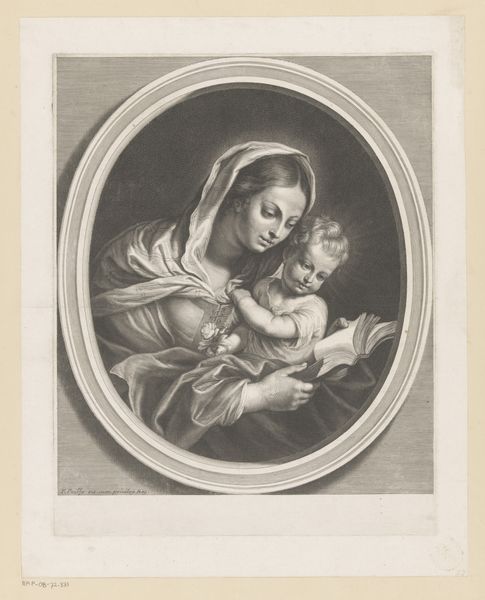
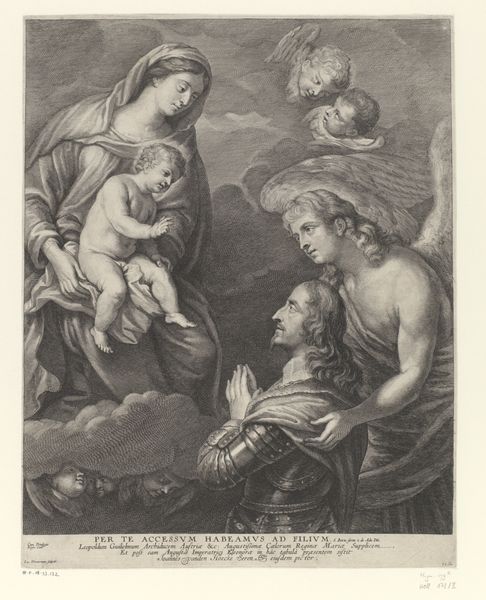
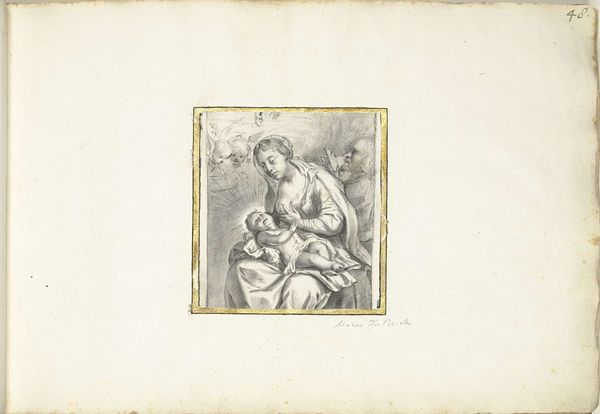
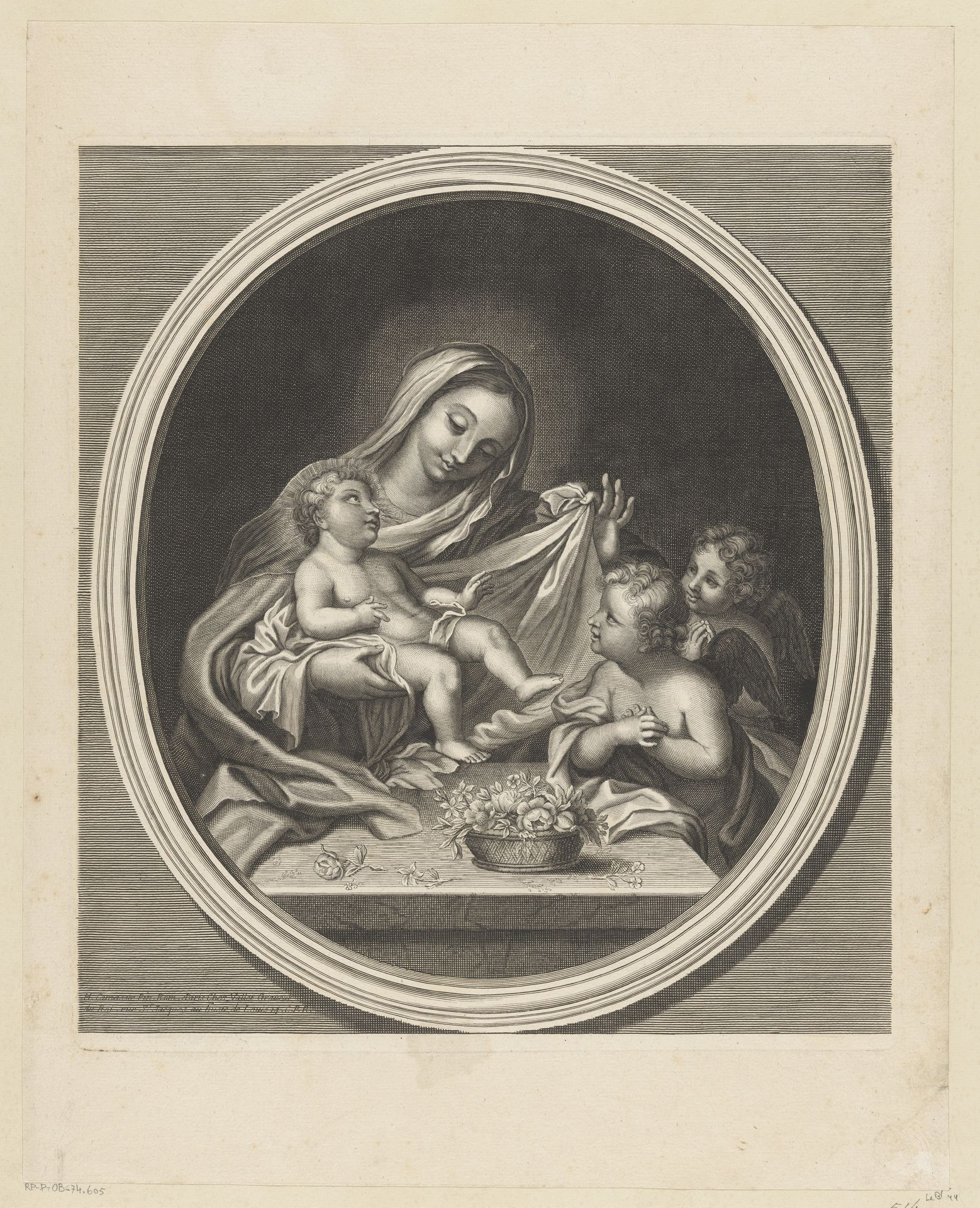
Maria met Kind en twee engelen achter een tafel met een mand met bloemen

Listen to curator's interpretation
Curatorial notes
Editor: So, here we have “Maria met Kind en twee engelen achter een tafel met een mand met bloemen,” or “Mary with Child and two angels behind a table with a basket of flowers,” a 17th or 18th-century engraving by Guillaume Vallet. It’s quite serene, almost dreamlike in its monochrome palette. What strikes you when you look at it? Curator: It’s funny, isn't it? How devotional images from the Baroque period always seem to aim for this saccharine sweetness, a bit like honey smeared on everything. Look at how the figures are arranged - it feels like a carefully posed tableau, not exactly bursting with raw emotion, but brimming with religious symbolism nonetheless. The oval frame adds to that sense of staged reverence, wouldn't you agree? Editor: Definitely staged. Almost too perfect? All that said, do you find that perfection comforting or stifling? Curator: Stifling is a harsh word, though it resonates, of course. I think artists in that period aimed for divine beauty –an idealised, sanitized reality. It's a reflection of their worldview, isn't it? Everything meticulously rendered, to demonstrate skill and evoke reverence. Makes me wonder, what would it look like if someone painted a *realistic* Mary? Imagine! Editor: A more raw and "human" version would be...provocative, I guess. Looking closely at the basket of flowers, it almost seems like a symbolic offering or a promise of better times? Curator: Exactly! Everything signifies something. Each petal, each fold in Mary’s dress whispers volumes. I get a nostalgic ache seeing all that work put into making one piece that someone hundreds of years from then would ruminate on. Editor: I'll never look at Baroque art the same way. So many hidden meanings under layers and layers of beauty and perfect craft.