About this artwork
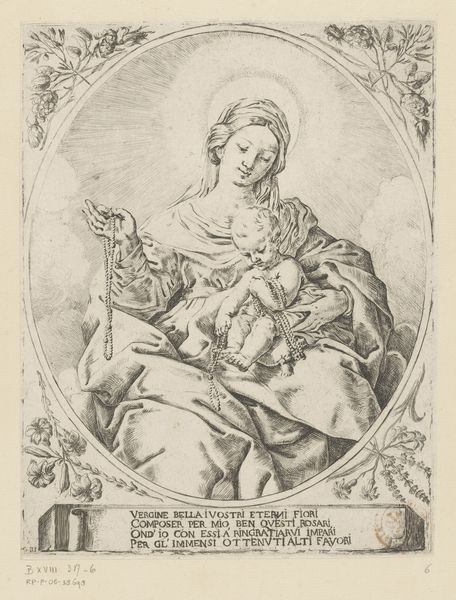
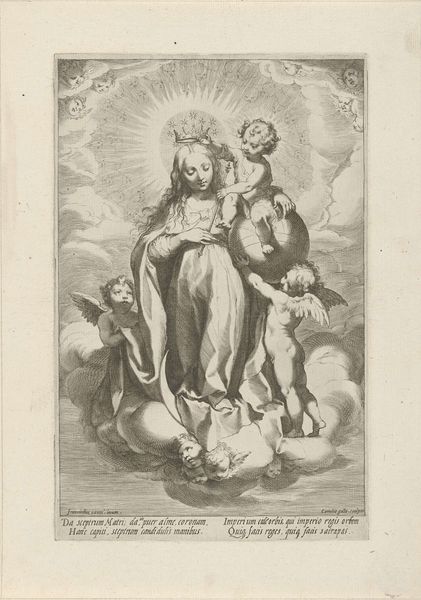
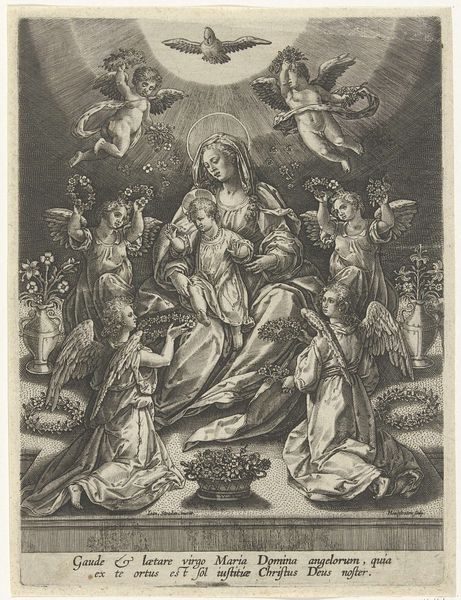
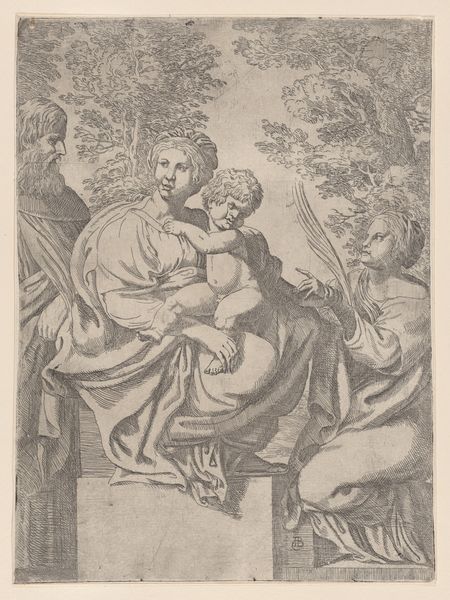
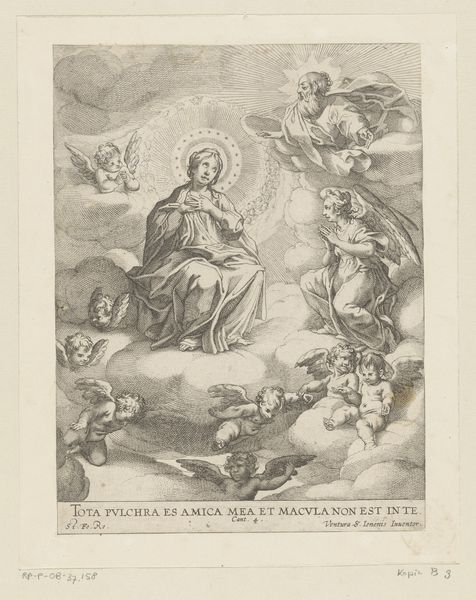
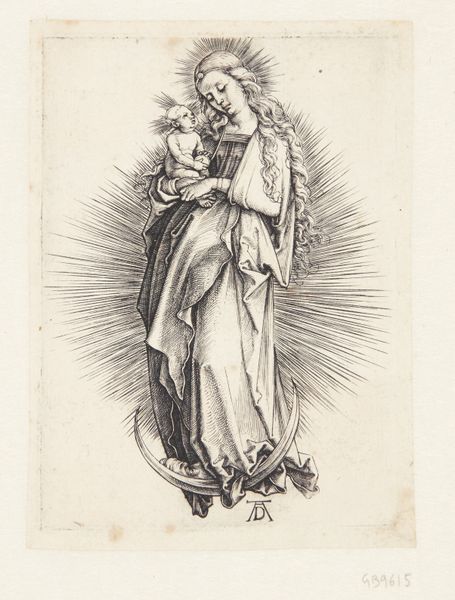
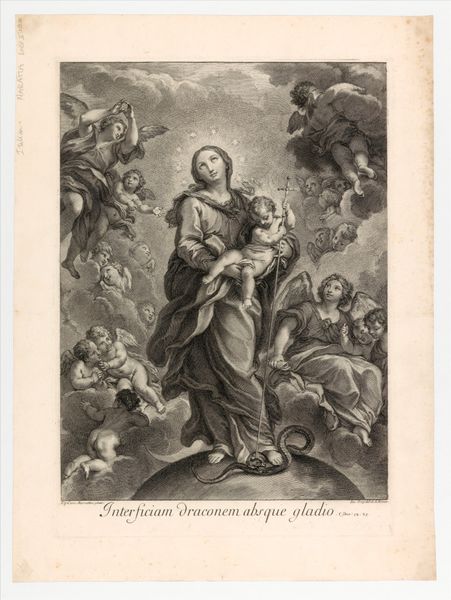
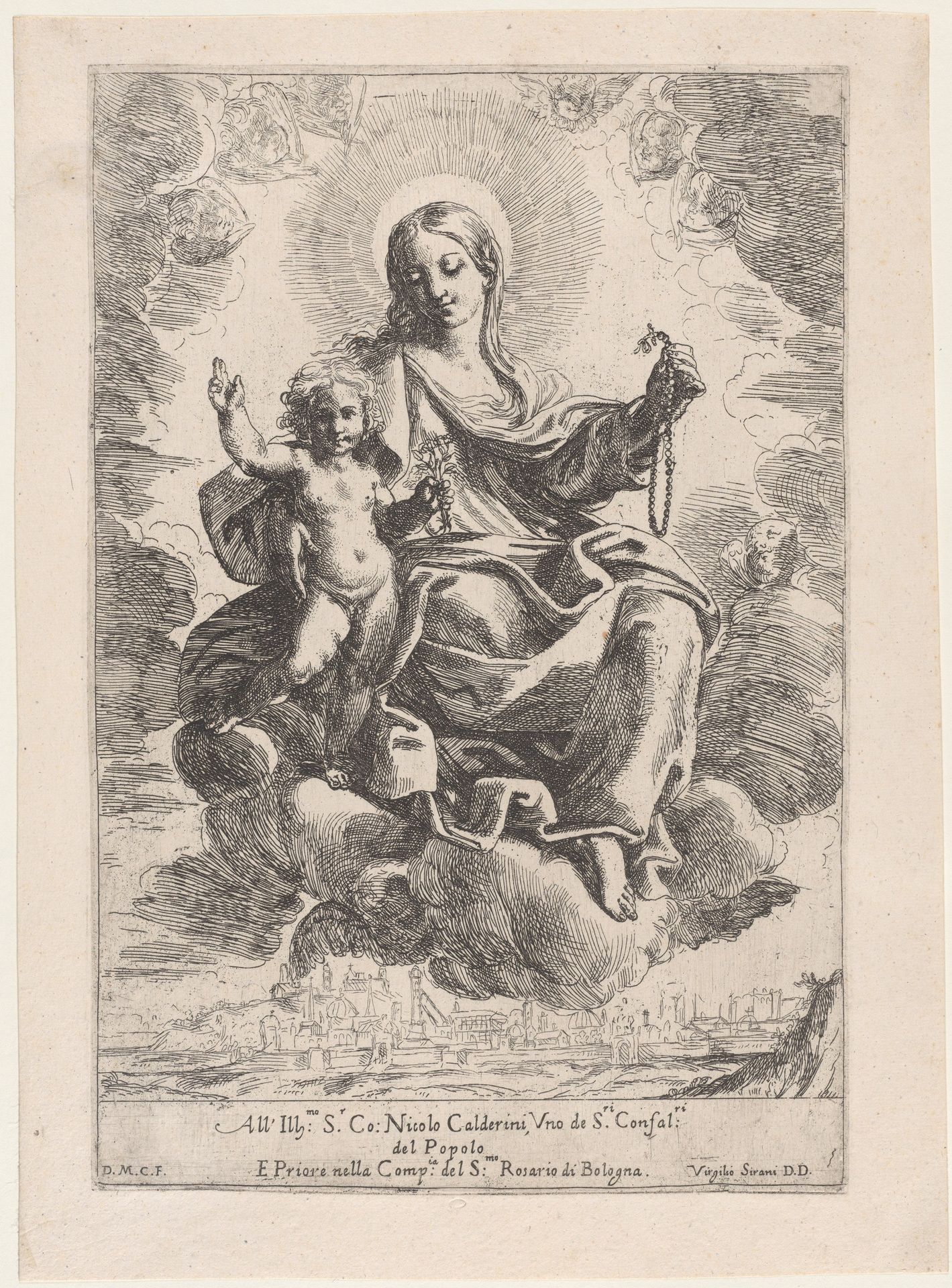
Domenico Maria Canuti created "The Virgin of the Rosary," a detailed print now housed at the Metropolitan Museum of Art. The composition invites the eye to wander between the ethereal figures of the Virgin and Child, perched atop clouds, and the detailed cityscape below. Lines define the forms with an almost diagrammatic precision, typical of prints in this era, yet there is a softness achieved through the delicate hatching that models their shapes. The radiating lines emanating from the Virgin suggest a divine aura, a visual language speaking to her sacred role. Meanwhile, the rosary, centrally positioned, is not merely an accessory but a focal point of devotional practice. The print functions less as a depiction and more as an instrument—a structured guide for contemplation. It's an interplay between form and function, where the lines, shapes, and composition serve a deeply rooted cultural purpose.
The Virgin of the Rosary
1645 - 1684

Domenico Maria Canuti
1625 - 1684
The Metropolitan Museum of Art
Metropolitan Museum of Art, New York, NYArtwork details
- Medium
- drawing, print, engraving
- Dimensions
- Sheet (Trimmed): 11 1/8 × 7 1/2 in. (28.2 × 19 cm)
- Location
- Metropolitan Museum of Art, New York, NY
- Copyright
- Public Domain
Tags
Comments
Share your thoughts
About this artwork
Domenico Maria Canuti created "The Virgin of the Rosary," a detailed print now housed at the Metropolitan Museum of Art. The composition invites the eye to wander between the ethereal figures of the Virgin and Child, perched atop clouds, and the detailed cityscape below. Lines define the forms with an almost diagrammatic precision, typical of prints in this era, yet there is a softness achieved through the delicate hatching that models their shapes. The radiating lines emanating from the Virgin suggest a divine aura, a visual language speaking to her sacred role. Meanwhile, the rosary, centrally positioned, is not merely an accessory but a focal point of devotional practice. The print functions less as a depiction and more as an instrument—a structured guide for contemplation. It's an interplay between form and function, where the lines, shapes, and composition serve a deeply rooted cultural purpose.
Comments
Share your thoughts