About this artwork
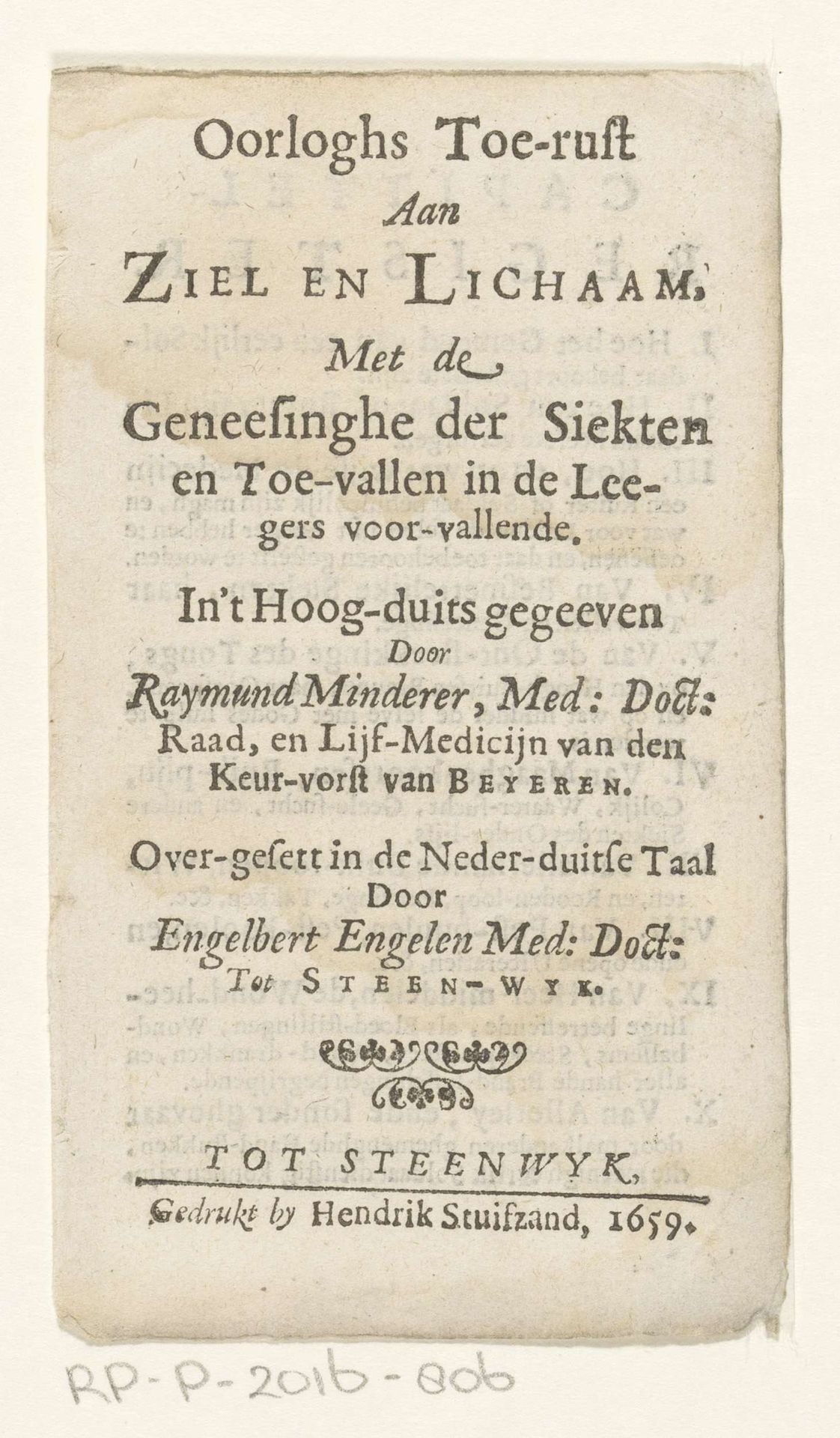
This is a title page for "Oorloghs Toe-rust Aan Ziel en Lichaam," printed by Hendrik Stuifzand in 1659. The text indicates that it is a manual for tending to the minds and bodies of soldiers, including treatments for diseases specific to military life. It was originally written in German by Raymund Minderer and translated into Dutch by Engelbert Engelen. This object offers a glimpse into the social conditions of 17th-century Europe. The prevalence of war necessitated practical guides like this, addressing the physical and psychological toll of conflict on soldiers. The book also speaks to the cultural exchange of knowledge. The translation and printing of this manual in the Dutch Republic reflects the intersection of intellectual and military spheres in a society shaped by ongoing conflicts. To understand this image better, one might consider the history of medicine and military organization in the Netherlands and the Holy Roman Empire. Scholarly databases and archives of printed materials can provide the necessary context. By investigating the social and institutional contexts, we can unlock the broader significance of this title page.
Titelpagina voor: Raymund Minderer en Engelbert Engelen, Oorloghs Toe-rust Aan Zien en Lichaam, 1659
1659

Anonymous
@anonymousLocation
RijksmuseumArtwork details
- Medium
- graphic-art, print, typography
- Dimensions
- height 120 mm, width 69 mm
- Location
- Rijksmuseum
- Copyright
- Rijks Museum: Open Domain
Tags
Comments
Share your thoughts
About this artwork
This is a title page for "Oorloghs Toe-rust Aan Ziel en Lichaam," printed by Hendrik Stuifzand in 1659. The text indicates that it is a manual for tending to the minds and bodies of soldiers, including treatments for diseases specific to military life. It was originally written in German by Raymund Minderer and translated into Dutch by Engelbert Engelen. This object offers a glimpse into the social conditions of 17th-century Europe. The prevalence of war necessitated practical guides like this, addressing the physical and psychological toll of conflict on soldiers. The book also speaks to the cultural exchange of knowledge. The translation and printing of this manual in the Dutch Republic reflects the intersection of intellectual and military spheres in a society shaped by ongoing conflicts. To understand this image better, one might consider the history of medicine and military organization in the Netherlands and the Holy Roman Empire. Scholarly databases and archives of printed materials can provide the necessary context. By investigating the social and institutional contexts, we can unlock the broader significance of this title page.
Comments
Share your thoughts