About this artwork
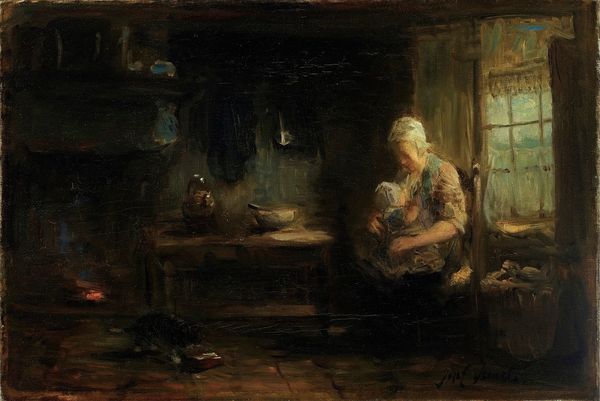
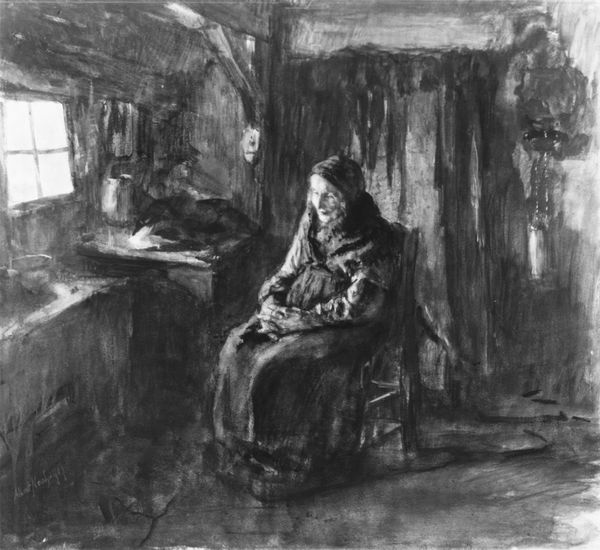
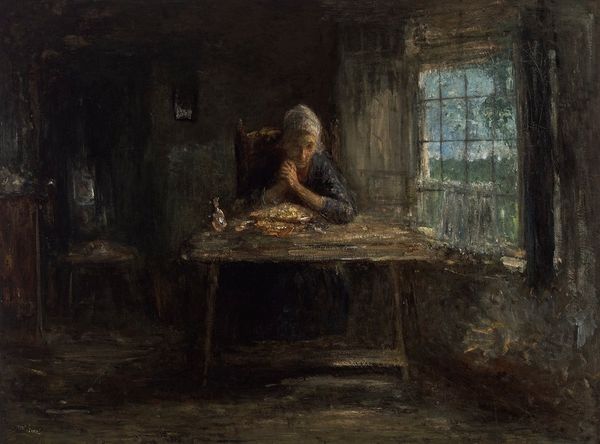
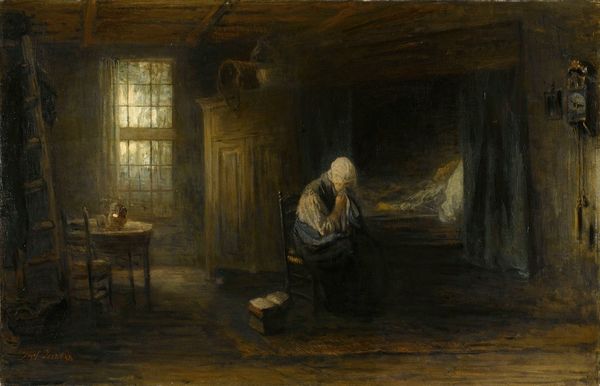
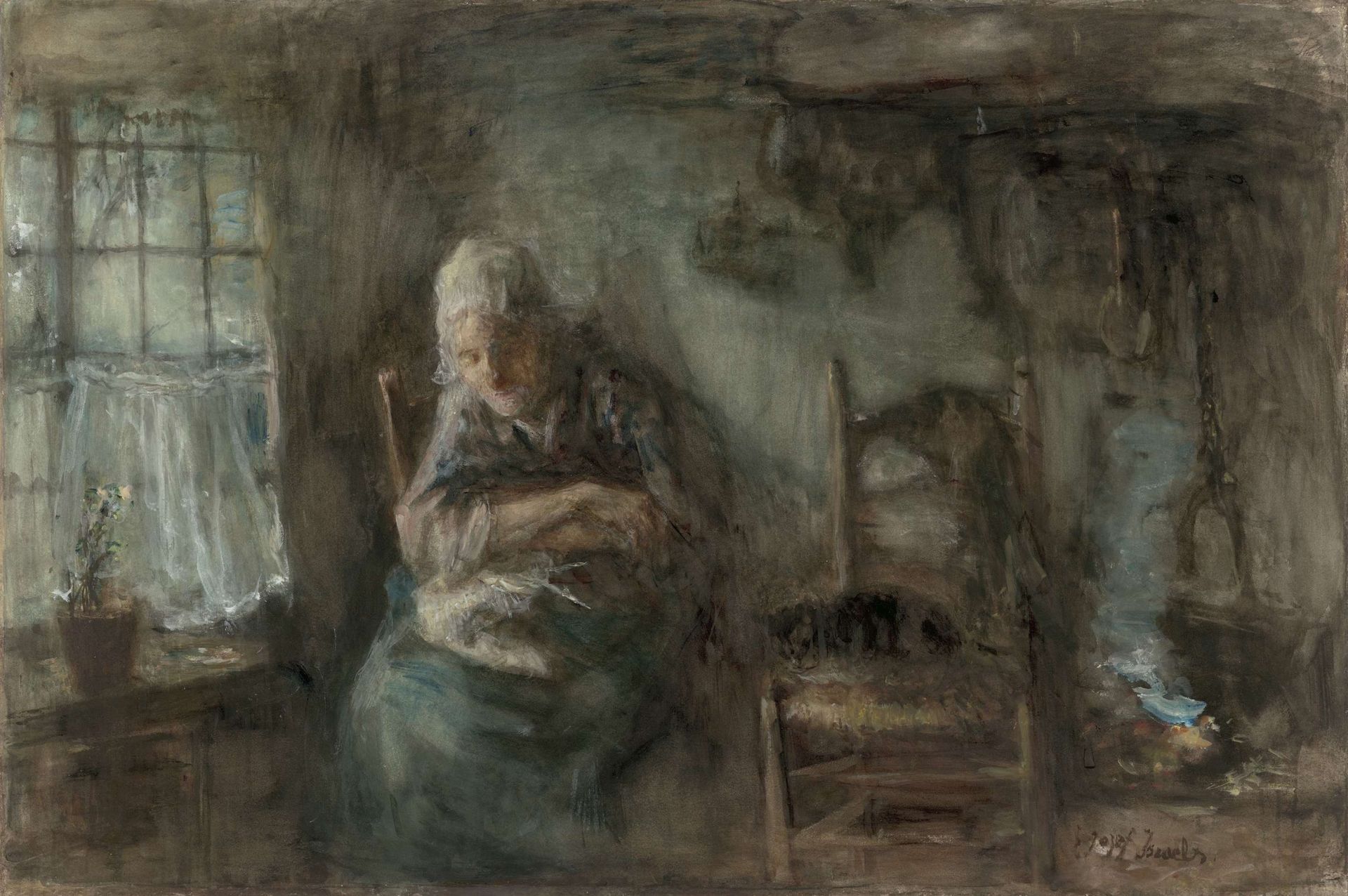
This is Jozef Israëls’s painting 'Old Fisherwoman,' housed here at the Rijksmuseum. A somber mood emanates from its muted palette and the diffuse light that softens every form. The composition is structured around a play of light and shadow, leading your eye from the bright window to the old woman, hunched over her work. Israëls masterfully uses the materiality of paint to evoke a sense of atmosphere and emotion. His loose brushwork and the limited tonal range create a sense of enclosure, mirroring the woman's isolated existence. It is a powerful statement about the human condition, viewed through the lens of formal elements, where the artist employs darkness and light, not just to depict, but to express profound empathy. Notice how the overall composition destabilizes traditional portraiture. Instead of focusing on individual details, Israëls blurs the lines, inviting the viewer to contemplate broader themes of aging, poverty, and resilience. This painting serves not merely as a depiction, but as a mirror reflecting our shared humanity.

Artwork details
- Medium
- oil-paint, charcoal
- Dimensions
- height 594 mm, width 895 mm
- Location
- Rijksmuseum
- Copyright
- Rijks Museum: Open Domain
Tags
Comments
Share your thoughts
About this artwork
This is Jozef Israëls’s painting 'Old Fisherwoman,' housed here at the Rijksmuseum. A somber mood emanates from its muted palette and the diffuse light that softens every form. The composition is structured around a play of light and shadow, leading your eye from the bright window to the old woman, hunched over her work. Israëls masterfully uses the materiality of paint to evoke a sense of atmosphere and emotion. His loose brushwork and the limited tonal range create a sense of enclosure, mirroring the woman's isolated existence. It is a powerful statement about the human condition, viewed through the lens of formal elements, where the artist employs darkness and light, not just to depict, but to express profound empathy. Notice how the overall composition destabilizes traditional portraiture. Instead of focusing on individual details, Israëls blurs the lines, inviting the viewer to contemplate broader themes of aging, poverty, and resilience. This painting serves not merely as a depiction, but as a mirror reflecting our shared humanity.
Comments
Share your thoughts