About this artwork
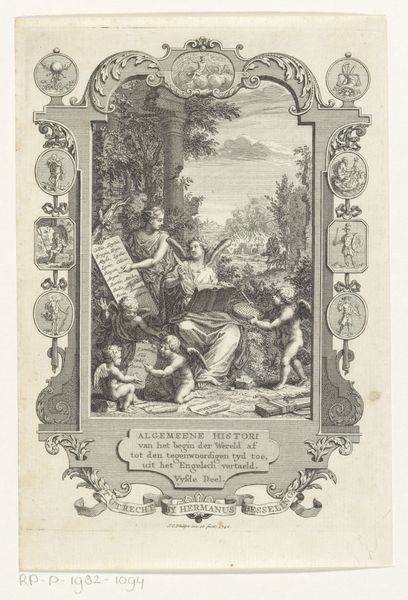
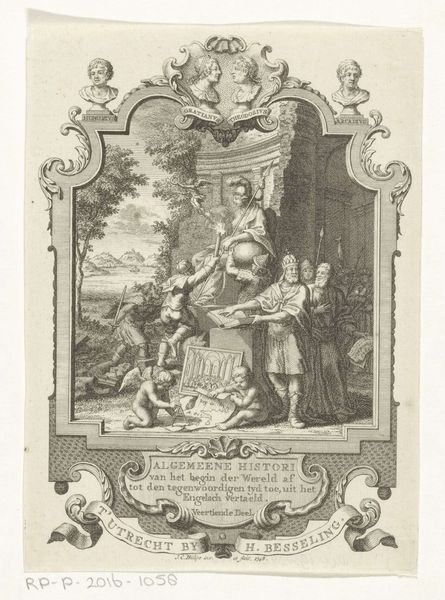
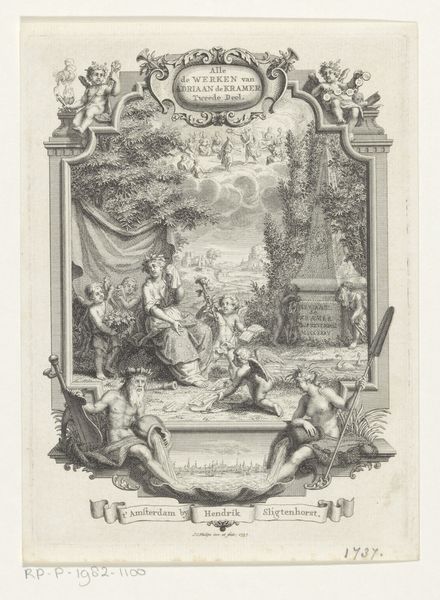
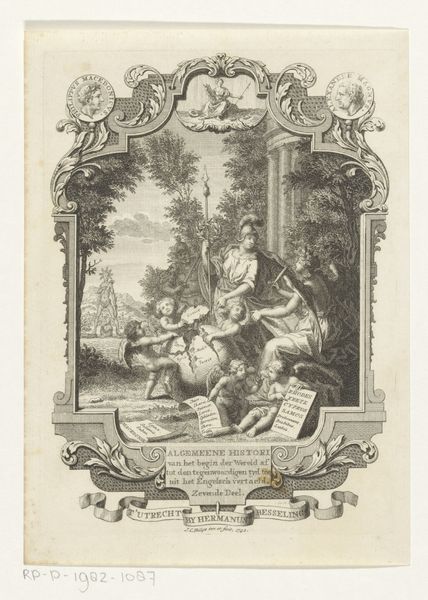
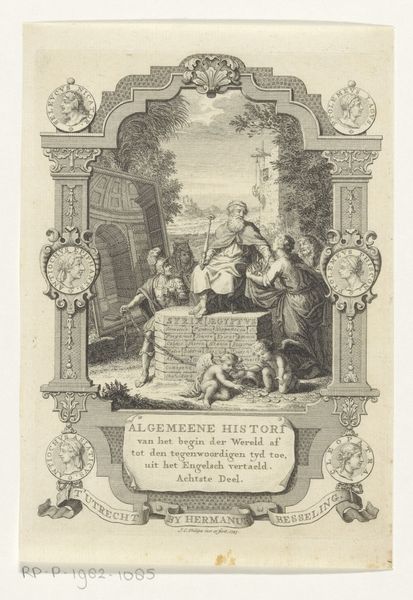
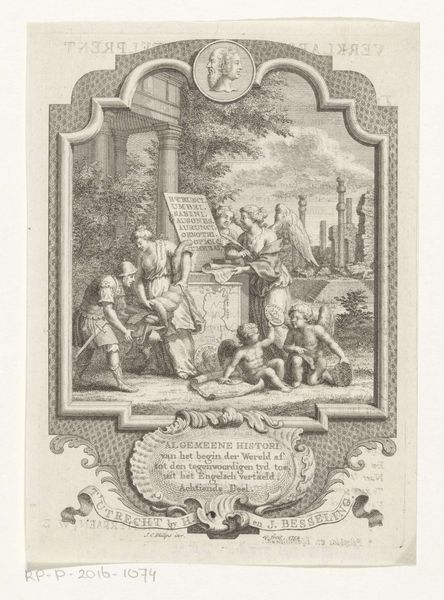
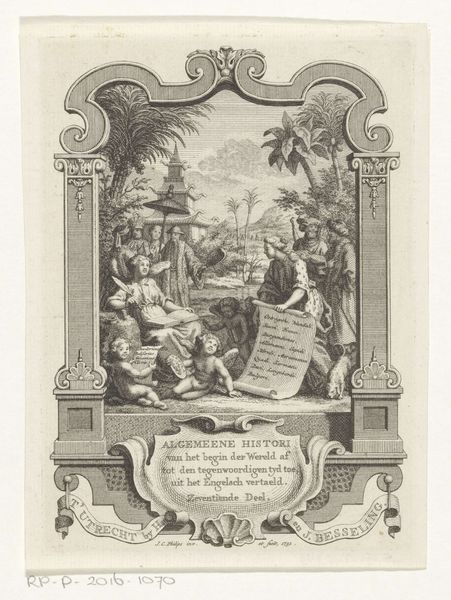
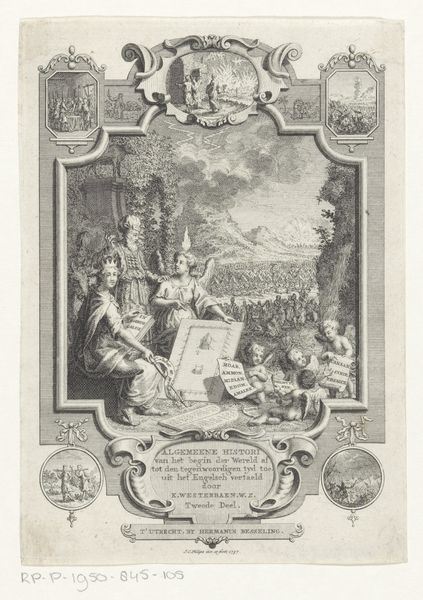
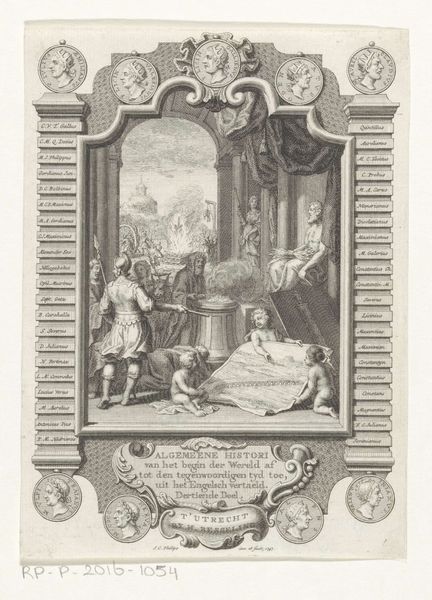
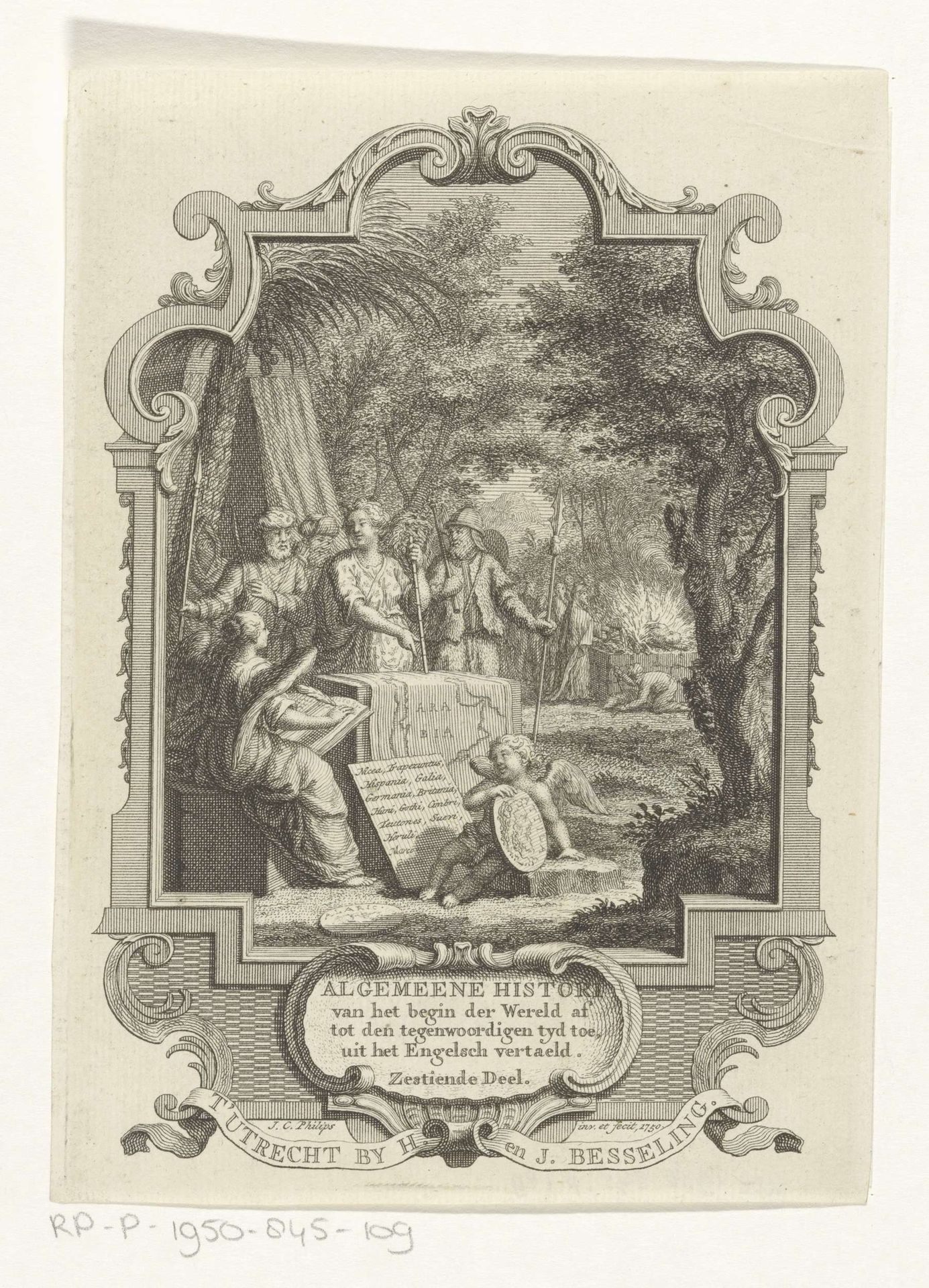
Jan Caspar Philips made this allegorical etching of the Arabian peninsula in the 18th century. The method of etching, using acid to bite lines into a metal plate, allowed for detailed and reproducible images, perfect for mass distribution in books. The print's fine lines and tonal range reveal the artist's skilled manipulation of the etching process, a technique that demands careful planning and execution. These prints were produced in workshops, involving labor specialization, and contributing to a growing print culture fueled by the expansion of publishing. The layers of labor and industrial processes required for such prints is removed from the final image we consume. By understanding the material and production process of this print, we can move beyond its surface appearance, connecting it to broader issues of labor, trade, and knowledge dissemination in the 18th century.
Cartouche met allegorie op geschiedenis van Arabisch schiereiland
1750

Jan Caspar Philips
1700 - 1775Location
RijksmuseumArtwork details
- Medium
- print, engraving
- Dimensions
- height 169 mm, width 120 mm
- Location
- Rijksmuseum
- Copyright
- Rijks Museum: Open Domain
Tags
Comments
Share your thoughts
About this artwork
Jan Caspar Philips made this allegorical etching of the Arabian peninsula in the 18th century. The method of etching, using acid to bite lines into a metal plate, allowed for detailed and reproducible images, perfect for mass distribution in books. The print's fine lines and tonal range reveal the artist's skilled manipulation of the etching process, a technique that demands careful planning and execution. These prints were produced in workshops, involving labor specialization, and contributing to a growing print culture fueled by the expansion of publishing. The layers of labor and industrial processes required for such prints is removed from the final image we consume. By understanding the material and production process of this print, we can move beyond its surface appearance, connecting it to broader issues of labor, trade, and knowledge dissemination in the 18th century.
Comments
Share your thoughts