drawing, print, etching, engraving
#
drawing
#
neoclacissism
# print
#
etching
#
engraving
Dimensions: 180 mm (height) x 103 mm (width) (billedmaal)
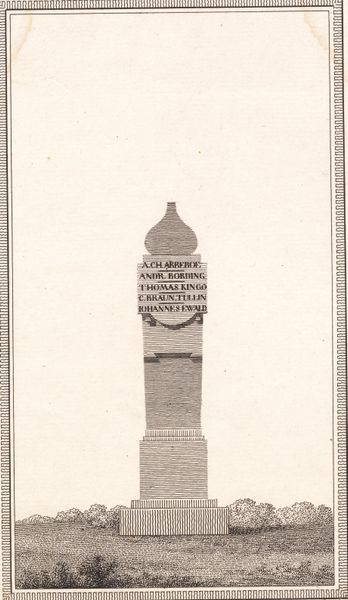
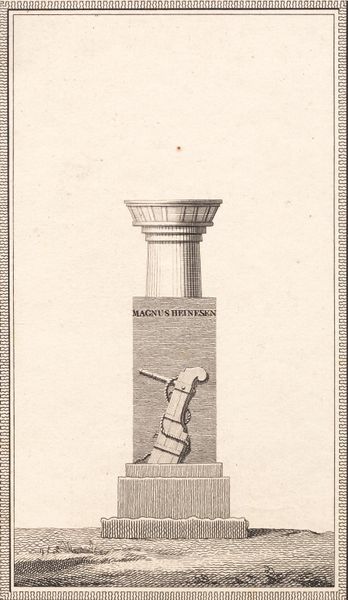
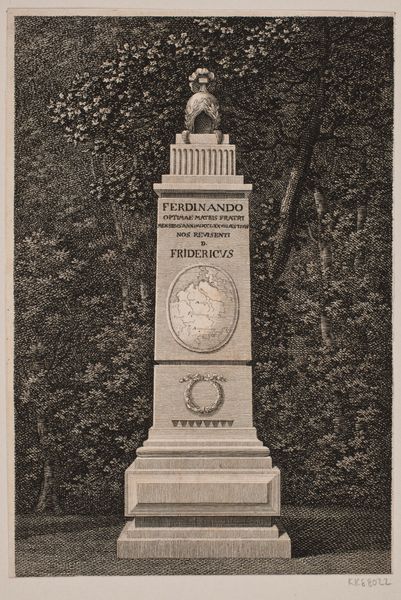
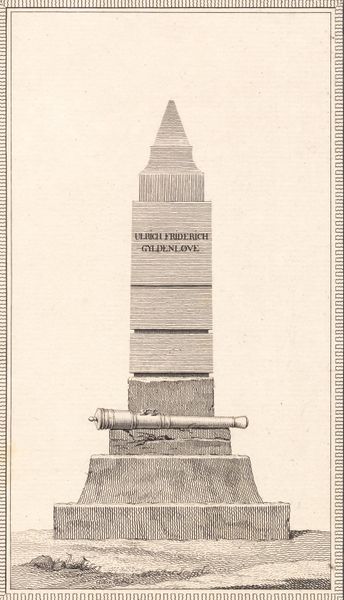
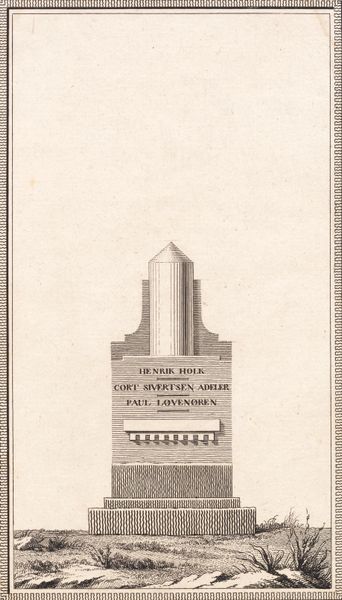
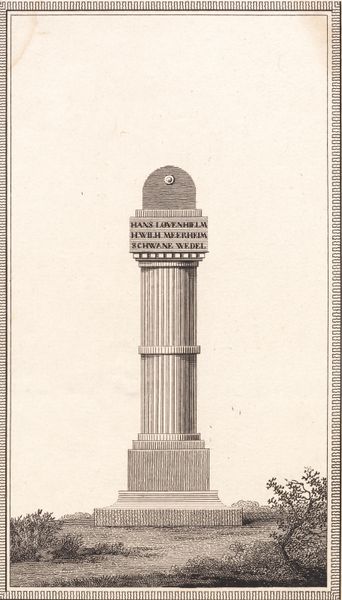
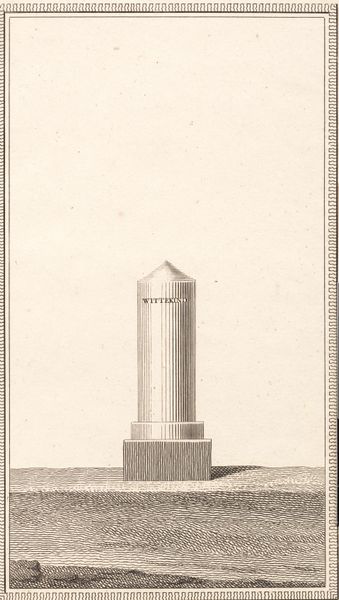
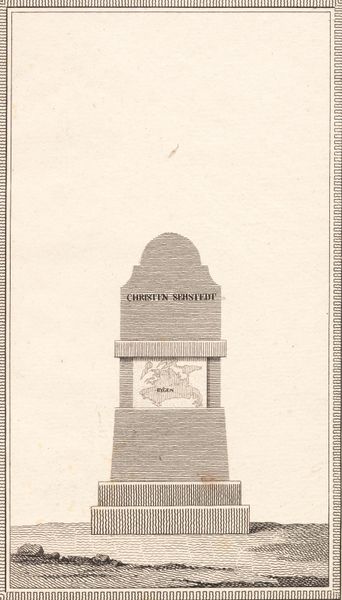
Curator: Here we have J.F. Clemens' "Benedict," a print combining etching and engraving, dating from between 1779 and 1781. It’s currently held at the SMK, Statens Museum for Kunst. Editor: My first impression is of rigid monumentality; it's so deliberately structured. A series of clear, defined horizontal bands ascending to that rather severe helmet at the very top. Curator: Indeed. The artist’s adherence to neoclassical ideals is evident in this structured composition. The emphasis on clarity and order elevates it beyond mere representation, striving for a Platonic ideal of form. Consider the stark lines, the geometric purity. Editor: What interests me is the means of its production, layering the labor of etching and engraving, repetitive actions to achieve the effect. How did Clemens actually realize the detail with such control of each medium in a print meant to spread across society? What sort of specialized workshop facilitated such production? Curator: Excellent point. But doesn't the inscription—"Benedict Svendestrids Son/Den Broderlige Kierligheds/Adle Monster"—immediately signal that Clemens intended the memorial’s symbolic weight to carry across all segments of society. Its formal balance speaks directly to Neoclassical principles, surely, evoking reason and the grand narratives of heroism. The inscription is literally built into the memorial itself. Editor: Yes, and how available and in what ways would Clemens circulate the message of this costly and layered object to the targeted communities. That the memorial’s design incorporates this written eulogy into its material being is itself thought-provoking. How effectively did Clemens negotiate his labor and its ultimate valuation to honor Benedict? Curator: Considering the clarity of the line work, the way light and shadow define the monument’s form, do you perceive anything about how it presents historical awareness to its original intended viewers? Editor: I think the act of layering both the engraving and etching and also distributing it makes for its symbolic success in reaching and reminding communities tied to Benedict, beyond Clemens. Thank you for allowing me to look at this commemorative marker from my perspective. Curator: And thank you for revealing these vital connections between medium, audience, and memory. An alternative reading only heightens Clemens’ artistic success here.
Comments
No comments
Be the first to comment and join the conversation on the ultimate creative platform.
 Collect
 React
React Comment
More like this