About this artwork
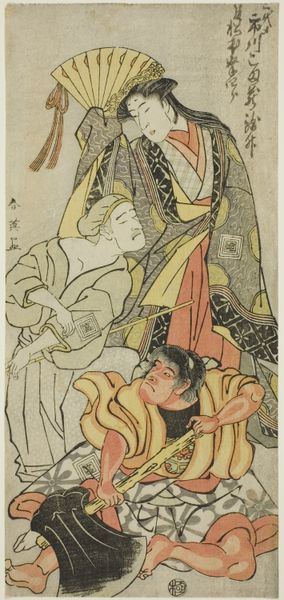
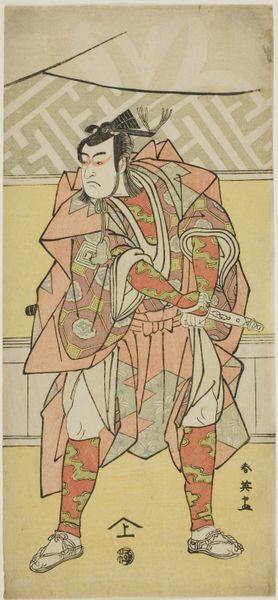
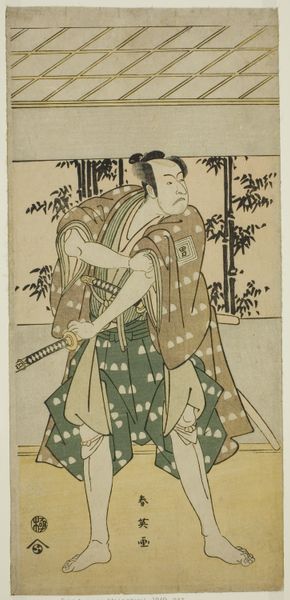
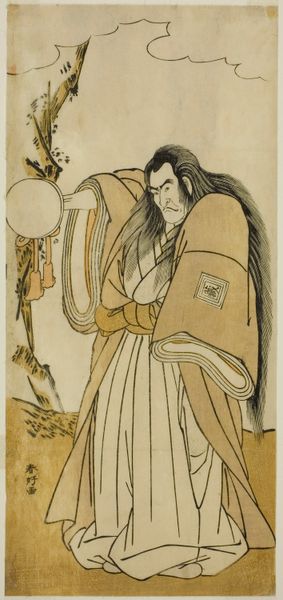
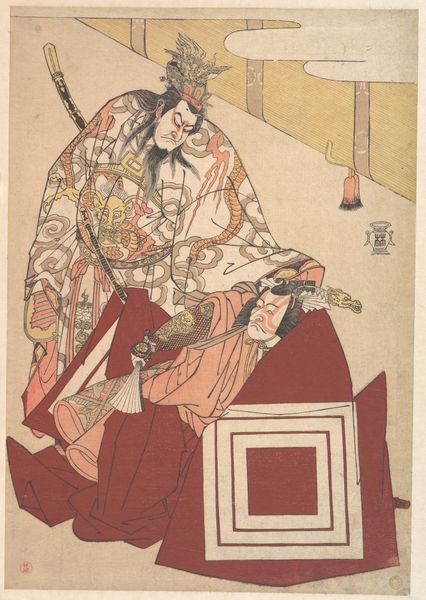
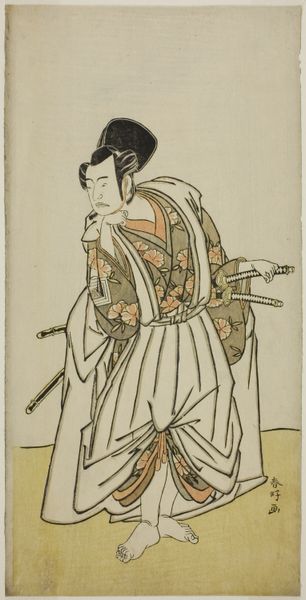
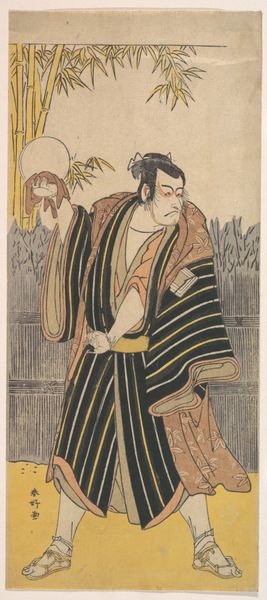
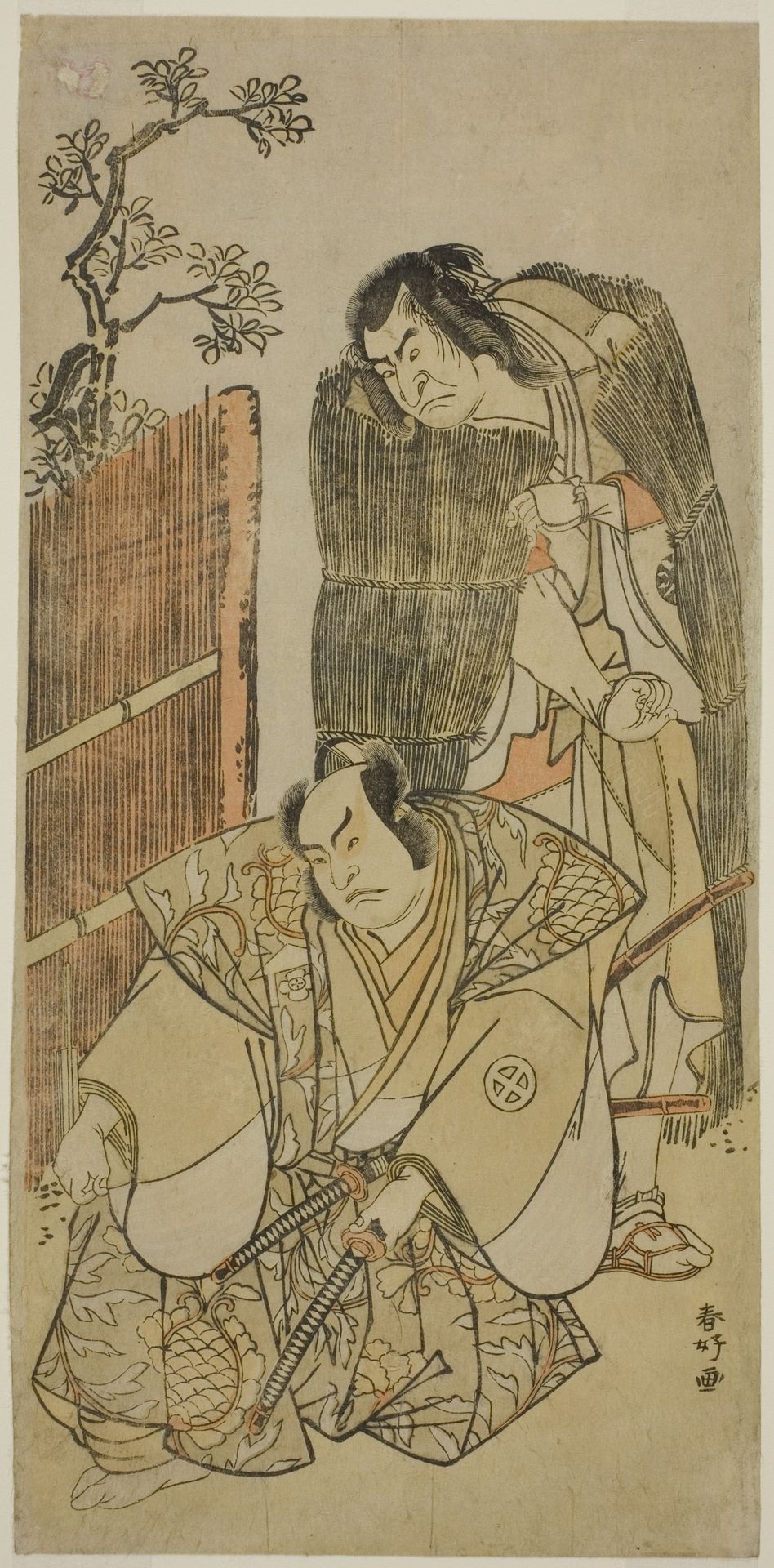
Katsukawa Shunko made this woodblock print in 1783 depicting actors in a Kabuki play, a popular form of Japanese theater. Kabuki emerged in the Edo period and became a major form of entertainment in urban centers. The focus on actors, rather than narrative, suggests the cult of celebrity that was emerging around Kabuki performers in the 18th century. The exaggerated expressions and poses, along with the costumes, are visual codes which convey emotions and character types to the audience. This print would have served as publicity for the play, as well as a collectible item for fans. As an art historian, I would want to research the Ichimura Theater and Kabuki culture in 18th-century Japan to fully understand the social context of this print. We might look to theater programs, playbills, and other popular ephemera to more fully understand the ways in which the theater intersected with Japanese society.
The Actors Nakamura Nakazo I as Kagekiyo Dressed as a Beggar (right), and Otani Hiroji III as Onio Shinzaemon (left), in the Play Kotobuki Banzei Soga, Performed at the Ichimura Theater in the Third Month, 1783
c. 1783


Artwork details
- Medium
- Dimensions
- 31 × 15 cm (12 3/16 × 5 7/8 in.)
- Location
- The Art Institute of Chicago
- Copyright
- Public Domain
Tags
Comments
Share your thoughts
About this artwork
Katsukawa Shunko made this woodblock print in 1783 depicting actors in a Kabuki play, a popular form of Japanese theater. Kabuki emerged in the Edo period and became a major form of entertainment in urban centers. The focus on actors, rather than narrative, suggests the cult of celebrity that was emerging around Kabuki performers in the 18th century. The exaggerated expressions and poses, along with the costumes, are visual codes which convey emotions and character types to the audience. This print would have served as publicity for the play, as well as a collectible item for fans. As an art historian, I would want to research the Ichimura Theater and Kabuki culture in 18th-century Japan to fully understand the social context of this print. We might look to theater programs, playbills, and other popular ephemera to more fully understand the ways in which the theater intersected with Japanese society.
Comments
Share your thoughts