About this artwork
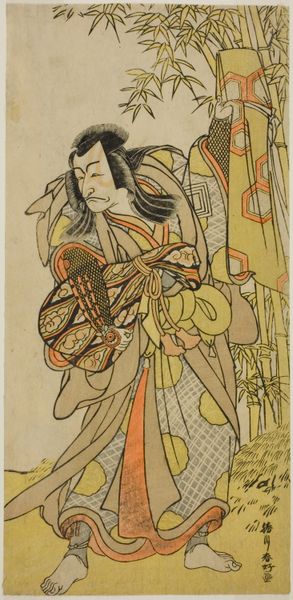
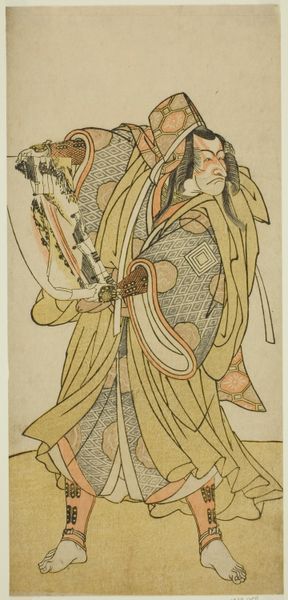
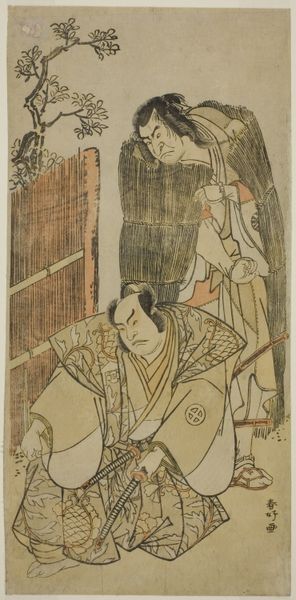
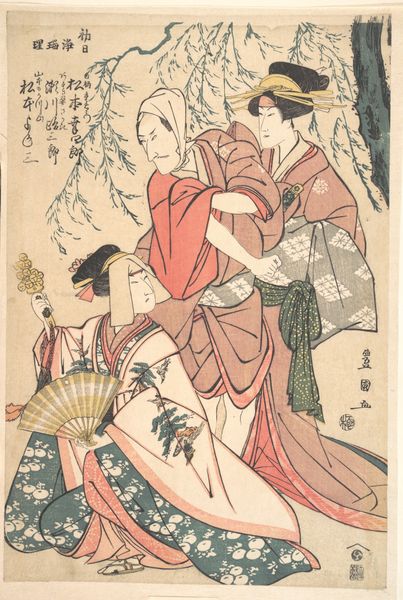
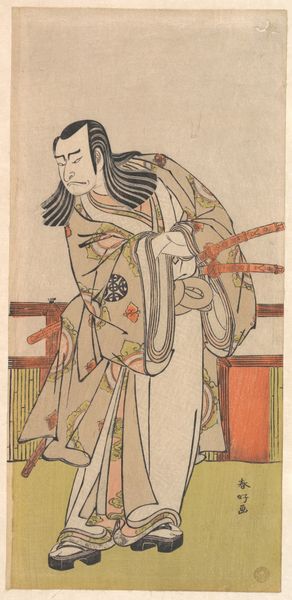
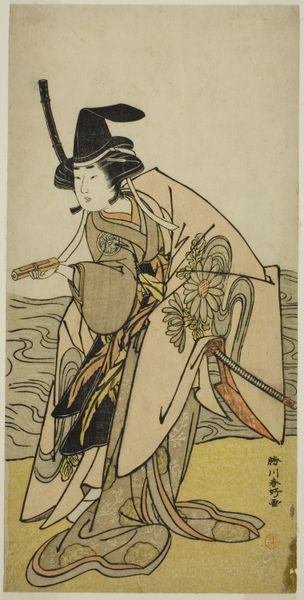
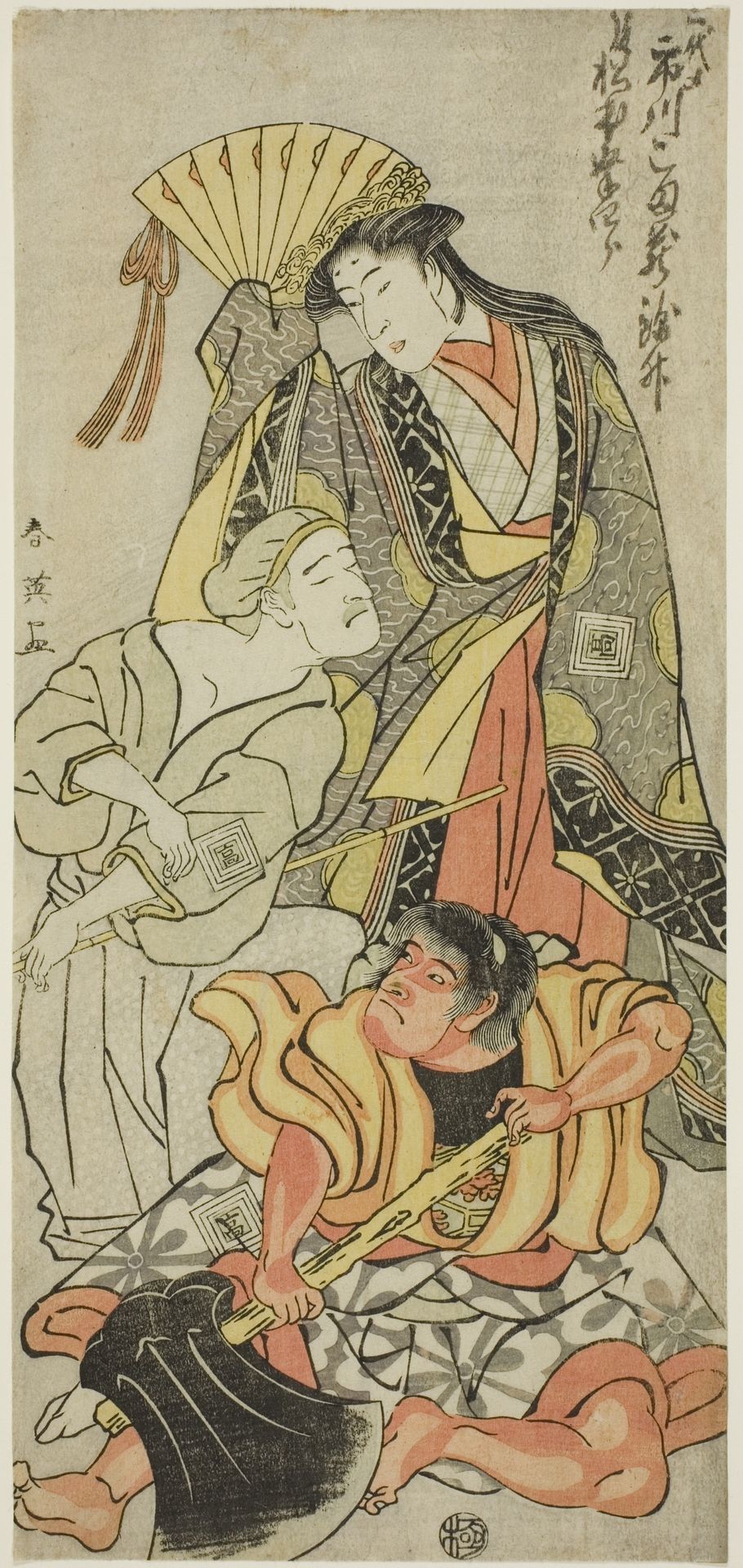
Katsukawa Shun'ei created this woodblock print in 1791, depicting the actor Ichikawa Komazo III in a play performed at the Kawarazaki Theater in Edo, now Tokyo. The print gives us insight into the cultural importance of Kabuki theatre during the Edo period. In this single sheet, Shun'ei represents Ichikawa Komazo III in three distinct roles from the play. The layering of characters in one print reflects the dynamic and transformative nature of Kabuki theatre. Kabuki allowed for commentary on contemporary social issues, class dynamics, and political events. Woodblock prints like this one served as publicity for the play and celebrated the actors. The popularity of actors could influence fashion and trends in the city. By studying playbills, theatre records, and the cultural context of Edo-period Japan, we can better understand the rich social and artistic fabric that informed this print and the performance it represents. The image gives us insight into the relationship between art, entertainment, and society.
The Actor Ichikawa Komazo III in Three Roles: Nyosan no Miya (The Third Princess), Ukare Zato (A Blind Street Performer), and Sakata no Kaido-maru, in the Play Zoho Natsu Matsuri (Expanded Summer Festival), Performed at the Kawarazaki Theater from the First Day of the Eighth Month, 1791
c. 1791


Artwork details
- Medium
- print, woodblock-print
- Dimensions
- 30.3 × 14 cm (11 15/16 × 5 1/2 in.)
- Location
- The Art Institute of Chicago
- Copyright
- Public Domain
Tags
portrait
narrative-art
asian-art
ukiyo-e
woodblock-print
Comments
Be the first to share your thoughts about this work.
About this artwork
Katsukawa Shun'ei created this woodblock print in 1791, depicting the actor Ichikawa Komazo III in a play performed at the Kawarazaki Theater in Edo, now Tokyo. The print gives us insight into the cultural importance of Kabuki theatre during the Edo period. In this single sheet, Shun'ei represents Ichikawa Komazo III in three distinct roles from the play. The layering of characters in one print reflects the dynamic and transformative nature of Kabuki theatre. Kabuki allowed for commentary on contemporary social issues, class dynamics, and political events. Woodblock prints like this one served as publicity for the play and celebrated the actors. The popularity of actors could influence fashion and trends in the city. By studying playbills, theatre records, and the cultural context of Edo-period Japan, we can better understand the rich social and artistic fabric that informed this print and the performance it represents. The image gives us insight into the relationship between art, entertainment, and society.
Comments
Be the first to share your thoughts about this work.