About this artwork
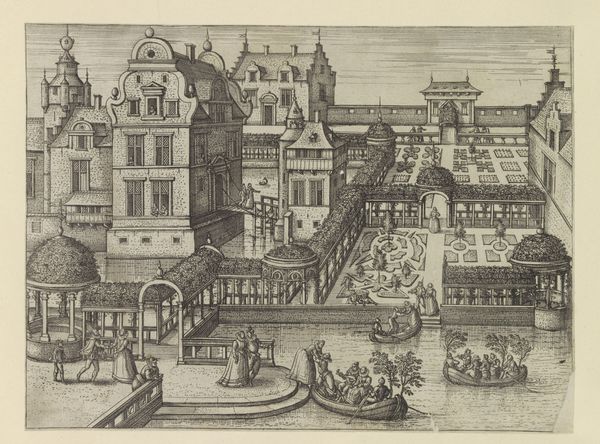
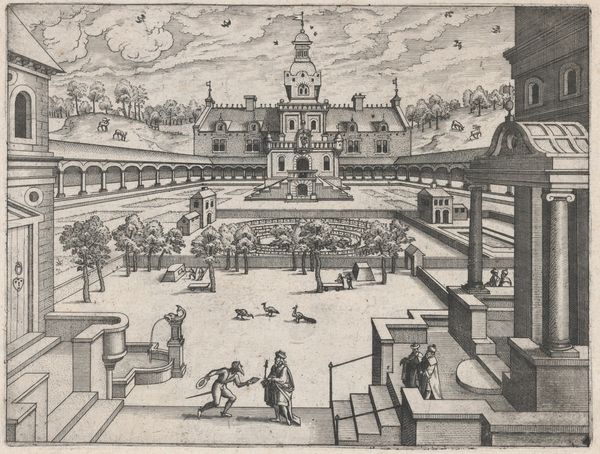
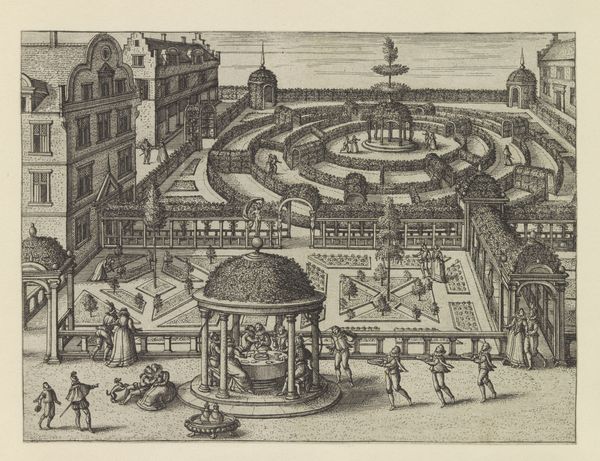
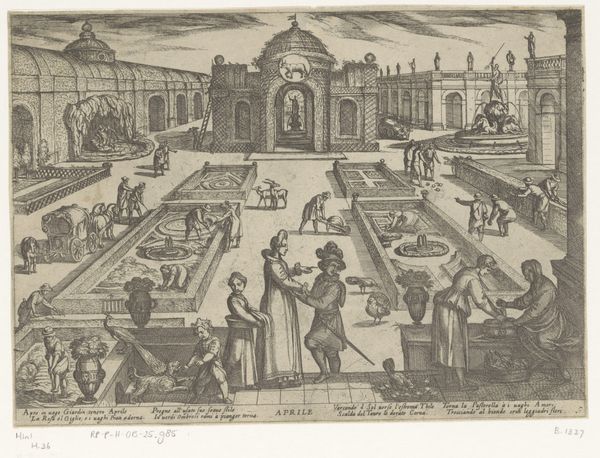
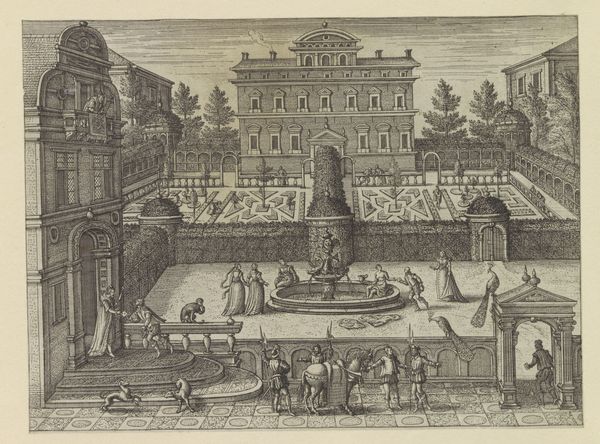
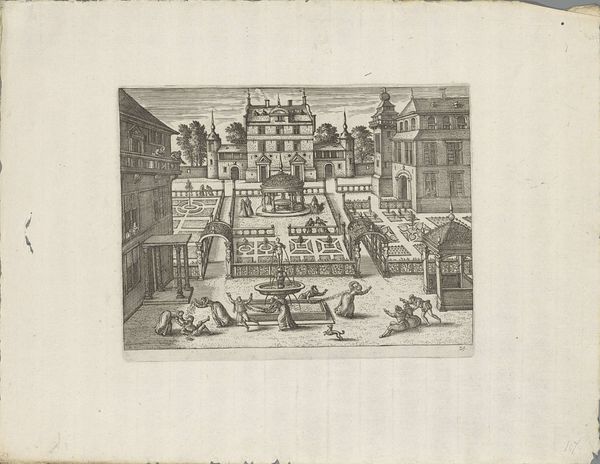
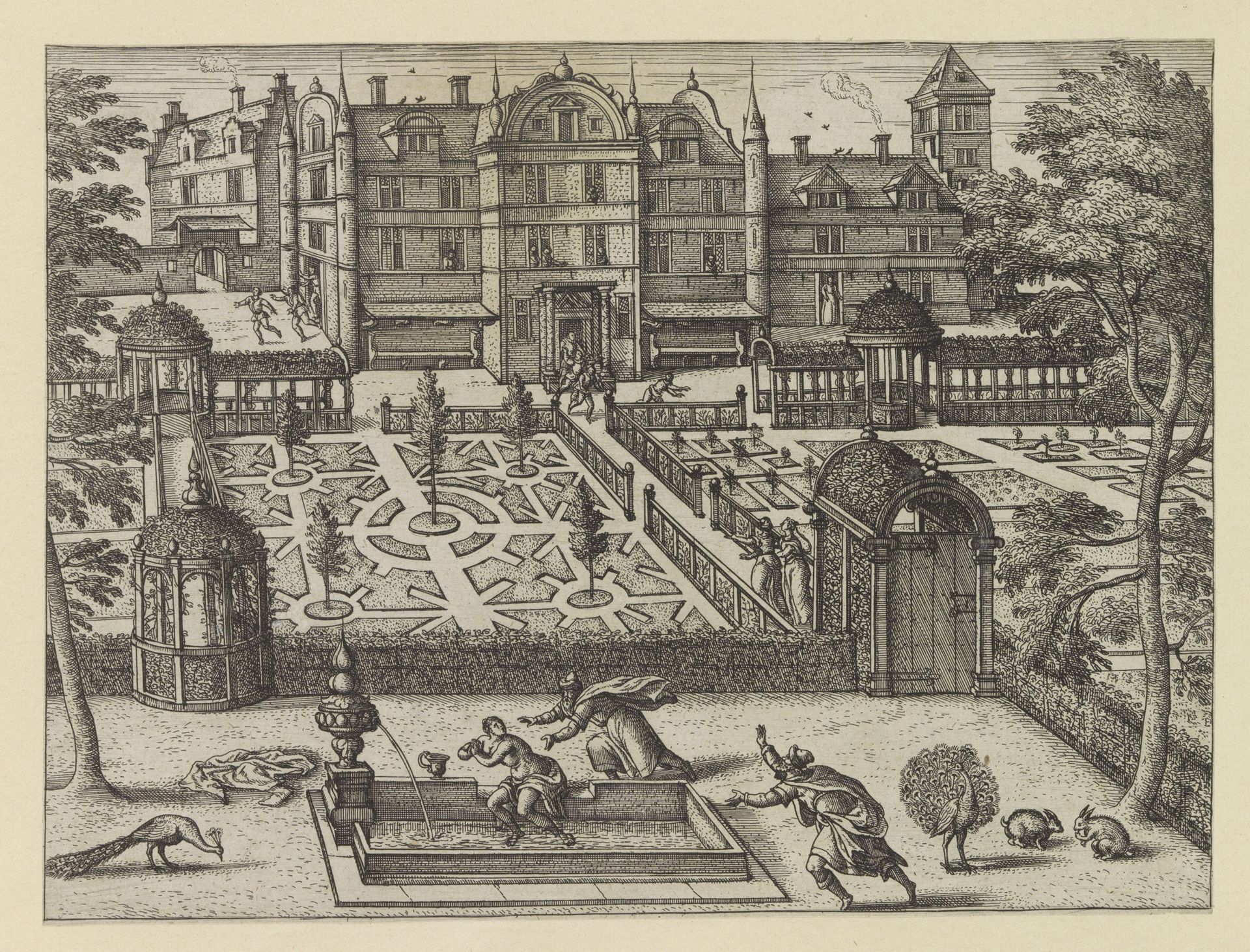
Pieter van der Borcht's "Hoftuin met Susanna in bad," is a small yet intricate engraving. The formal garden is structured around strict geometric patterns, which immediately evokes a sense of imposed order and control. The composition, viewed from a slightly elevated perspective, reveals a network of paths, meticulously shaped flowerbeds, and architectural elements that divide and organize space. This geometric division reflects the period's intellectual obsession with structuring knowledge and moral narratives through spatial arrangements. The choice of engraving as a medium enhances this sense of precision, with fine lines and hatching creating a detailed, almost taxonomic depiction. The narrative of Susanna being spied upon while bathing introduces a subversive element. This juxtaposition—the ordered garden and the illicit gaze—destabilizes the presumed harmony. The garden, therefore, becomes a stage where morality and transgression intersect, challenging viewers to reconsider the boundaries of public and private, permissible and forbidden.
Hoftuin met Susanna in bad
c. 1587 - 1601

Pieter van der (I) Borcht
1545 - 1608Location
RijksmuseumArtwork details
- Medium
- etching, engraving
- Dimensions
- height 182 mm, width 245 mm
- Location
- Rijksmuseum
- Copyright
- Rijks Museum: Open Domain
Tags
Comments
Share your thoughts
About this artwork
Pieter van der Borcht's "Hoftuin met Susanna in bad," is a small yet intricate engraving. The formal garden is structured around strict geometric patterns, which immediately evokes a sense of imposed order and control. The composition, viewed from a slightly elevated perspective, reveals a network of paths, meticulously shaped flowerbeds, and architectural elements that divide and organize space. This geometric division reflects the period's intellectual obsession with structuring knowledge and moral narratives through spatial arrangements. The choice of engraving as a medium enhances this sense of precision, with fine lines and hatching creating a detailed, almost taxonomic depiction. The narrative of Susanna being spied upon while bathing introduces a subversive element. This juxtaposition—the ordered garden and the illicit gaze—destabilizes the presumed harmony. The garden, therefore, becomes a stage where morality and transgression intersect, challenging viewers to reconsider the boundaries of public and private, permissible and forbidden.
Comments
Share your thoughts