drawing, pencil
#
portrait
#
drawing
#
caricature
#
pencil drawing
#
pencil
#
portrait drawing
#
academic-art
Dimensions: height 150 mm, width 95 mm
Copyright: Rijks Museum: Open Domain
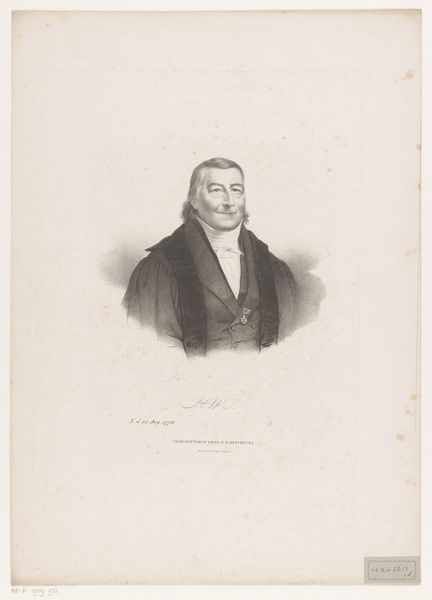
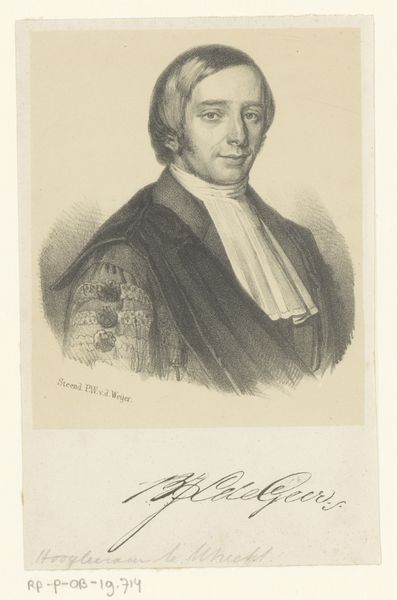
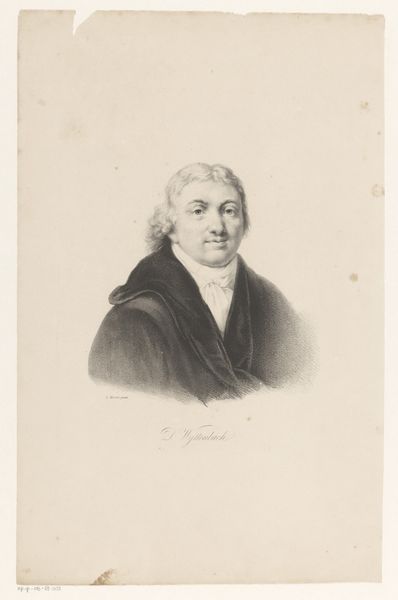
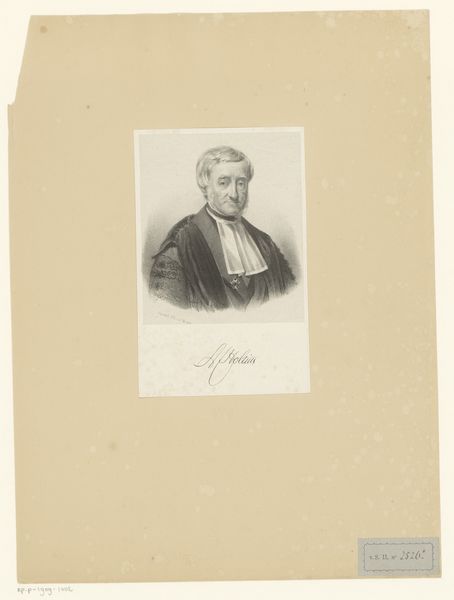
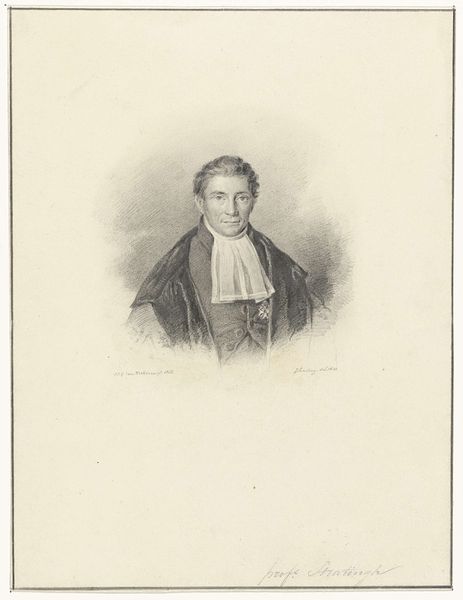
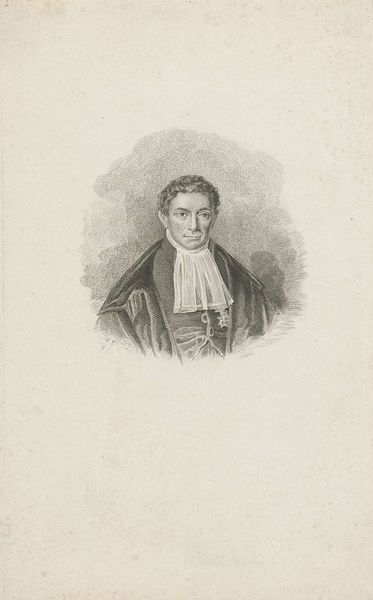
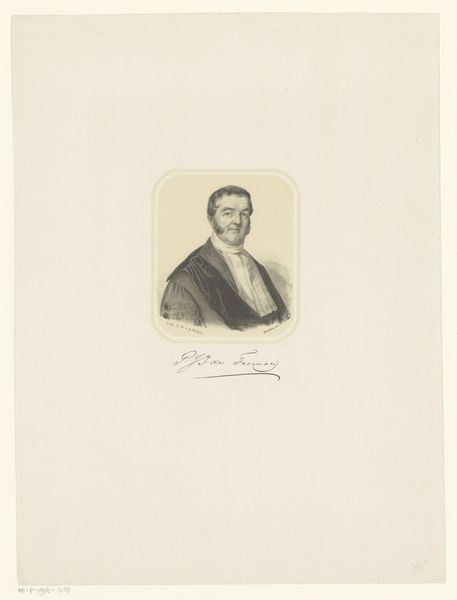
Curator: This is a drawing by Johan Heinrich Neuman, dating from after 1834, entitled "Portret van Petrus Johannes Isaacus de Frémery." It's a pencil drawing held here at the Rijksmuseum. What strikes you about it initially? Editor: There's a distinct somber quality. His slightly downturned gaze and the dark cloak... it hints at a weighty presence, almost a burdened demeanor. Curator: Indeed. The portrait's formal qualities speak to the subject's societal position. We can read his clothing, those crisp white details against the heavy cloak, as symbols of power. How might the context of the 1830s shape our understanding of such symbols? Editor: The symbols of power are layered here, aren’t they? Consider the rigid posture contrasted with the softened lines of the face – almost a humane counterpoint to officialdom. This era, post-Napoleonic wars, saw the rise of a new elite, many of whom craved validation, and often projected this through formal portraits. Curator: Exactly, so we must acknowledge that it's also a work produced within specific power dynamics, during a moment of political renegotiation, the sitter must have been invested in upholding those status symbols in this new socio-political era. Editor: Do you think the somewhat idealised face, slightly romanticized by the artistic skill, attempts to soften his image or present him as virtuous? There seems to be a push and pull in this very carefully constructed persona. The symbols aren't stagnant, their interaction evolves in the narrative of power and representation. Curator: Absolutely, it shows the complicated dance individuals and social standing create for us. I see it as a rich reminder to interrogate the visual cues that tell stories about social structures. Editor: Well, I'm left contemplating the sitter's individual identity in relation to those grander narratives. Food for thought!
Comments
No comments
Be the first to comment and join the conversation on the ultimate creative platform.
 Collect
 React
React Comment
More like this