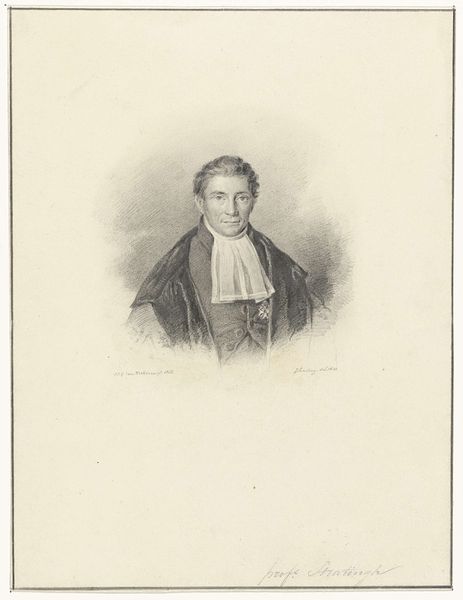
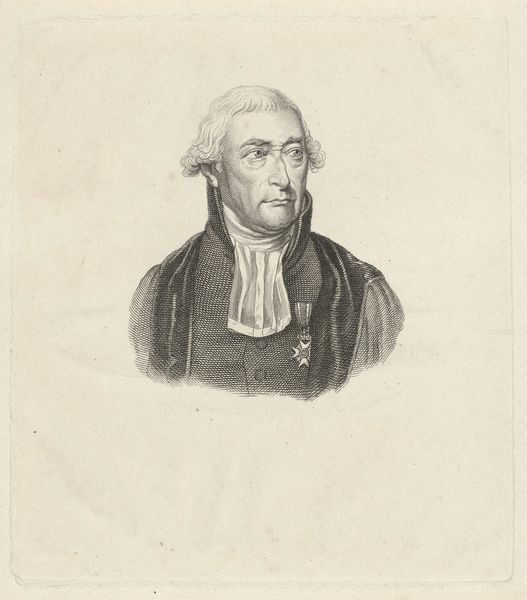
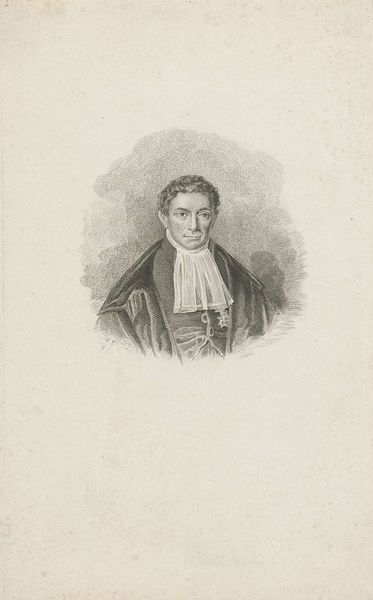
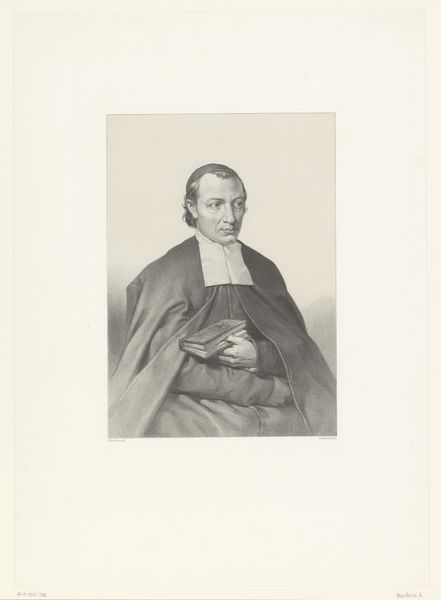
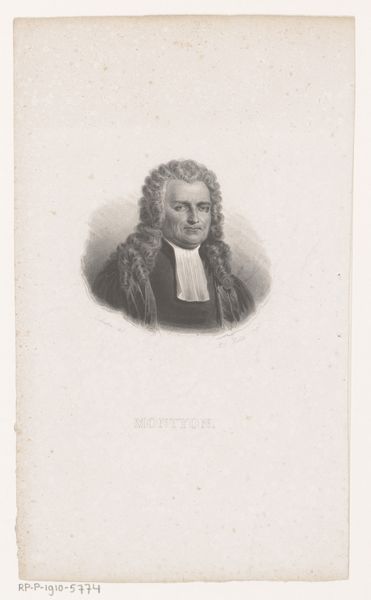
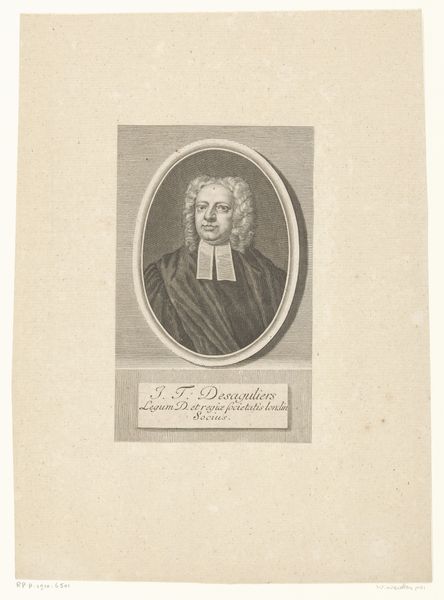
Portret van Barthold Jacob Lintelo de Geer van Jutphaas 1851
0:00
0:00

pieterwilhelmusvandeweijer
Rijksmuseum
drawing, pencil
#
portrait
#
pencil drawn
#
drawing
#
pencil sketch
#
old engraving style
#
pencil drawing
#
pencil
#
portrait drawing
#
academic-art
#
realism
Dimensions: height 150 mm, width 95 mm
Copyright: Rijks Museum: Open Domain
Editor: Here we have Pieter Wilhelmus van de Weijer’s 1851 pencil drawing, "Portret van Barthold Jacob Lintelo de Geer van Jutphaas," currently at the Rijksmuseum. It feels very formal, almost austere. What’s your take on this portrait? Curator: Indeed, on the surface, it appears to be a rather conventional depiction of 19th-century Dutch respectability. But, let’s delve a bit deeper, shall we? Think about the power dynamics inherent in portraiture of this era. Who was typically portrayed, and who was doing the portraying? This work memorializes a professor and legal scholar. But how does academic life, particularly in law, intersect with societal privilege? Editor: I see your point. It's not just a drawing; it's a representation of established authority. How would that relate to the activist lens, exactly? Curator: Van de Weijer, like many artists of his time, was participating in constructing visual narratives of power. His work is part of a broader system of representation that historically marginalized certain groups. By critically examining portraits like this one, we expose not only the sitter’s status but the social structures that afforded them such representation, implicitly inviting questions about class, access, and perhaps, even today's "cancel culture." What do you make of his expression? Editor: It seems rather neutral. Maybe even slightly…resigned? Curator: Precisely. Could that neutrality also signal something about the subject’s awareness of his position or, perhaps, a lack of critical self-reflection regarding that position? These are some thoughts raised by critical engagement. Editor: It gives me a lot to consider about how portraits from this era solidify those ideas. Thank you. Curator: My pleasure. I'm glad that seeing beyond the aesthetic and diving into its contextual implications provided additional meaning.
Comments
No comments
Be the first to comment and join the conversation on the ultimate creative platform.
 Collect
 React
React Comment
More like this