About this artwork
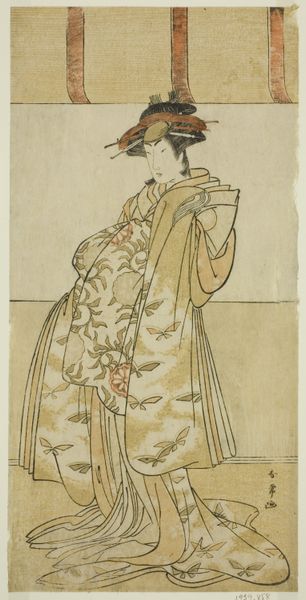
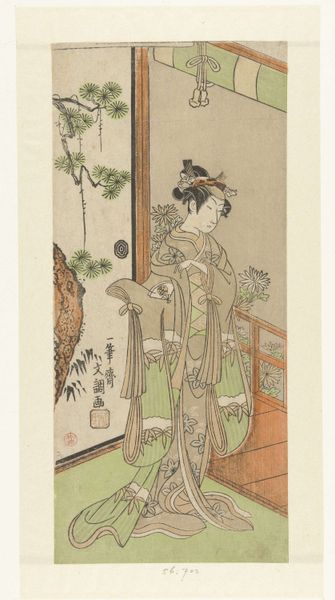
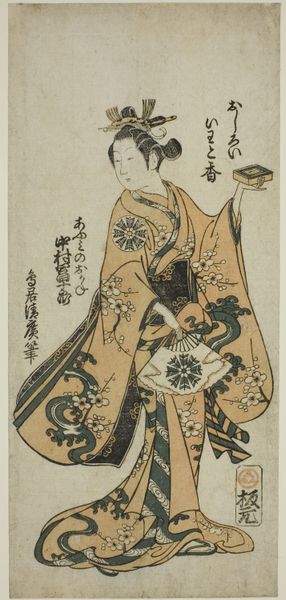
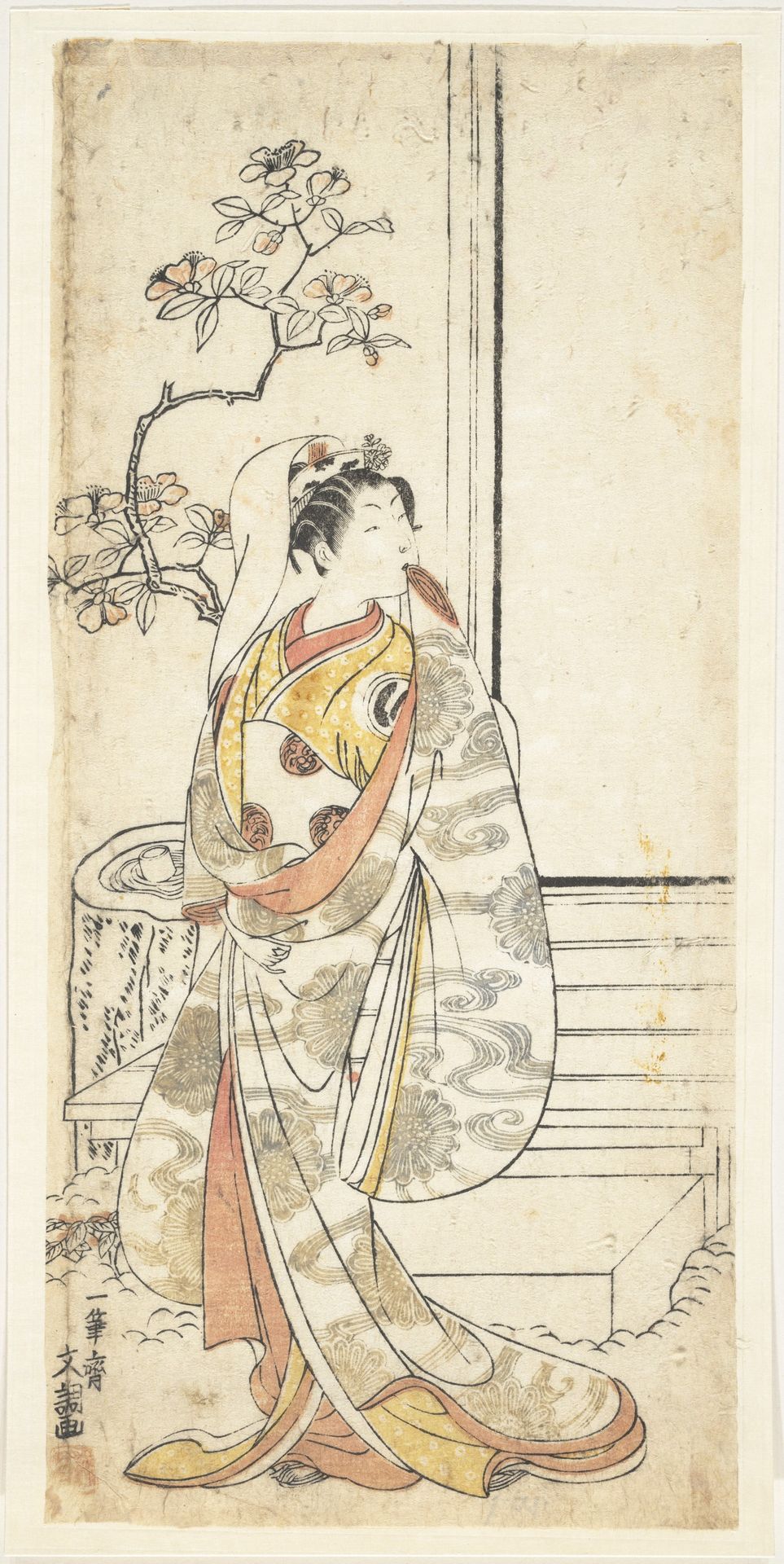
Ippitsusai Bunchō created this print of the actor Sawamura Sojuro I in an unidentified female role around 1770, using woodblock printing on paper. The composition is dominated by a full-length figure, set against a neutral background punctuated by architectural and floral elements. The delicate lines and subdued colors of the print create a serene yet somewhat theatrical atmosphere. Here, Bunchō masterfully plays with the semiotics of gender and identity. The actor, a male portraying a female role, challenges fixed notions of gender. The intricate patterns on the kimono, the carefully arranged hair, and the graceful pose are all signs that contribute to the construction of this ambiguous persona. The artist seems interested in deconstructing traditional representations of both masculinity and femininity. In doing so, Bunchō’s print invites viewers to question the cultural codes and performative aspects of gender, suggesting that identity is not fixed but fluid and theatrical.
The Actor Sawamura Sojuro I, 1689–1756 in an Unidentified Female Role
1723 - 1792

Ippitsusai Bunchō 一筆齊文調
1765 - 1792
The Metropolitan Museum of Art
Metropolitan Museum of Art, New York, NYArtwork details
- Medium
- Dimensions
- H. 11 1/2 in. (29.2 cm); W. 5 3/8 in. (13.7 cm)
- Location
- Metropolitan Museum of Art, New York, NY
- Copyright
- Public Domain
Tags
portrait
asian-art
ukiyo-e
Comments
Be the first to share your thoughts about this work.
About this artwork
Ippitsusai Bunchō created this print of the actor Sawamura Sojuro I in an unidentified female role around 1770, using woodblock printing on paper. The composition is dominated by a full-length figure, set against a neutral background punctuated by architectural and floral elements. The delicate lines and subdued colors of the print create a serene yet somewhat theatrical atmosphere. Here, Bunchō masterfully plays with the semiotics of gender and identity. The actor, a male portraying a female role, challenges fixed notions of gender. The intricate patterns on the kimono, the carefully arranged hair, and the graceful pose are all signs that contribute to the construction of this ambiguous persona. The artist seems interested in deconstructing traditional representations of both masculinity and femininity. In doing so, Bunchō’s print invites viewers to question the cultural codes and performative aspects of gender, suggesting that identity is not fixed but fluid and theatrical.
Comments
Be the first to share your thoughts about this work.