1780 - 1810
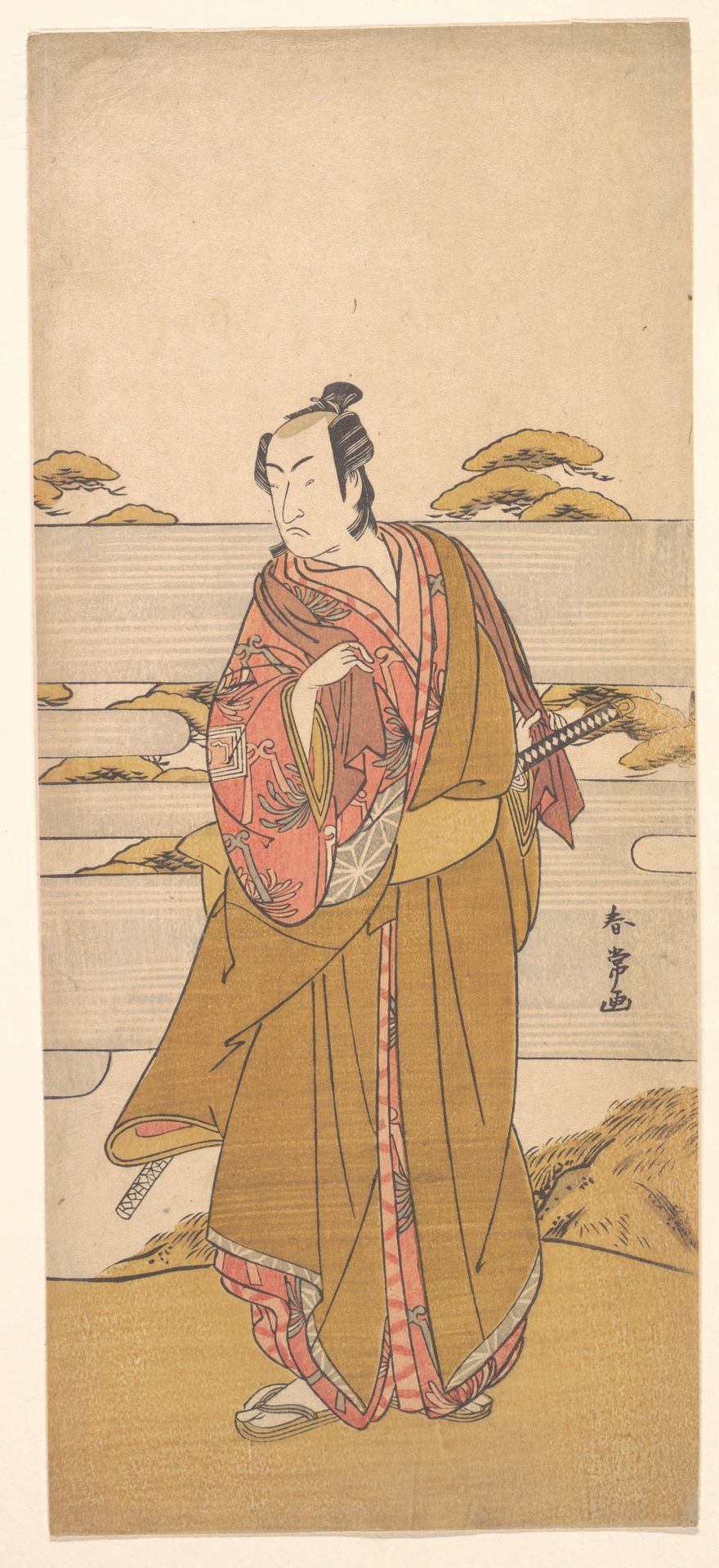
Ichikawa Monosuke II


Listen to curator's interpretation
Curatorial notes
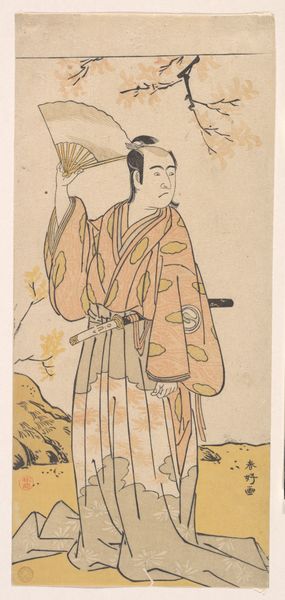
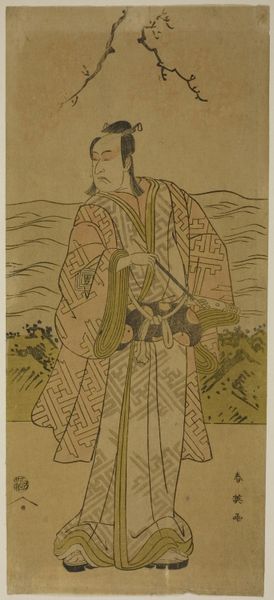
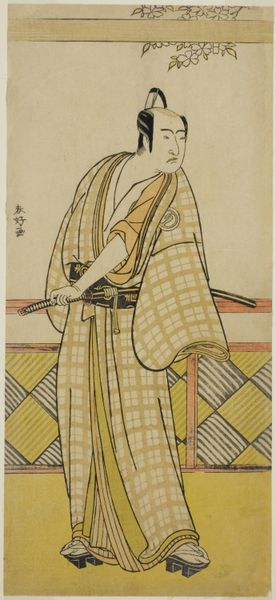
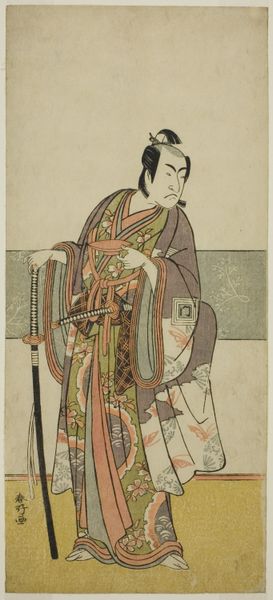
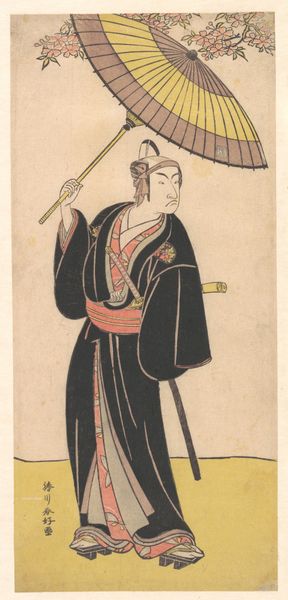
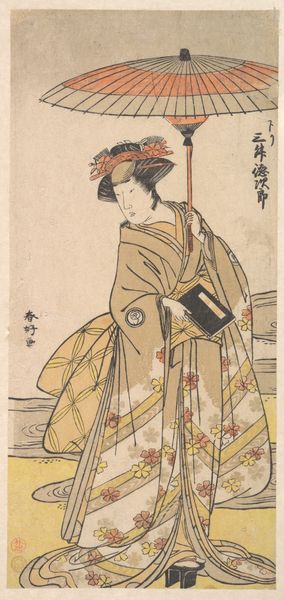
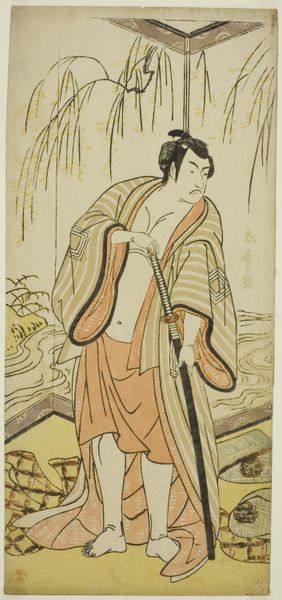
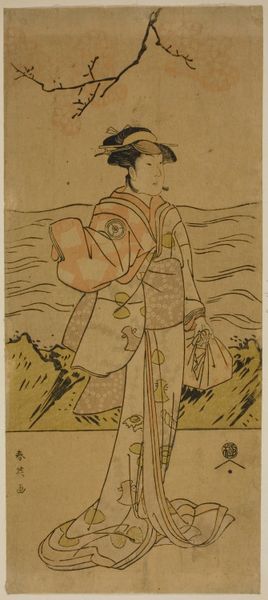
Editor: Here we have Katsukawa Shunshō's "Ichikawa Monosuke II", a woodcut print from the late 18th century. It depicts a figure on what appears to be a stage. I'm immediately struck by how the patterned robes contrast with the more minimalist landscape. What’s your perspective on this work? Curator: Well, immediately my attention is drawn to the labor embedded within this ukiyo-e print. Consider the materiality: the paper, the inks, the woodblocks painstakingly carved. And think of the collaboration required – the artist, the carver, the printer, each a skilled worker contributing to the final product. What does that suggest to you about art production in this period? Editor: It definitely challenges the idea of the lone genius. It sounds more like a collective effort, almost like a factory producing art! The quality of the print seems important then. Curator: Exactly! It points towards the commercial aspect of ukiyo-e. These prints were made for mass consumption. This image represents a Kabuki actor, therefore what about his audience, and his status among society. It highlights a system where art isn't just about aesthetics but also about the circulation of images and the representation of social roles. Consider too the colors - were these expensive dyes? Were they imported? That tells us a lot about trade routes and economic exchange. Editor: So, even a simple print like this speaks volumes about the economy and the societal structure of Edo-period Japan! I initially just saw the surface, but you've illuminated its deep roots. Curator: Indeed! The material reality of art-making always has something to say. Approaching art from a perspective rooted in the modes of production, offers invaluable insights into the societal landscape in which this image existed.