1764 - 1811
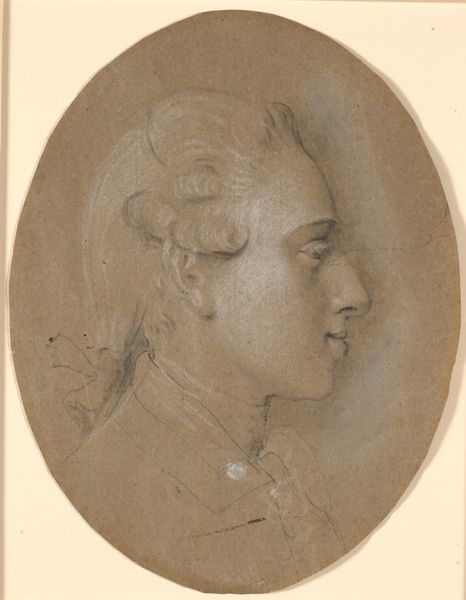
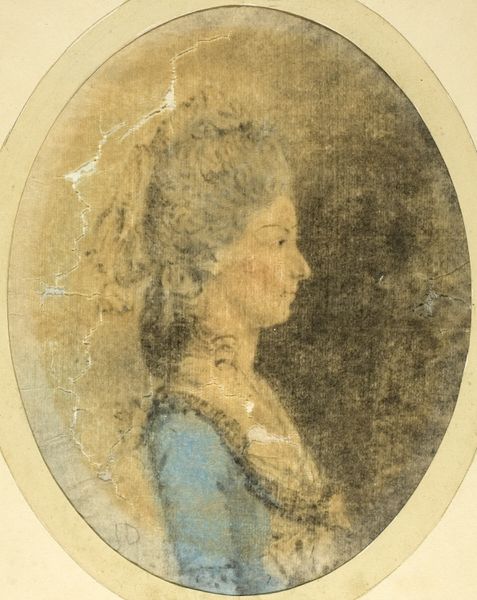
Portret van een vrouw

Listen to curator's interpretation
Curatorial notes
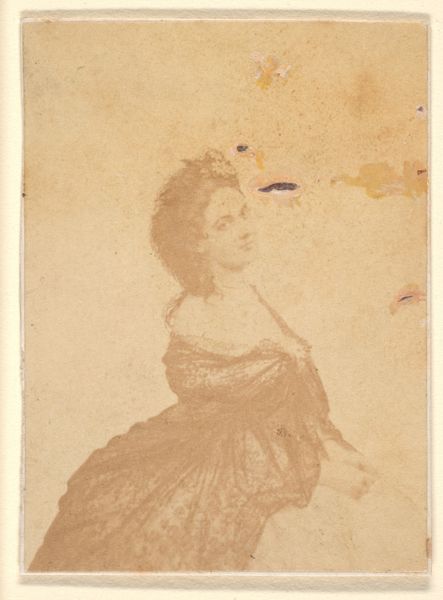
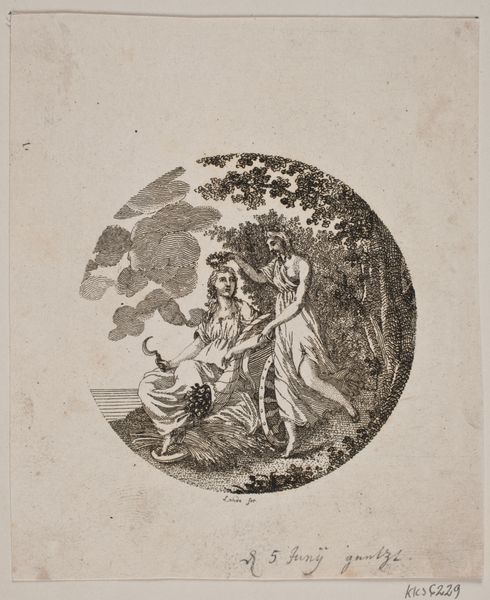
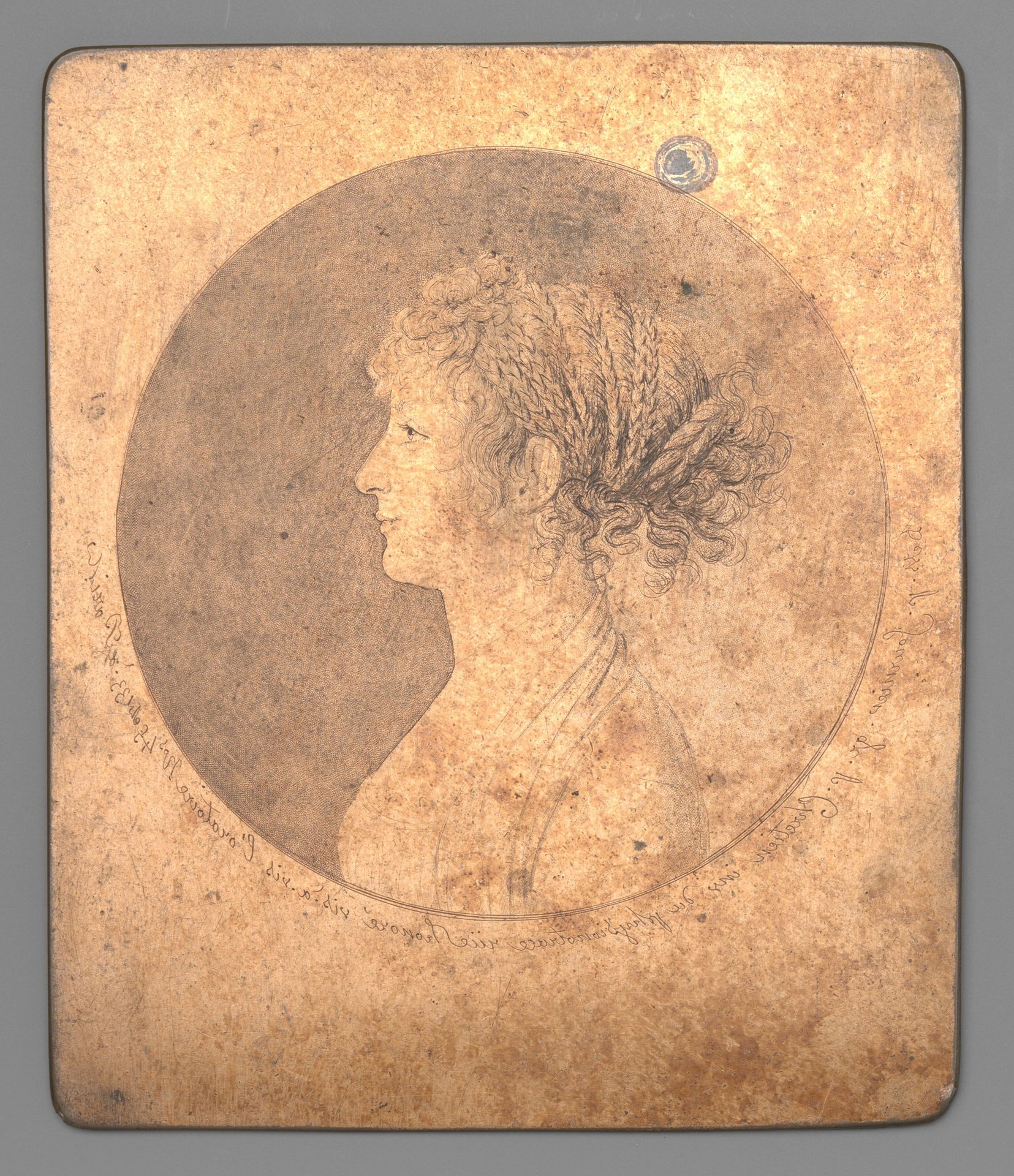
Editor: So, here we have "Portrait of a Woman" by Gilles Louis Chrétien, created sometime between 1764 and 1811. It’s a pencil drawing on paper and its simplicity makes me focus on her expression...What catches your eye about this portrait? Curator: For me, it's the blend of delicacy and precision. The line work, typical of Neoclassicism, gives a sense of order, almost a mathematical beauty. But then you have the softer touches in her hair, that little wisp escaping… It makes me wonder, doesn't it, about the controlled versus the uncontrolled aspects of a person, especially in that era. How they tried to contain the 'self'. Does it resonate with you? Editor: Absolutely! It's like she's resisting the constraints. What about the circle framing her? Does it have a particular significance? Curator: Ooh, good question! Circles often symbolize eternity or wholeness. In portraits, they can suggest idealization. But here, I see something else—a kind of… containment. As if she's displayed, almost scientifically. Editor: That’s a bit unsettling…So much for eternity, huh? Curator: Indeed. It transforms the sitter into an object of study, not reverence. Chrétien almost seems to be asking: "Can we truly know someone simply by their appearance?" It is also perhaps something about what portraiture means. The circle creates, I suppose, both art and artifact in one. Editor: Wow, I didn’t think about it that way! Now, seeing the subtle details and thinking about the historical context… It’s shifted my perspective completely! Curator: Precisely! That's the delightful power of art—changing how we see, feel, and understand the world, and especially each other, across time.