About this artwork
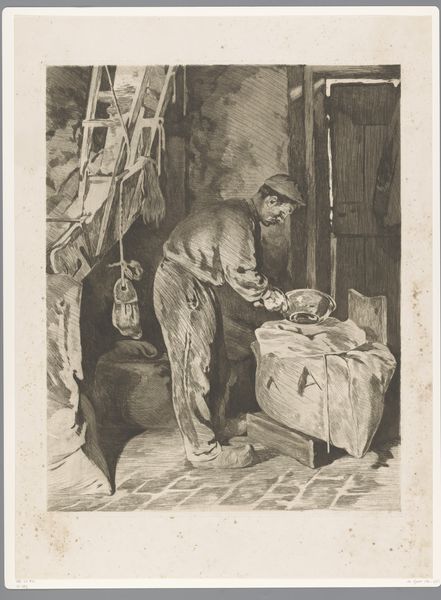
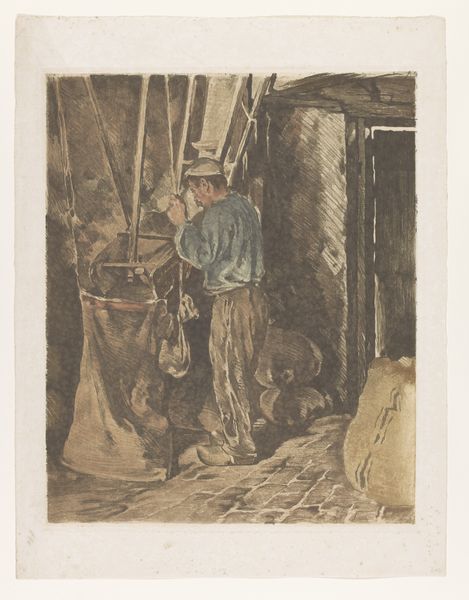
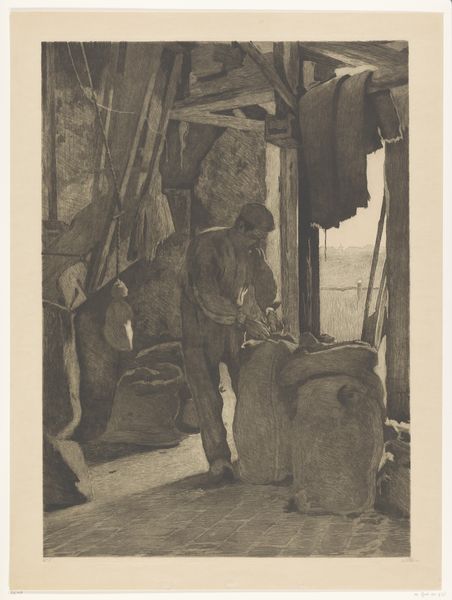
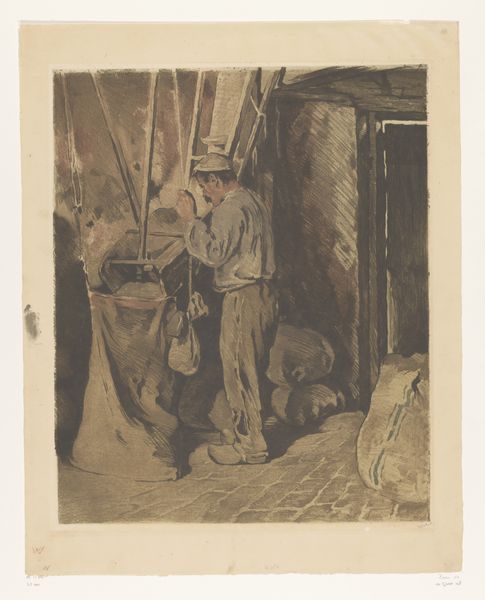
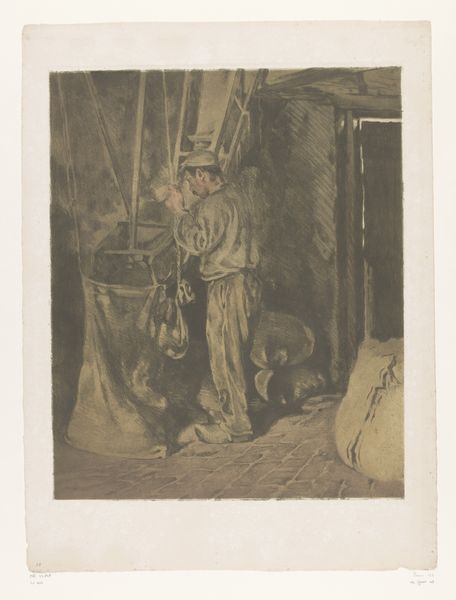
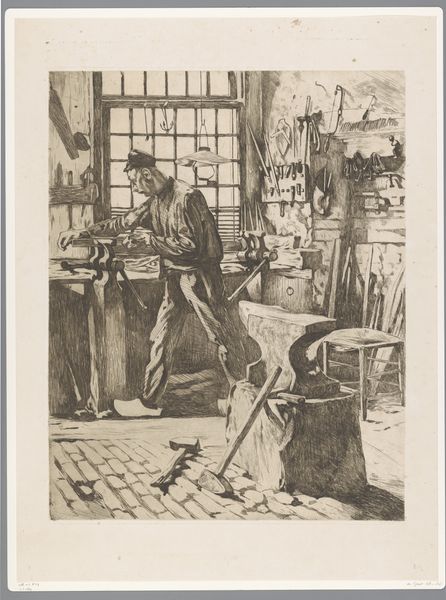
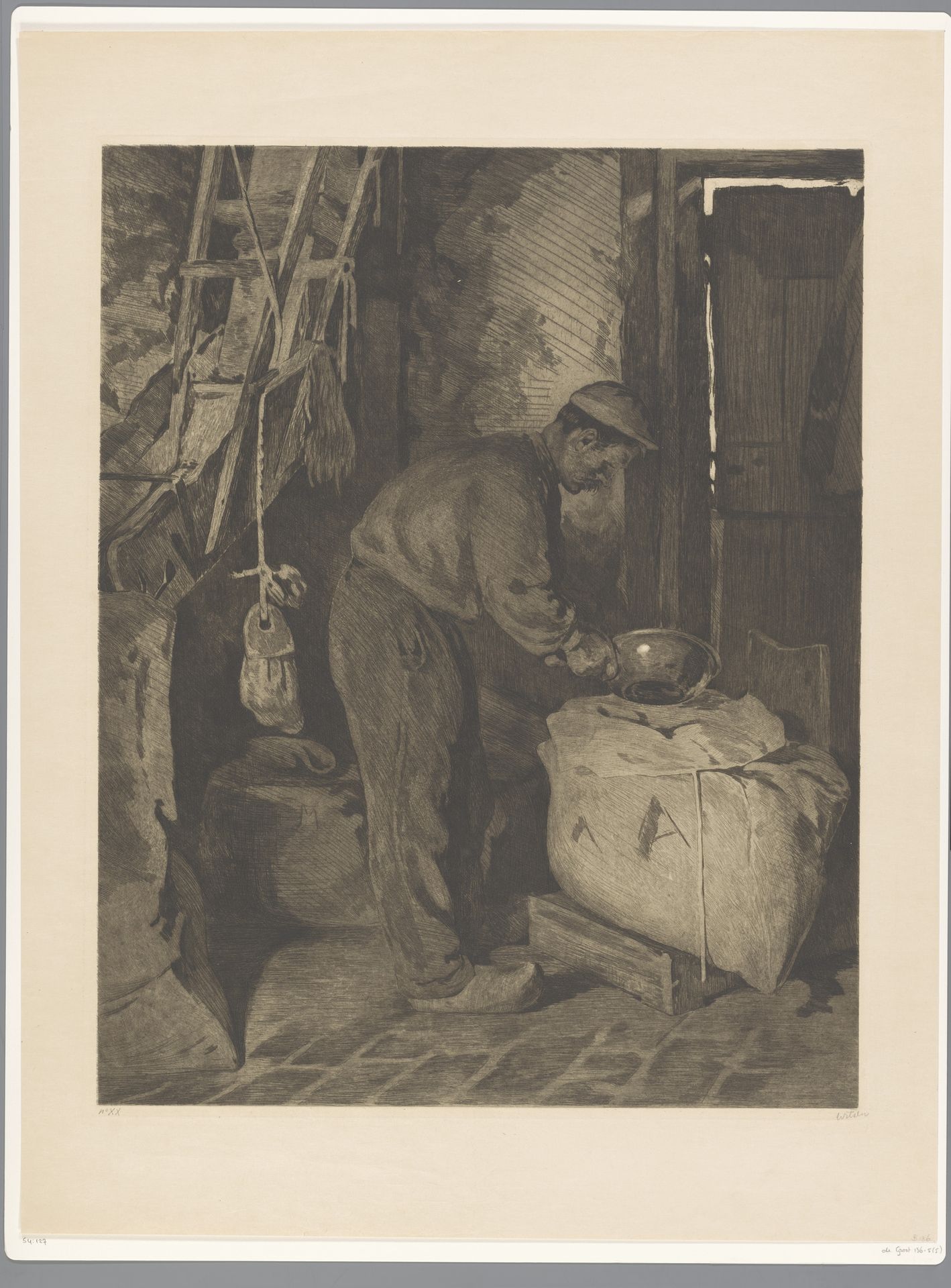
Willem Witsen made this print of a miller filling a bag with flour using the technique of aquatint. The way an aquatint is made gives this picture its character. To create the image, Witsen would have sprinkled powdered resin on a copper plate, then heated it to create a porous, acid-resistant ground. When etched, this would create a grainy texture capable of holding ink. This mimics the rough, granular texture of flour itself. The deep blacks and subtle greys of the aquatint beautifully capture the atmosphere of the mill’s interior, the weight of the labor, and the dust-filled air. But Witsen wasn't just interested in the beauty of the process. He was also interested in the social realities of labor. He emphasizes the skill and effort required to produce this essential commodity. He invites us to consider the human element behind our daily bread, and to value the labor that brings it to our tables.
Molenaar in de korenmolen van Wijk bij Duurstede vult een zak meel
c. 1908

Willem Witsen
1860 - 1923Location
RijksmuseumArtwork details
- Medium
- drawing, print, etching
- Dimensions
- height 627 mm, width 500 mm
- Location
- Rijksmuseum
- Copyright
- Rijks Museum: Open Domain
Tags
Comments
Share your thoughts
About this artwork
Willem Witsen made this print of a miller filling a bag with flour using the technique of aquatint. The way an aquatint is made gives this picture its character. To create the image, Witsen would have sprinkled powdered resin on a copper plate, then heated it to create a porous, acid-resistant ground. When etched, this would create a grainy texture capable of holding ink. This mimics the rough, granular texture of flour itself. The deep blacks and subtle greys of the aquatint beautifully capture the atmosphere of the mill’s interior, the weight of the labor, and the dust-filled air. But Witsen wasn't just interested in the beauty of the process. He was also interested in the social realities of labor. He emphasizes the skill and effort required to produce this essential commodity. He invites us to consider the human element behind our daily bread, and to value the labor that brings it to our tables.
Comments
Share your thoughts