graphic-art, print, engraving
graphic-art
11_renaissance
engraving
Dimensions: height 83 mm, width 127 mm
Copyright: Rijks Museum: Open Domain
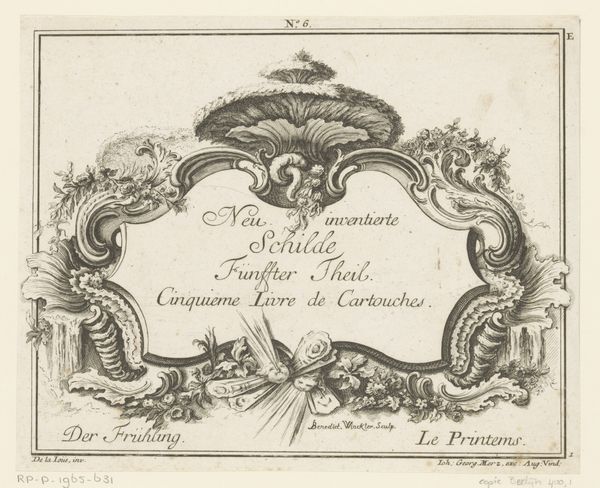
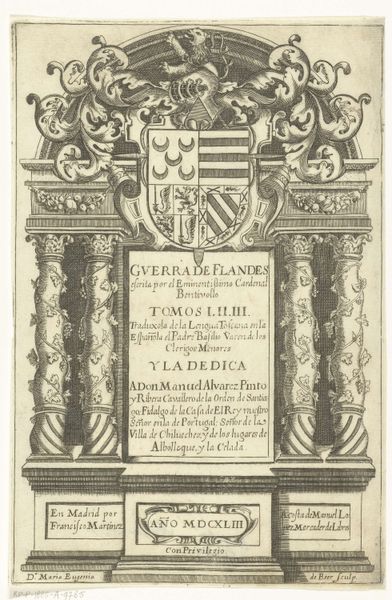
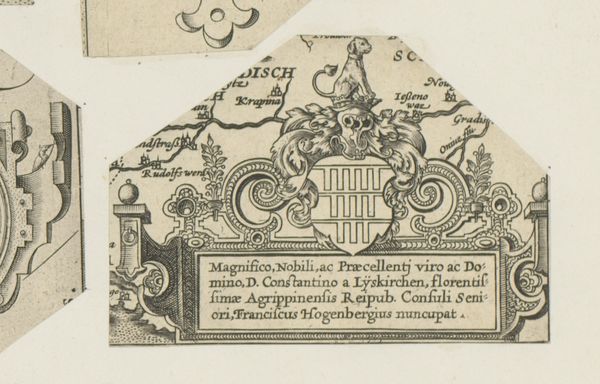
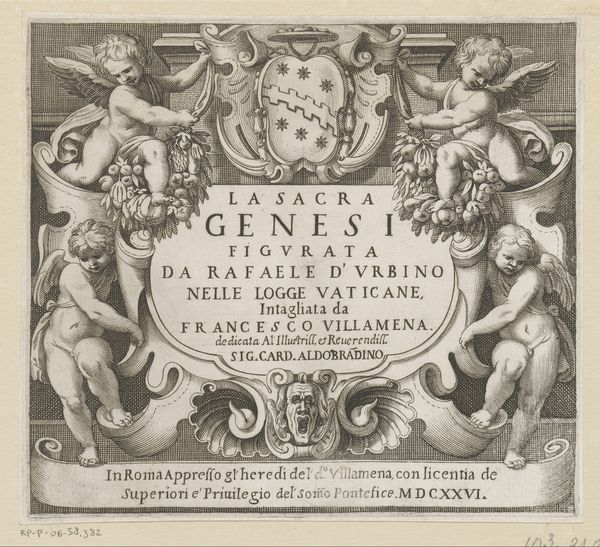
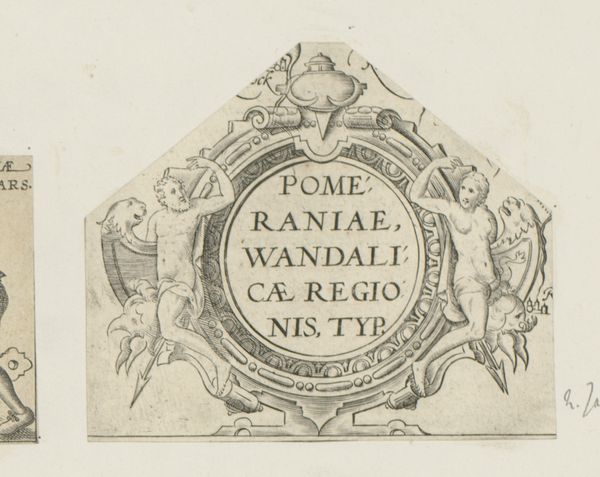
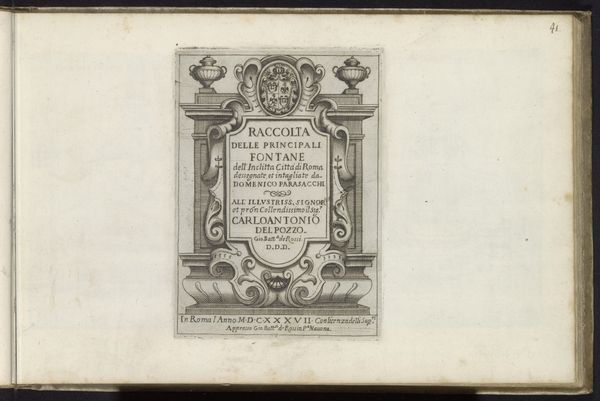
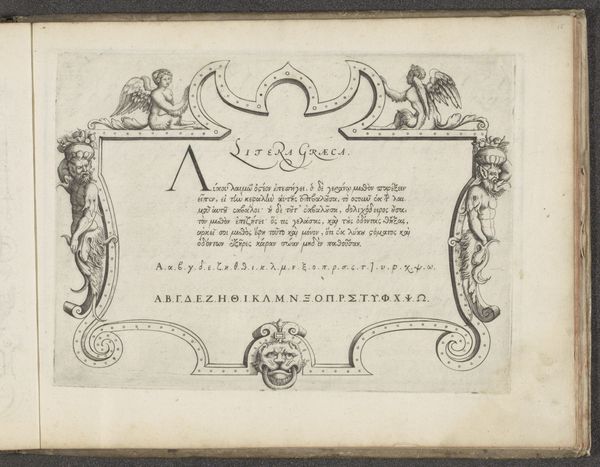
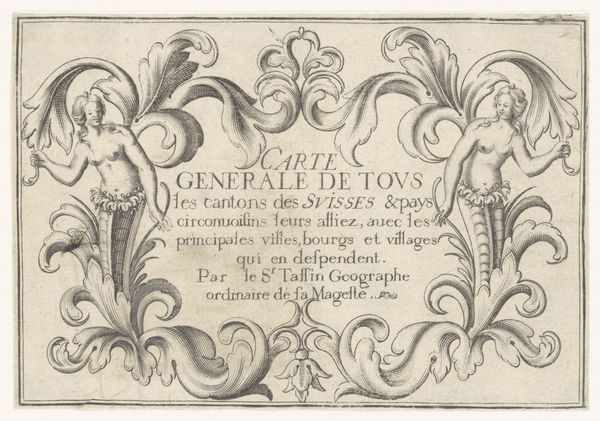
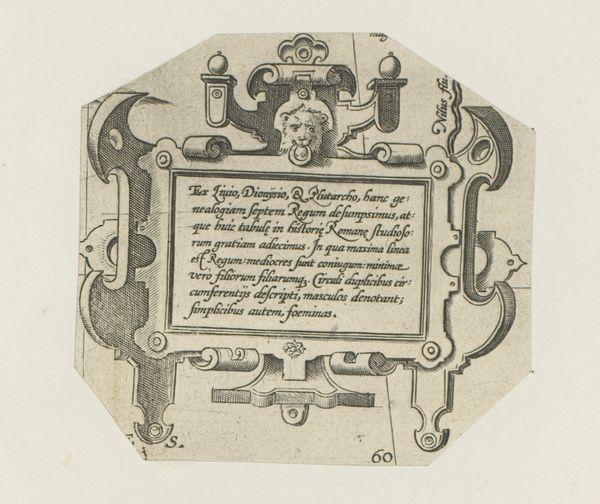
Curator: Let's talk about this curious engraving: “Cartouche met geitenkop,” from 1590, an anonymous work over here at the Rijksmuseum. The precision of line! You can almost smell the printer's ink, can't you? Editor: Absolutely! It's like peering into another world through this tiny window. The little goat head at the bottom is kind of throwing me off. What is it doing there? What do you see in this piece beyond the obvious details? Curator: Well, the "obvious," as you say, is pretty darn interesting itself. This isn’t just decoration; it’s the title cartouche from a map! “Gallia Vetus,” ancient Gaul, according to Abraham Ortelius. Now, consider the goat. Could it be a subtle nod to a local deity, a rustic symbol juxtaposed with scholarly cartography? Or a printer’s mark, perhaps? The image pulses with the life of early mapmaking—its blend of artistry and burgeoning science. Look at the precision required to depict a land they had never seen in the way they needed it to be known. Doesn’t it make you want to wander around in a dusty attic with Ortelius? Editor: Definitely. I never really considered how much maps straddle the line between art and science. Curator: They’re tales spun in lines, darling! And who doesn't like a good story? Editor: True! Seeing it as storytelling shifts my whole perspective. Thanks, I will see cartouches with different eyes from now on. Curator: Exactly. It all invites you to reconsider our relationship with the old in relation to the new; a dance, just like the life we all dance with our memories.
Comments
No comments
Be the first to comment and join the conversation on the ultimate creative platform.
 React
React Comment