About this artwork
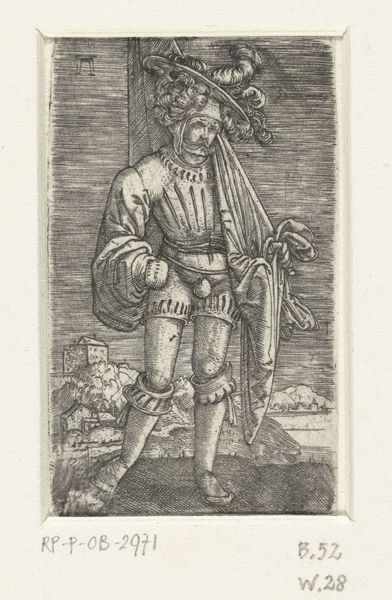
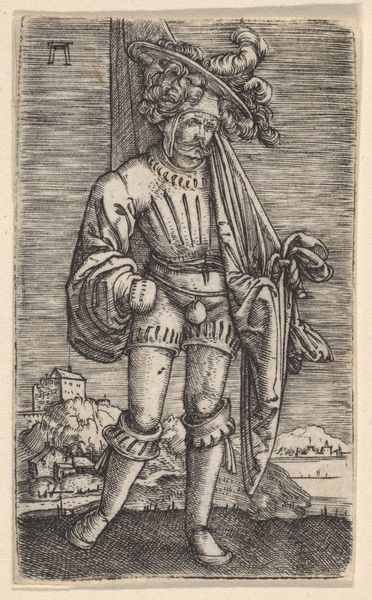
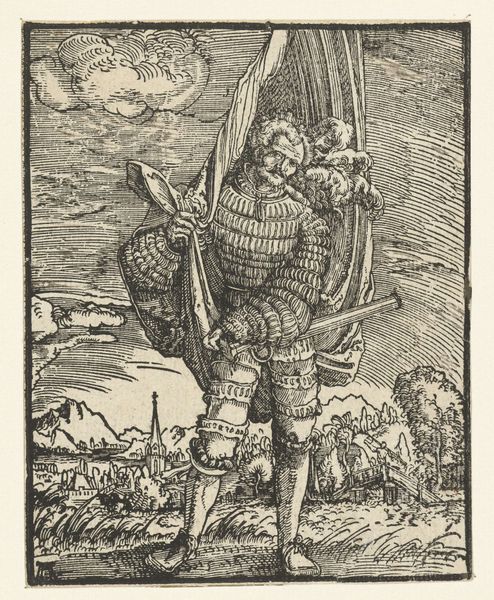
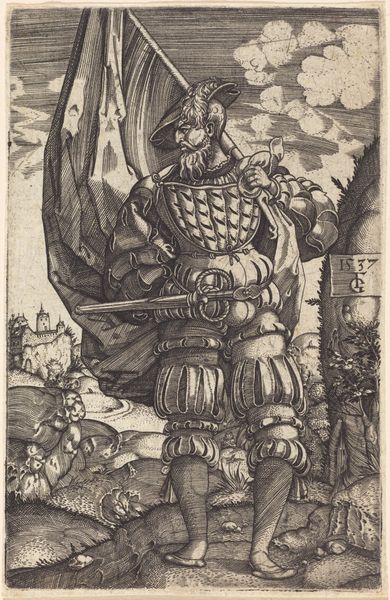
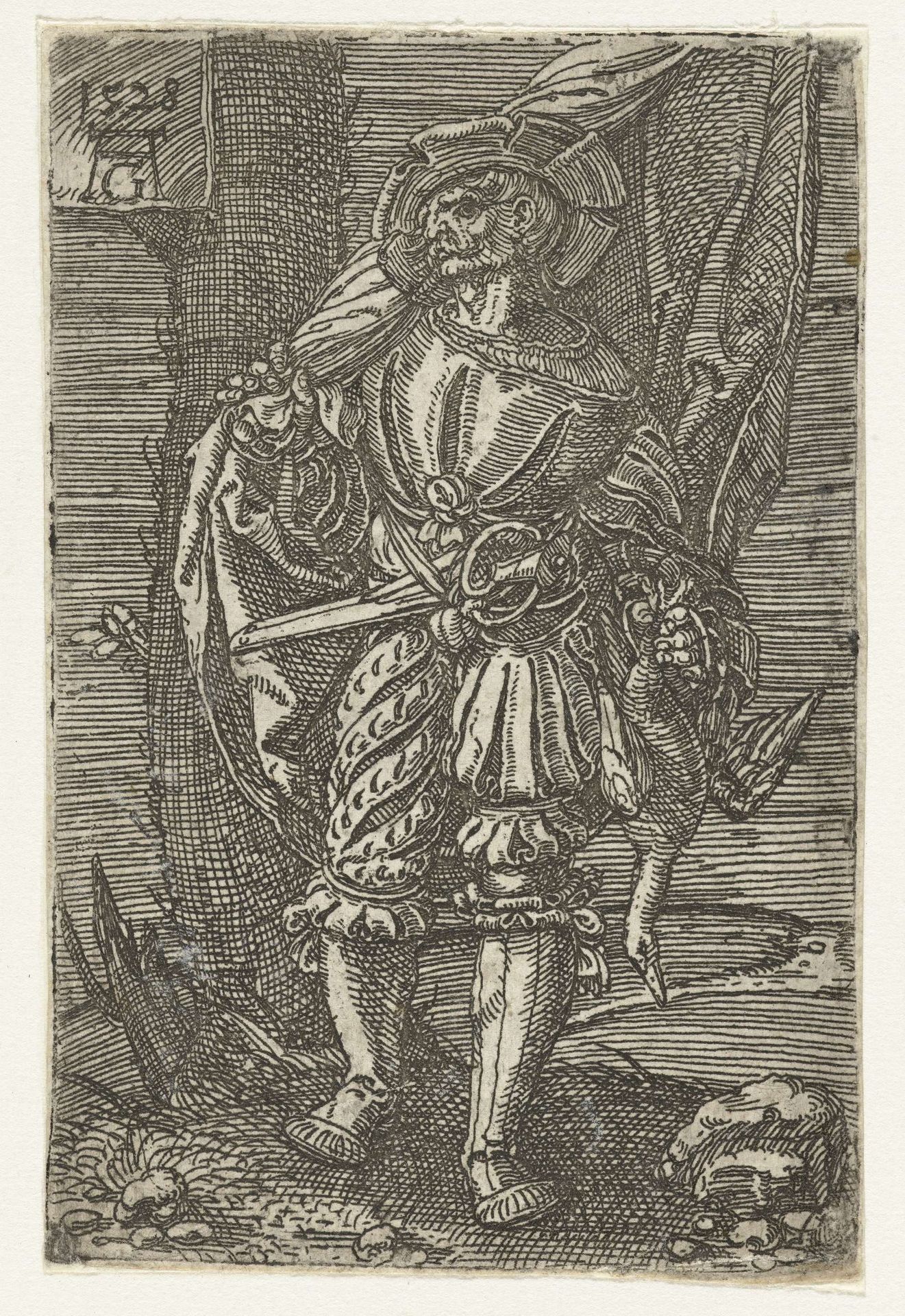
Heinrich Aldegrever created this tiny engraving of a standard-bearer, or "Vaandeldrager," using black ink on paper. This image encapsulates the tumultuous social climate of 16th-century Germany. The standard-bearer, a symbol of civic duty and military might, stands amidst the religious and political upheavals of the Reformation. Aldegrever, known for his association with the Anabaptist movement, imbues the figure with a complex mix of authority and vulnerability. The man's elaborate clothing and proud stance reflect the importance of military service in that era, but the stark lines and intricate details of the engraving also hint at the underlying tensions and uncertainties of the time. The artist is challenging the very institutions that would have defined social order. Delving into period documents, such as pamphlets and religious tracts, will reveal more about the artist's political leaning and about the public role of art during this time of immense change.

Artwork details
- Medium
- drawing, print, engraving
- Dimensions
- height 79 mm, width 52 mm
- Location
- Rijksmuseum
- Copyright
- Rijks Museum: Open Domain
Tags
Comments
Share your thoughts
About this artwork
Heinrich Aldegrever created this tiny engraving of a standard-bearer, or "Vaandeldrager," using black ink on paper. This image encapsulates the tumultuous social climate of 16th-century Germany. The standard-bearer, a symbol of civic duty and military might, stands amidst the religious and political upheavals of the Reformation. Aldegrever, known for his association with the Anabaptist movement, imbues the figure with a complex mix of authority and vulnerability. The man's elaborate clothing and proud stance reflect the importance of military service in that era, but the stark lines and intricate details of the engraving also hint at the underlying tensions and uncertainties of the time. The artist is challenging the very institutions that would have defined social order. Delving into period documents, such as pamphlets and religious tracts, will reveal more about the artist's political leaning and about the public role of art during this time of immense change.
Comments
Share your thoughts