1568 - 1596
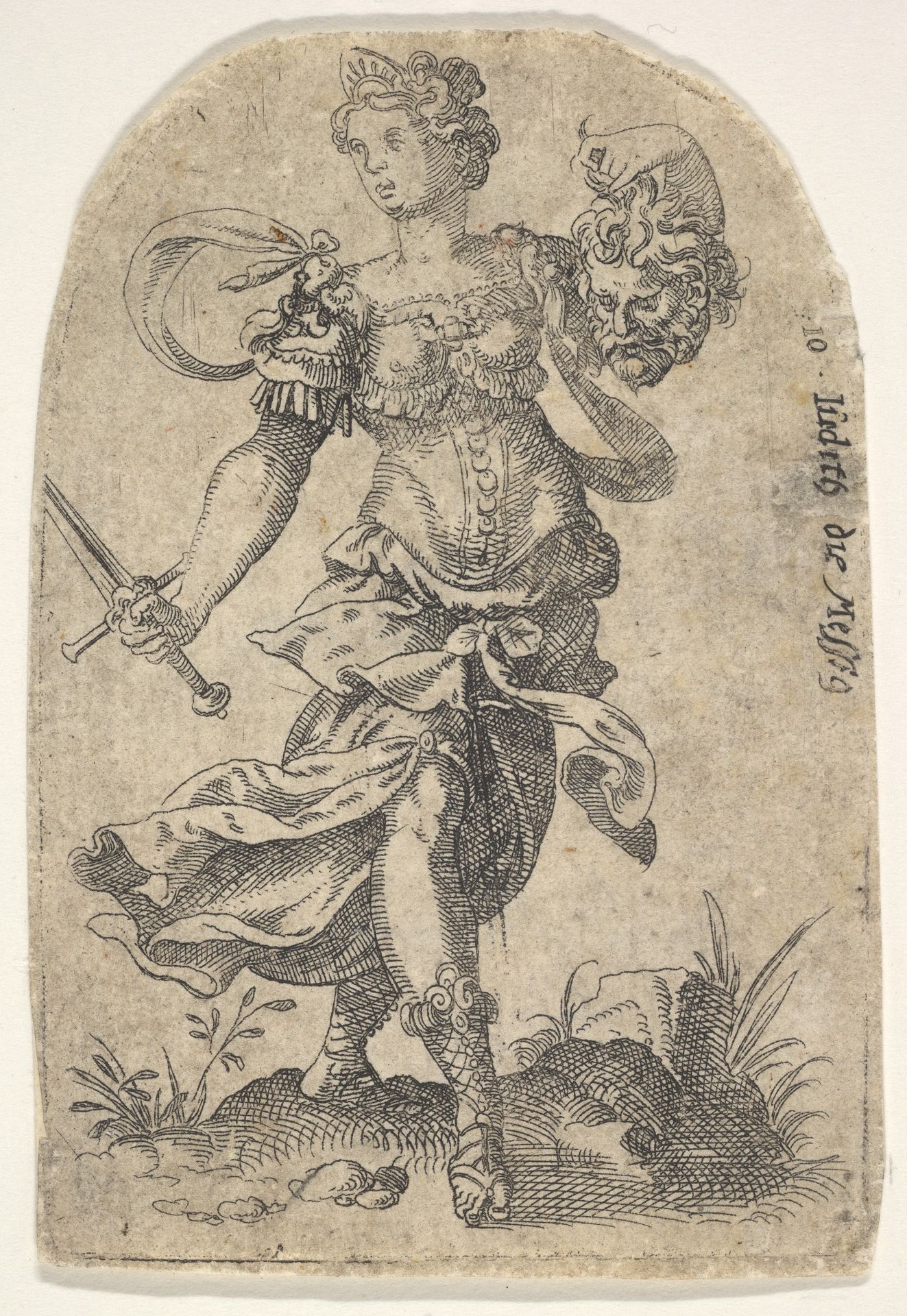
Judith, from Celebrated Women of the Old Testament


Listen to curator's interpretation
Curatorial notes
Editor: So, this is Jost Amman’s "Judith, from Celebrated Women of the Old Testament," dating back to the late 16th century. It’s an engraving, and… well, it’s pretty intense. She's holding a sword in one hand and Holofernes' head in the other. What’s your take on this, Professor? Curator: What I find particularly striking is how Amman reclaims the narrative of Judith. Far from being a simple retelling of a biblical story, the engraving acts as a visual assertion of female agency in a period marked by rigid patriarchal structures. Consider, she's not merely a passive instrument of divine will but a politically active subject violently overthrowing oppression. Do you see hints of that in her posture, her gaze? Editor: I do now that you mention it. She does look very self-possessed, standing over the vanquished enemy with what seems like very calculated defiance rather than shame or guilt. Curator: Exactly! Think about what it meant to depict a woman actively resisting male tyranny during the Northern Renaissance. How do you imagine that might have been received, particularly in relation to shifting religious and societal power dynamics? Editor: I imagine it must have been quite subversive. The piece reclaims feminine power, but through a somewhat male, almost aggressive, visual vocabulary, maybe even unsettling for the establishment at the time? Curator: Precisely. By employing a visual language typically reserved for male heroes, Amman challenges established gender roles. He elevates Judith from a religious figure to a symbol of broader political resistance. Seeing it like this helps us question not only the past, but the stories we keep telling in the present. Editor: It’s amazing to think about this print as a powerful act of cultural commentary back then! Curator: Indeed. And it reminds us that art, even centuries old, can still speak to our current struggles for equality and justice.