About this artwork
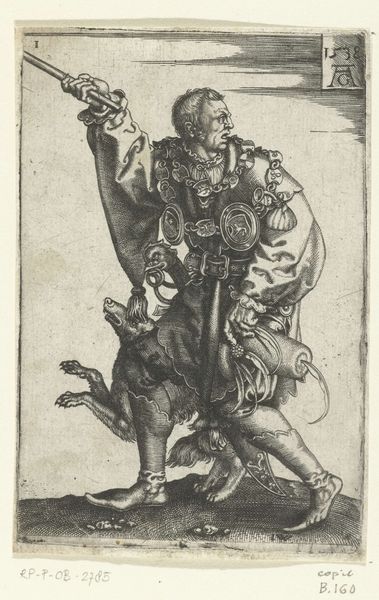
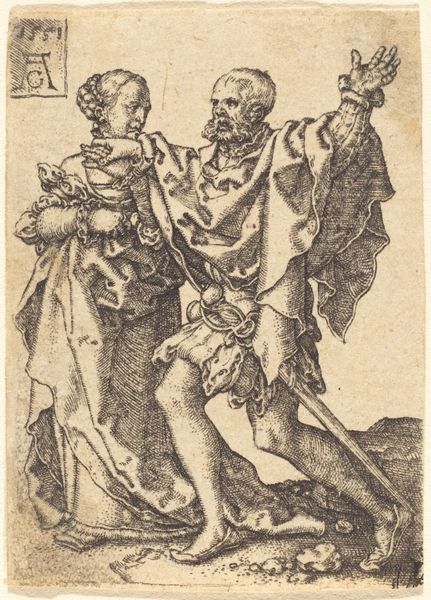
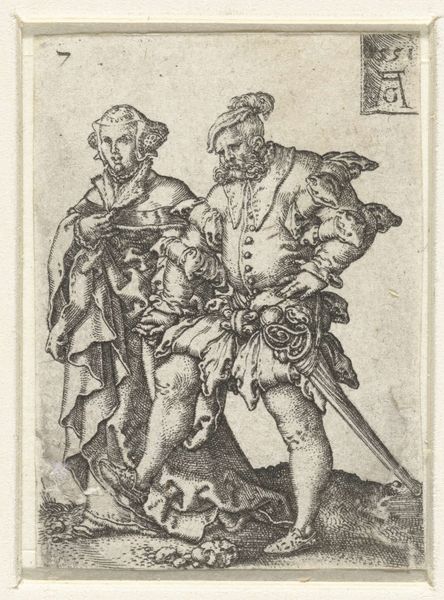
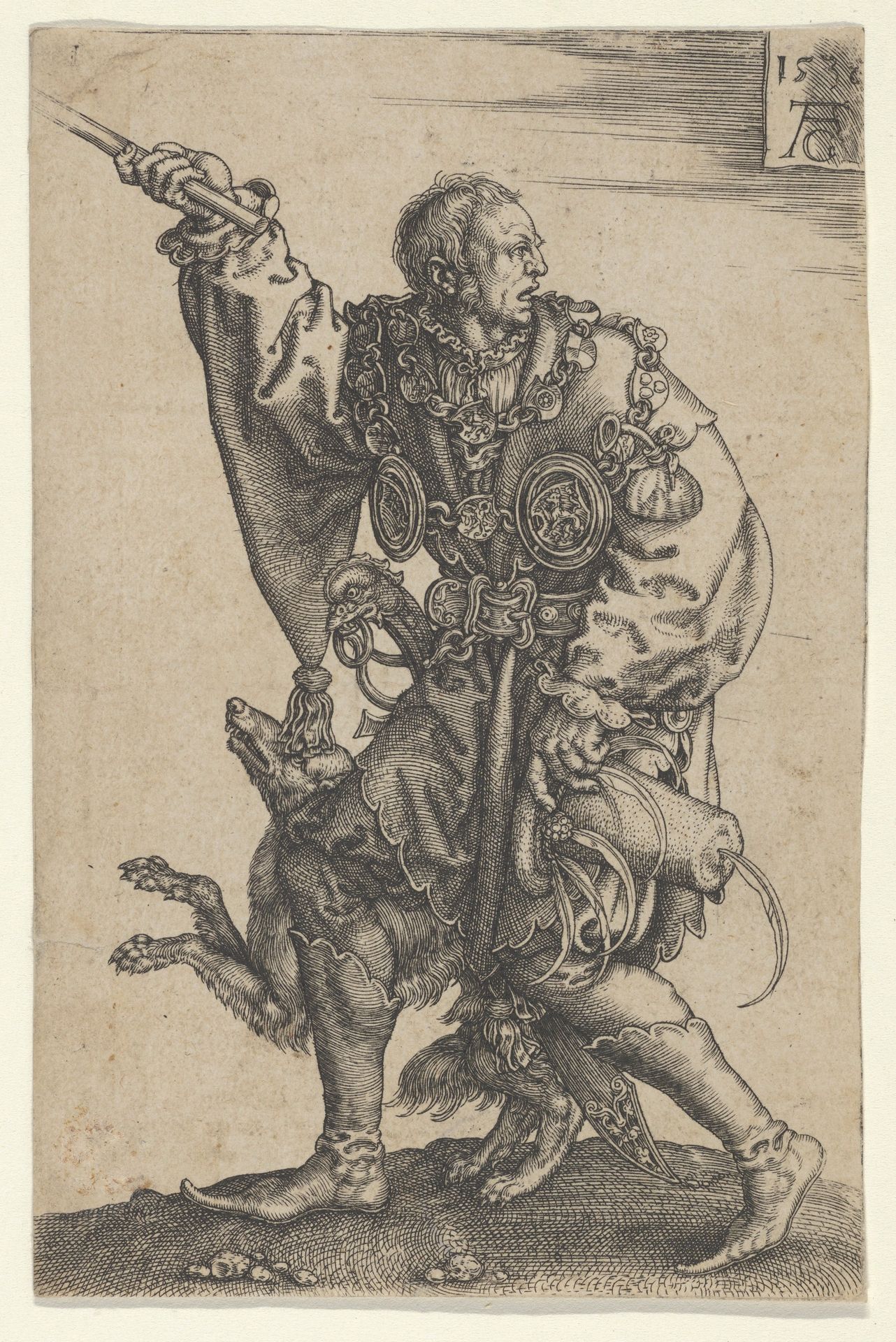
Heinrich Aldegrever created this engraving, "Master of Ceremonies with a Dog," in Germany around 1538. It presents a figure adorned with an elaborate chain and medallions, holding a staff, while a dog walks beside him. The image evokes questions about social class and the performance of status in 16th-century Germany. The master of ceremonies, judging by his attire, is clearly of a higher social standing. Note how the dog, often a symbol of loyalty and wealth, further underscores the man's privileged position. Aldegrever was part of a group of artists in Northern Europe who were reflecting the social structures of their time, often using prints to disseminate their views widely. To fully understand this work, one might research the sumptuary laws of the period, or study the ways in which the rising merchant class sought to emulate the aristocracy. The social history of art helps us understand the ways in which artists can either reinforce or challenge the norms of their time.
Master of Ceremonies with a Dog, from "The Large Wedding Dancers"
1538

Heinrich Aldegrever
1502 - 1561
The Metropolitan Museum of Art
Metropolitan Museum of Art, New York, NYArtwork details
- Dimensions
- Sheet: 4 9/16 × 3 1/16 in. (11.6 × 7.7 cm)
- Location
- Metropolitan Museum of Art, New York, NY
- Copyright
- Public Domain
Comments
Share your thoughts
About this artwork
Heinrich Aldegrever created this engraving, "Master of Ceremonies with a Dog," in Germany around 1538. It presents a figure adorned with an elaborate chain and medallions, holding a staff, while a dog walks beside him. The image evokes questions about social class and the performance of status in 16th-century Germany. The master of ceremonies, judging by his attire, is clearly of a higher social standing. Note how the dog, often a symbol of loyalty and wealth, further underscores the man's privileged position. Aldegrever was part of a group of artists in Northern Europe who were reflecting the social structures of their time, often using prints to disseminate their views widely. To fully understand this work, one might research the sumptuary laws of the period, or study the ways in which the rising merchant class sought to emulate the aristocracy. The social history of art helps us understand the ways in which artists can either reinforce or challenge the norms of their time.
Comments
Share your thoughts