About this artwork
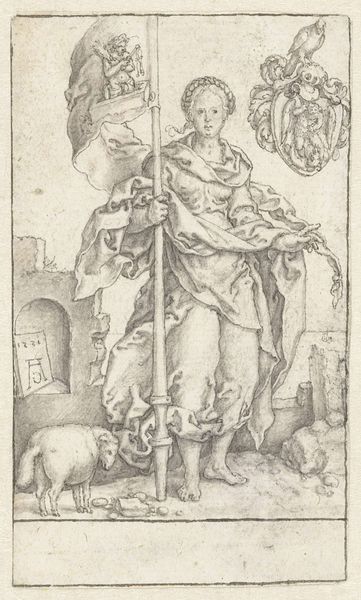
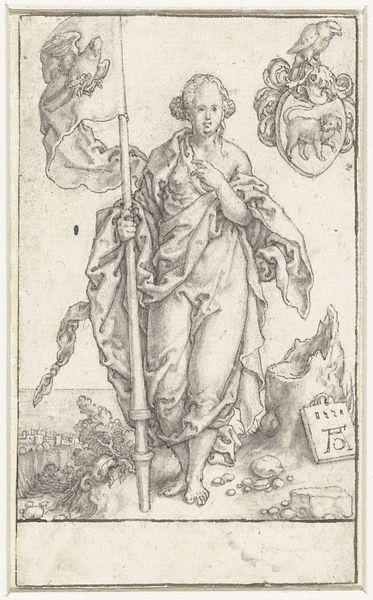
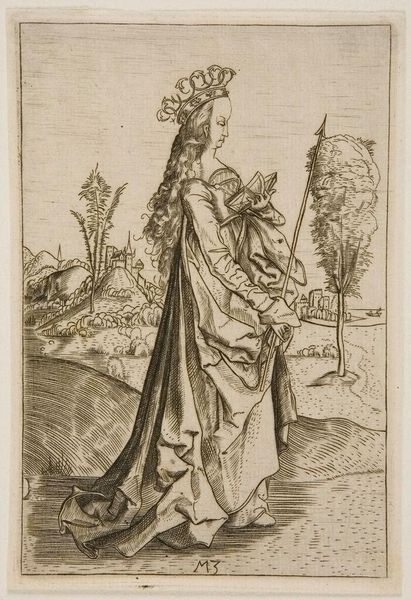
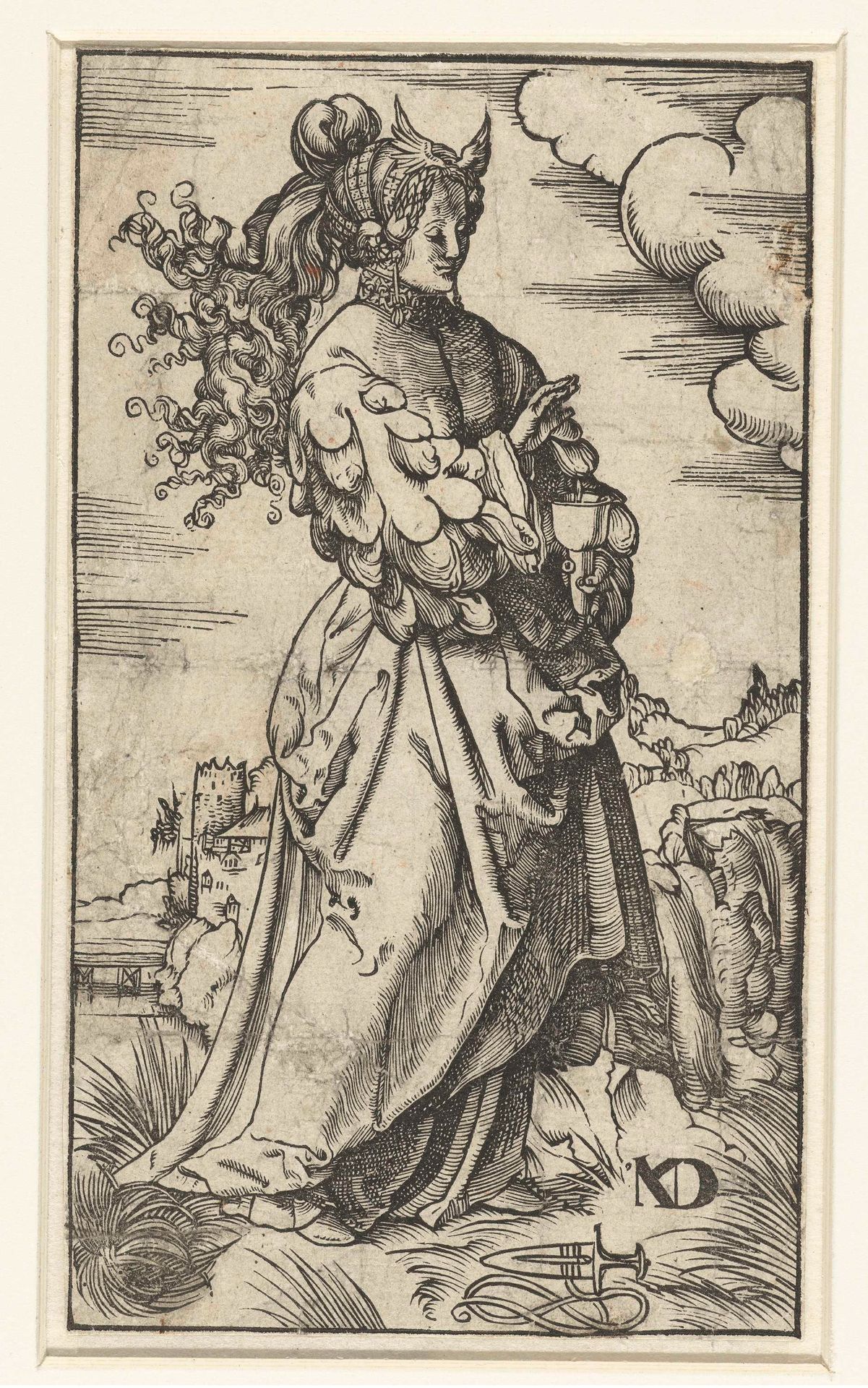
Niklaus Manuel Deutsch made this print of a wise virgin with a burning oil lamp sometime in the early 16th century, using the intaglio process of engraving. This involves using a tool called a burin to carve lines directly into a metal plate, which is then inked and printed. Look closely, and you’ll see how the artist has used hatching – closely spaced parallel lines – to create areas of shadow and volume, particularly in the figure’s drapery and hair. The medium of engraving lends itself well to fine detail, allowing for a high level of precision in the rendering of textures and patterns. While engraving was a highly skilled craft, it was also a reproductive medium, allowing images to be disseminated widely and relatively cheaply. This print, with its religious subject matter, would have been accessible to a broad audience. The medium allowed Deutsch to share his artistic vision with a wider public, but also reflects the changing economic and social landscape of the time, where art was increasingly becoming a commodity. So, as you consider the image, think about not just the artist’s skill, but also the role of printmaking in shaping early modern culture.

Artwork details
- Medium
- drawing, print, ink, engraving
- Dimensions
- height 182 mm, width 105 mm
- Copyright
- Rijks Museum: Open Domain
Tags
Comments
Share your thoughts
About this artwork
Niklaus Manuel Deutsch made this print of a wise virgin with a burning oil lamp sometime in the early 16th century, using the intaglio process of engraving. This involves using a tool called a burin to carve lines directly into a metal plate, which is then inked and printed. Look closely, and you’ll see how the artist has used hatching – closely spaced parallel lines – to create areas of shadow and volume, particularly in the figure’s drapery and hair. The medium of engraving lends itself well to fine detail, allowing for a high level of precision in the rendering of textures and patterns. While engraving was a highly skilled craft, it was also a reproductive medium, allowing images to be disseminated widely and relatively cheaply. This print, with its religious subject matter, would have been accessible to a broad audience. The medium allowed Deutsch to share his artistic vision with a wider public, but also reflects the changing economic and social landscape of the time, where art was increasingly becoming a commodity. So, as you consider the image, think about not just the artist’s skill, but also the role of printmaking in shaping early modern culture.
Comments
Share your thoughts