About this artwork
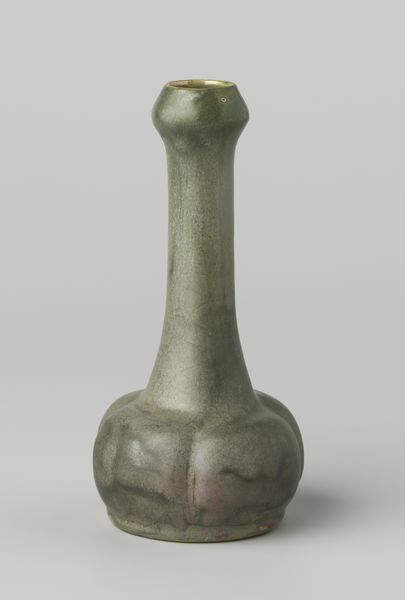
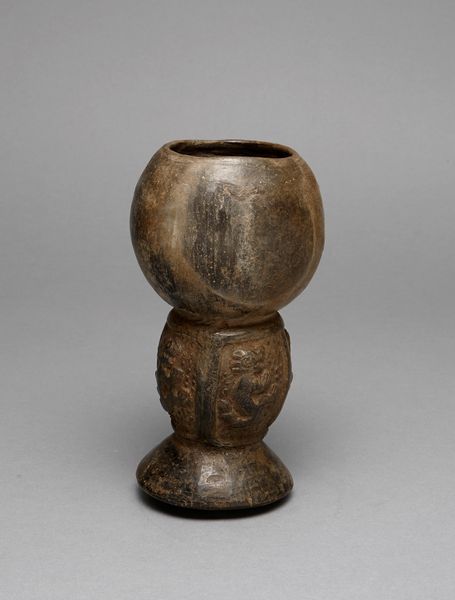
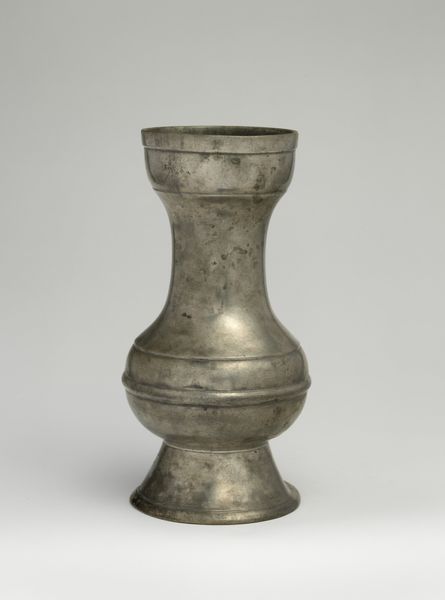
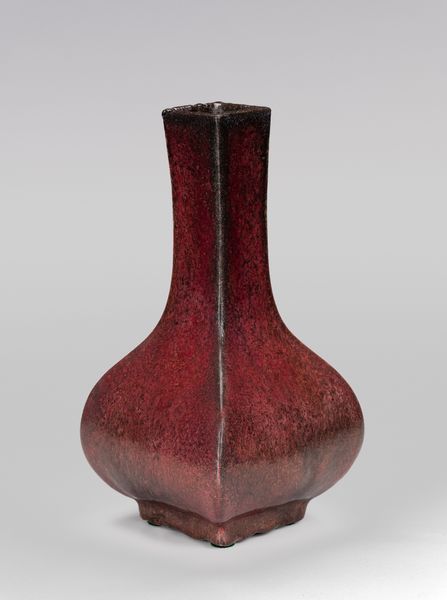
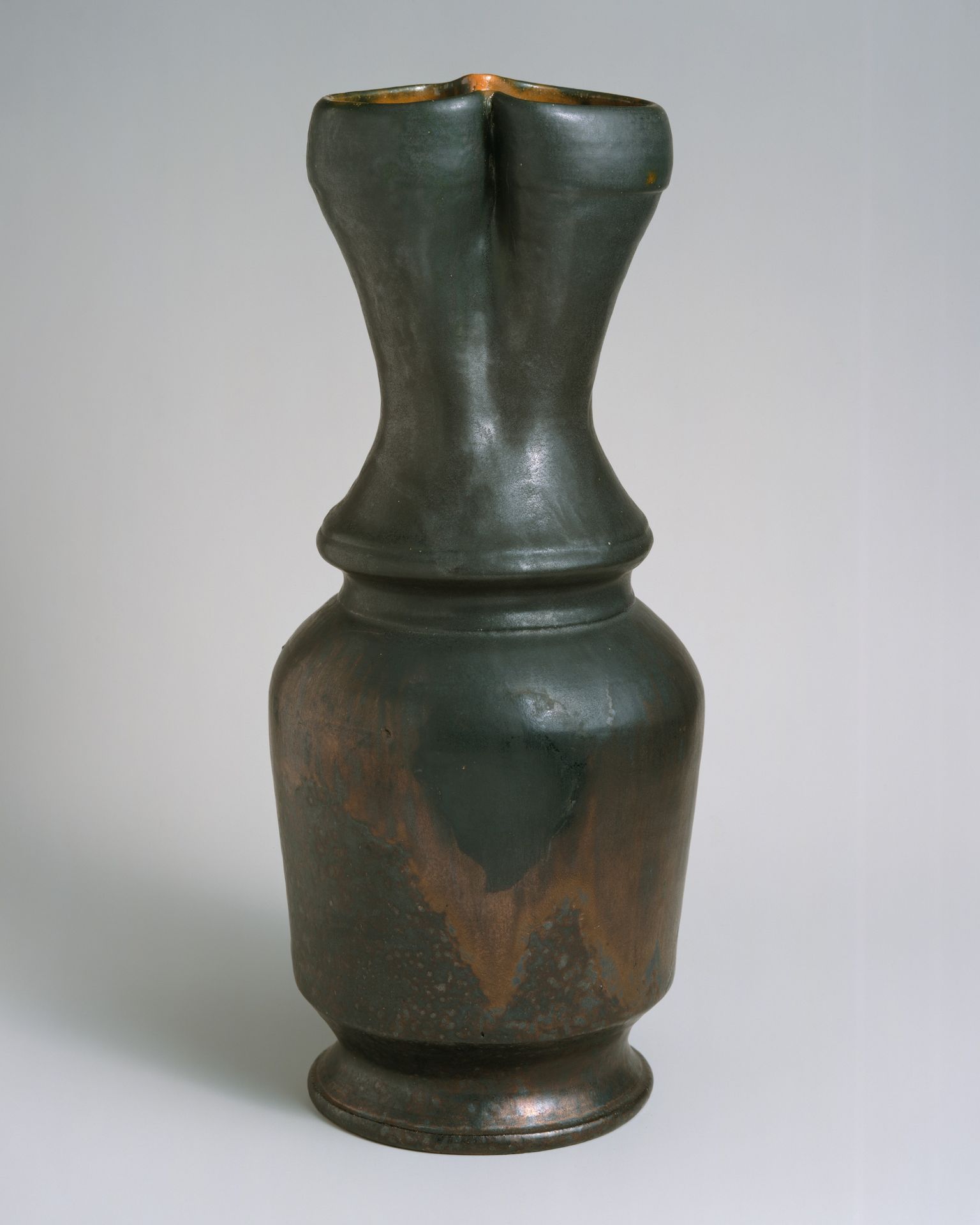
This vase was made by George Ohr, sometime between the late 19th and early 20th centuries, using clay and glaze. Ohr was based in Biloxi, Mississippi, and liked to call himself the ‘Mad Potter’. He was deeply interested in the material properties of clay and became a master of manipulating it on the wheel. The vase has a somber, almost metallic look. But if you look closely, you’ll see the tell-tale signs of the potter’s wheel. The body has a kind of swirled, in-and-out form, and the top is divided into two separate necks. Ohr was able to achieve these eccentric effects through extremely thin throwing. The clay has a certain tension as if it might collapse at any moment. Ohr’s approach was unique for his time. He blurred the lines between art, craft, and design, anticipating many developments of later 20th-century ceramics. He insisted that his works be seen as individual expressions, not just functional objects. This vase shows his masterful approach to materials and the expressive possibilities of clay.
Vase
1895 - 1900


Artwork details
- Medium
- ceramic, earthenware, sculpture
- Dimensions
- H. 14 1/8 in. (35.9 cm); Diam. 6 1/8 in. (15.6 cm)
- Location
- Metropolitan Museum of Art, New York, NY
- Copyright
- Public Domain
Tags
Comments
Share your thoughts
About this artwork
This vase was made by George Ohr, sometime between the late 19th and early 20th centuries, using clay and glaze. Ohr was based in Biloxi, Mississippi, and liked to call himself the ‘Mad Potter’. He was deeply interested in the material properties of clay and became a master of manipulating it on the wheel. The vase has a somber, almost metallic look. But if you look closely, you’ll see the tell-tale signs of the potter’s wheel. The body has a kind of swirled, in-and-out form, and the top is divided into two separate necks. Ohr was able to achieve these eccentric effects through extremely thin throwing. The clay has a certain tension as if it might collapse at any moment. Ohr’s approach was unique for his time. He blurred the lines between art, craft, and design, anticipating many developments of later 20th-century ceramics. He insisted that his works be seen as individual expressions, not just functional objects. This vase shows his masterful approach to materials and the expressive possibilities of clay.
Comments
Share your thoughts