About this artwork
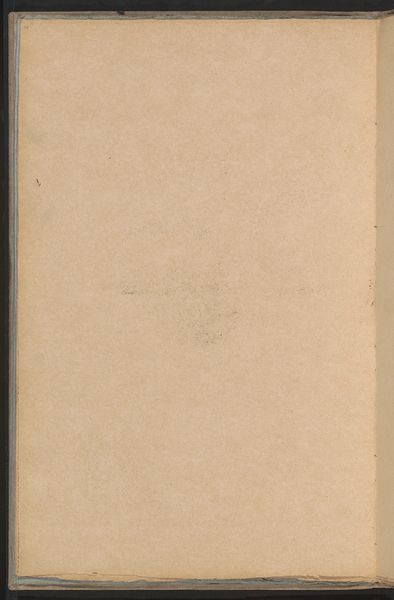
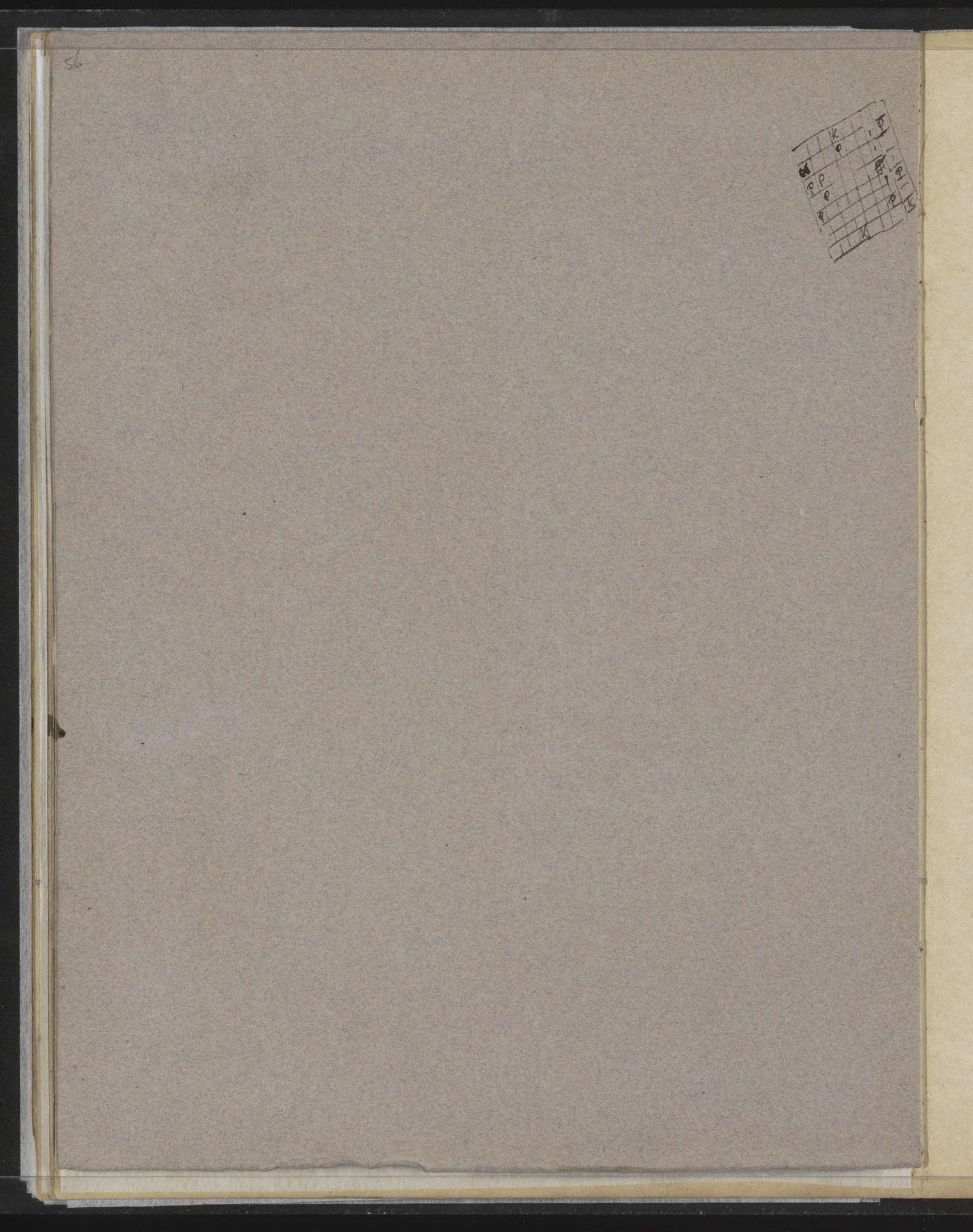
Curator: The Rijksmuseum holds this intriguing piece by Willem Witsen, titled "Raster met letters," dating back to 1887-1888. It's crafted using ink on paper. Editor: My initial impression is one of sparseness. There's this large expanse of empty space punctuated only by a grid with tiny letters in the upper right corner. The contrast of the simple shapes and the blank void is rather captivating. Curator: Considering Witsen's connections to the literary journal De Nieuwe Gids and his broader artistic circle, it’s interesting to think about this drawing as a kind of personal inscription or a coded message linked to intellectual exchange. Editor: It's curious, the grid, so deliberately placed on the pale field. Is it a secret cipher? It looks almost architectural, a blueprint maybe, hinting at a world beyond the page. Curator: The Rijksmuseum's documentation indicates this is part of a collection of drawings found together after Witsen's death, suggesting this wasn’t necessarily meant for public consumption. We may be looking at a fragment, a fleeting thought given form. The act of repetition within the grid - the suggestion of writing as texture – might imply private thoughts or studies. Editor: That blankness surrounding the grid makes it so stark and isolating. Perhaps the unsaid or the invisible were important to Witsen. Maybe this is a meditation on the limits of representation itself. Curator: Given his background, the “Raster met letters” serves as a window into the fin-de-siècle intellectual climate. Editor: The piece provokes such thoughtful ambiguity and invites speculation. Curator: Indeed. Considering it's been preserved by the Rijksmuseum, "Raster met letters" stands as a testament to the complex networks of art, thought, and personal relationships that were evolving around the late nineteenth century. Editor: Its minimalist qualities definitely invite close study, revealing subtle compositional strengths despite the seeming simplicity. It definitely encourages looking beyond first impressions.

Artwork details
- Medium
- drawing, paper, ink
- Location
- Rijksmuseum
- Copyright
- Rijks Museum: Open Domain
Tags
drawing
paper
ink
Comments
No comments
About this artwork
Curator: The Rijksmuseum holds this intriguing piece by Willem Witsen, titled "Raster met letters," dating back to 1887-1888. It's crafted using ink on paper. Editor: My initial impression is one of sparseness. There's this large expanse of empty space punctuated only by a grid with tiny letters in the upper right corner. The contrast of the simple shapes and the blank void is rather captivating. Curator: Considering Witsen's connections to the literary journal De Nieuwe Gids and his broader artistic circle, it’s interesting to think about this drawing as a kind of personal inscription or a coded message linked to intellectual exchange. Editor: It's curious, the grid, so deliberately placed on the pale field. Is it a secret cipher? It looks almost architectural, a blueprint maybe, hinting at a world beyond the page. Curator: The Rijksmuseum's documentation indicates this is part of a collection of drawings found together after Witsen's death, suggesting this wasn’t necessarily meant for public consumption. We may be looking at a fragment, a fleeting thought given form. The act of repetition within the grid - the suggestion of writing as texture – might imply private thoughts or studies. Editor: That blankness surrounding the grid makes it so stark and isolating. Perhaps the unsaid or the invisible were important to Witsen. Maybe this is a meditation on the limits of representation itself. Curator: Given his background, the “Raster met letters” serves as a window into the fin-de-siècle intellectual climate. Editor: The piece provokes such thoughtful ambiguity and invites speculation. Curator: Indeed. Considering it's been preserved by the Rijksmuseum, "Raster met letters" stands as a testament to the complex networks of art, thought, and personal relationships that were evolving around the late nineteenth century. Editor: Its minimalist qualities definitely invite close study, revealing subtle compositional strengths despite the seeming simplicity. It definitely encourages looking beyond first impressions.
Comments
No comments