mixed-media, collage, paper
#
de-stijl
#
mixed-media
#
collage
#
constructivism
#
paper
#
text
#
geometric
#
abstraction
#
line
#
mixed media
Dimensions: 59.4 x 44 cm
Copyright: Public domain
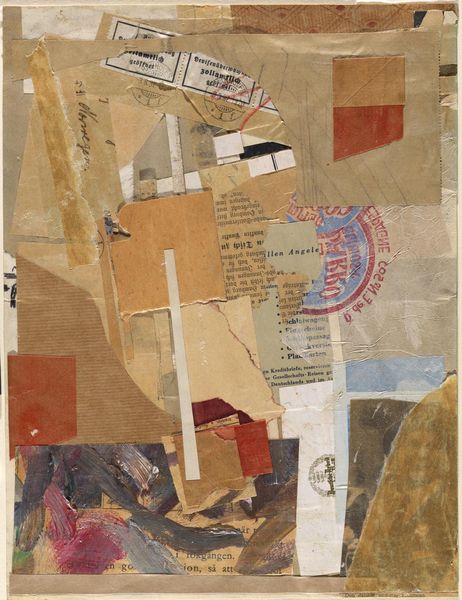
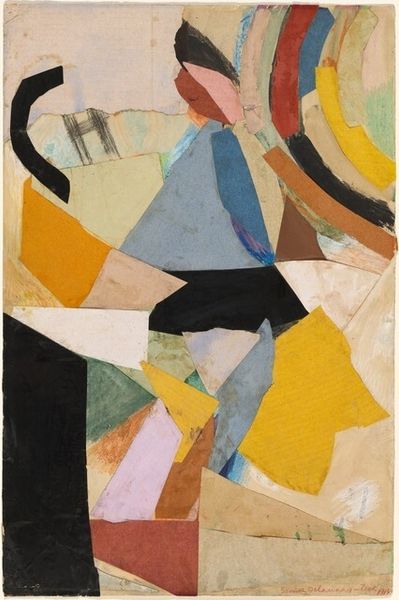
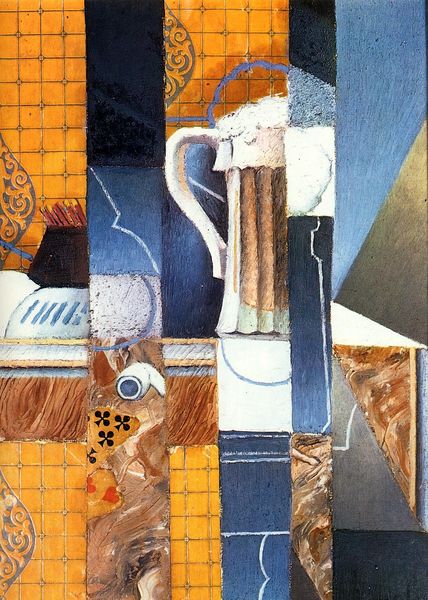
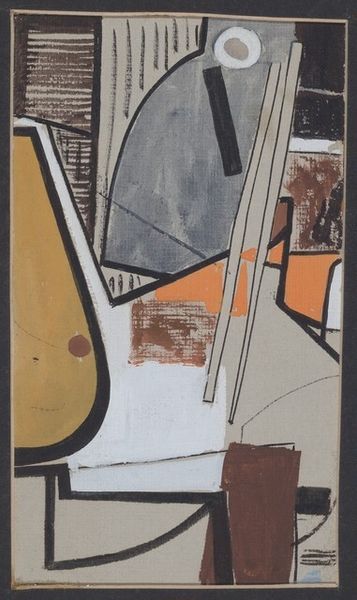
Editor: This is Theo van Doesburg's "The denaturalized material. Destruction 2.," created in 1923 using mixed media and collage. It has such a chaotic feel, like fragments of different realities colliding. How do you interpret this work? Curator: The chaos you perceive speaks volumes about its historical context. Created in the aftermath of World War I, it embodies a sense of societal fracture and disillusionment with traditional values. De Stijl artists like van Doesburg sought to create a universal visual language, yet here he employs destruction. What tensions do you observe between the intent to build something new and the imagery of dismantling? Editor: I see a contrast between the geometric shapes, which feel ordered, and the torn, seemingly random bits of paper. Curator: Exactly! The geometric forms allude to the utopian aspirations of the era. However, by incorporating found materials like newspaper clippings, the work simultaneously acknowledges the intrusion of reality – the very reality that those utopian ideals were meant to transcend. The “Gewapen” text for example points to armaments; consider how that shapes the viewer’s reading. Where does that political edge take our interpretation? Editor: So, it's not just about abstract shapes; it's a commentary on society at the time. The collage medium itself suggests a piecing together of what's been broken. Curator: Precisely. The collage is an apt metaphor for social reconstruction after immense trauma. It questions whether a completely clean slate is even possible, or desirable, after such events. Instead the layers provide an alternative way forward: How do we, and can we, piece together a fragmented world to make sense of things once again? Editor: I hadn't considered it in that light before. I see now that it reflects both the hope and the anxiety of rebuilding a world after destruction. Curator: Indeed. And this artwork prompts us to reflect on similar themes today: how art engages with the issues of identity, gender, and race, issues related to sociopolitical unrests that inform reconstruction through social action.
Comments
No comments
Be the first to comment and join the conversation on the ultimate creative platform.
 Collect
 React
React Comment
More like this