
Curatorial notes
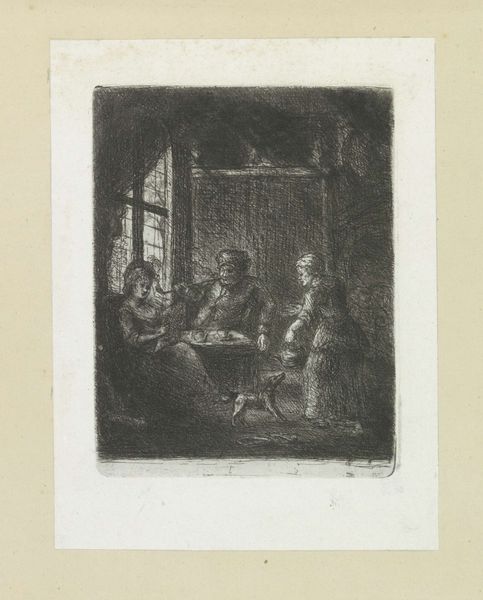
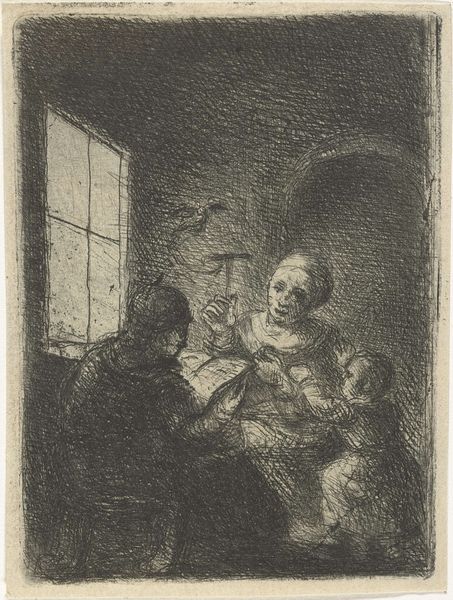
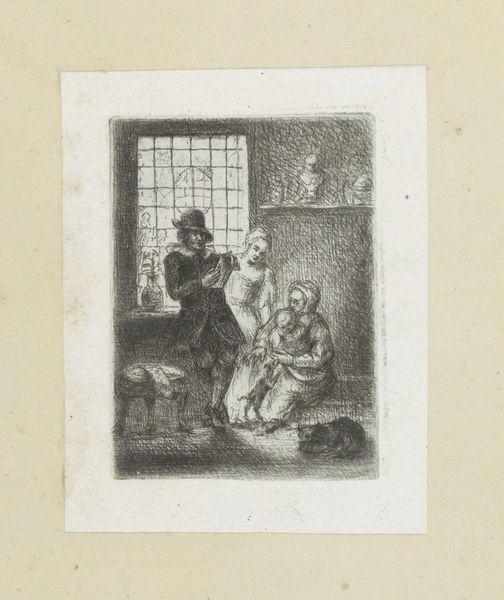
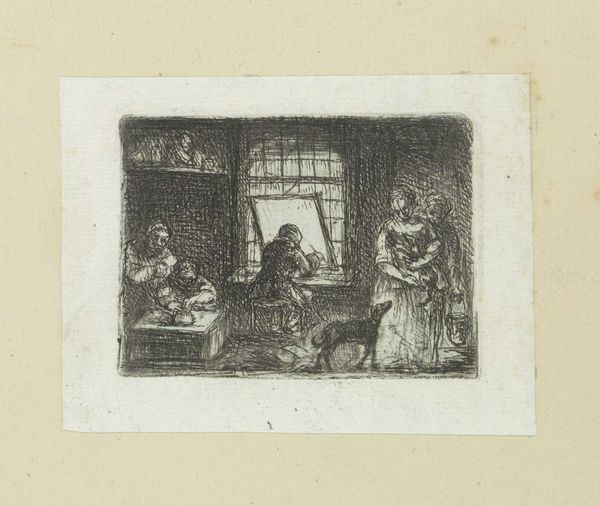
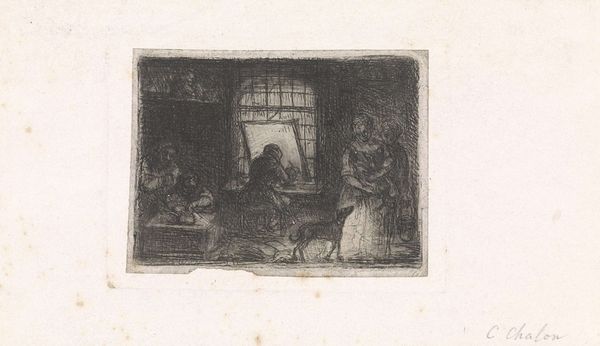
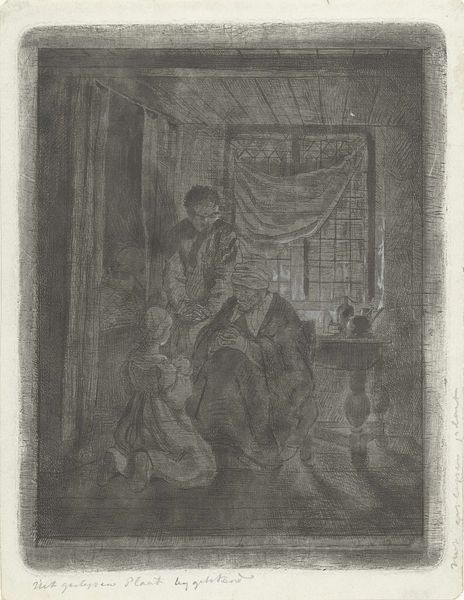
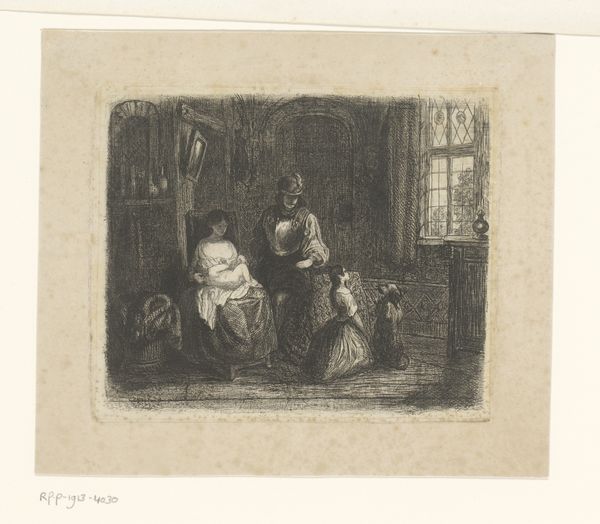
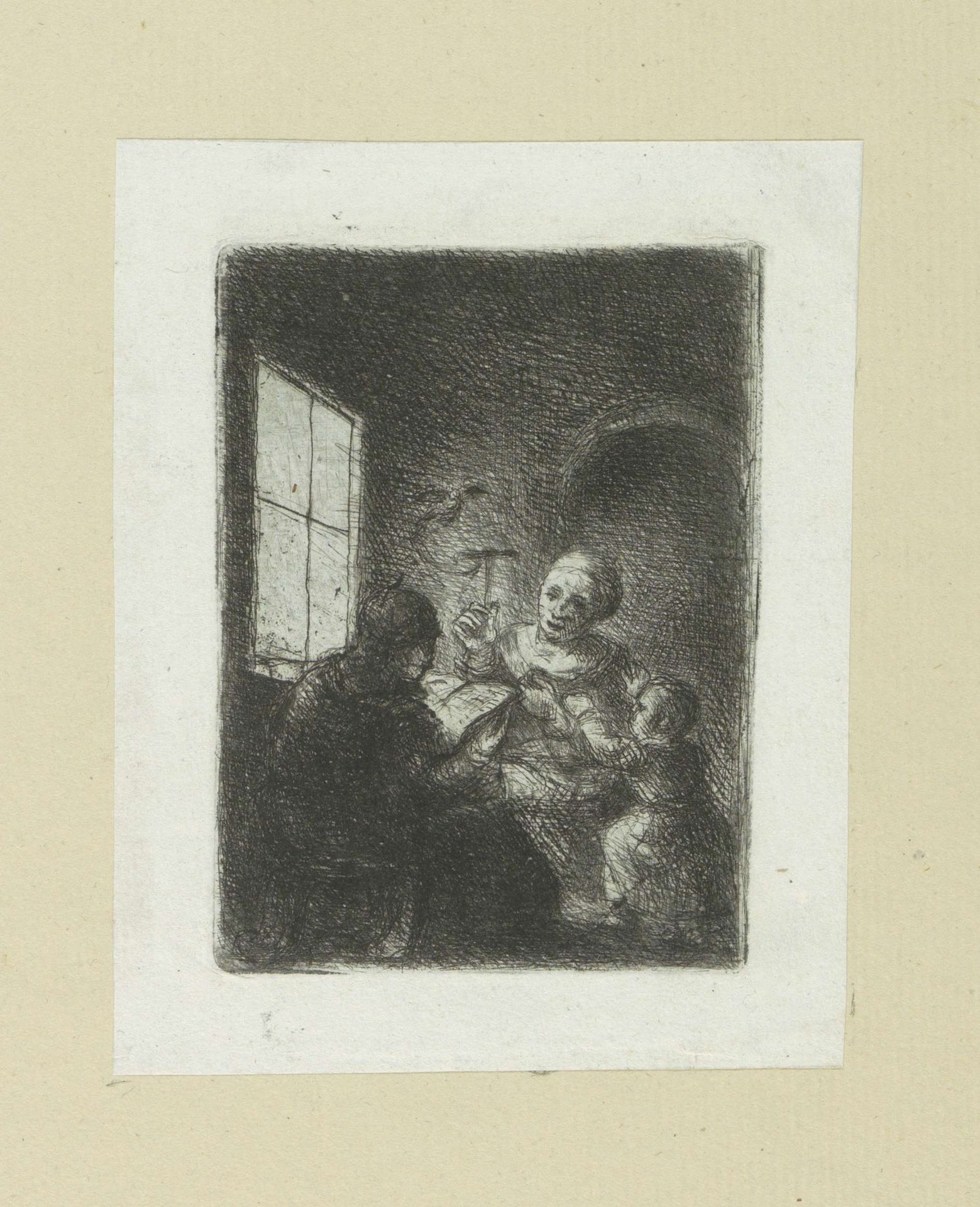
Jan Chalon created this print, titled "Family by the Window," in the Netherlands during the late 18th century. Notice the intimate domestic scene, illuminated by the window and a central candle. What does it tell us about the social conditions of the time? The presence of a family suggests societal values placed on domesticity and familial bonds. But the etching also hints at the economic realities of 18th-century Dutch life. The family's modest attire and the sparse interior suggest a middle-class existence, a far cry from the opulence enjoyed by the elite. This image enters into a longer history of Dutch genre painting, associated with artists like Rembrandt and Vermeer. Chalon's print partakes in that tradition, but it also subtly comments on the changing social landscape, as a new era of revolution was about to begin. To understand this artwork further, we might consider how 18th-century Dutch society viewed family life and economic status. By delving into such historical and cultural contexts, we gain a richer appreciation of art's role in reflecting and shaping social norms.