About this artwork
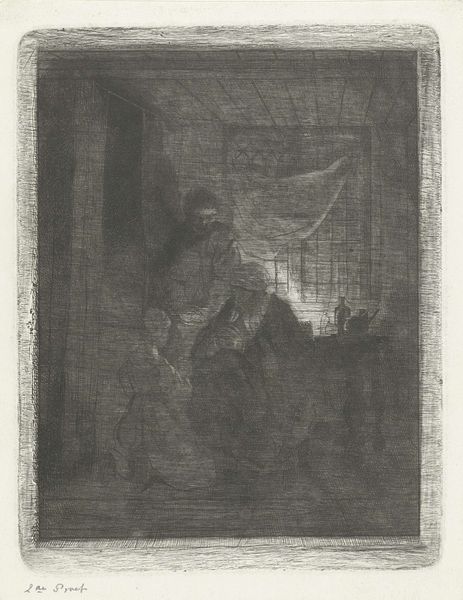
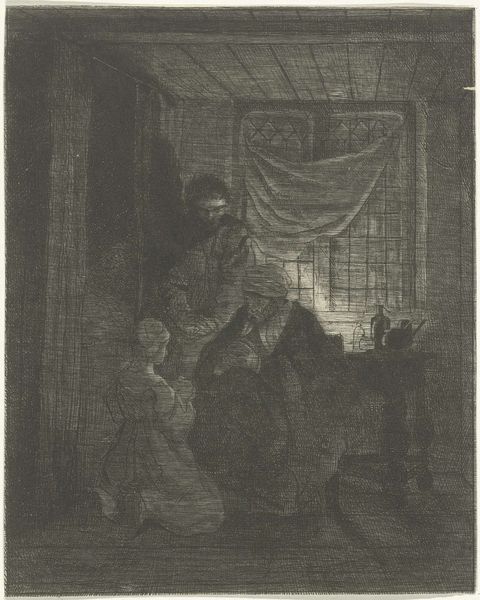
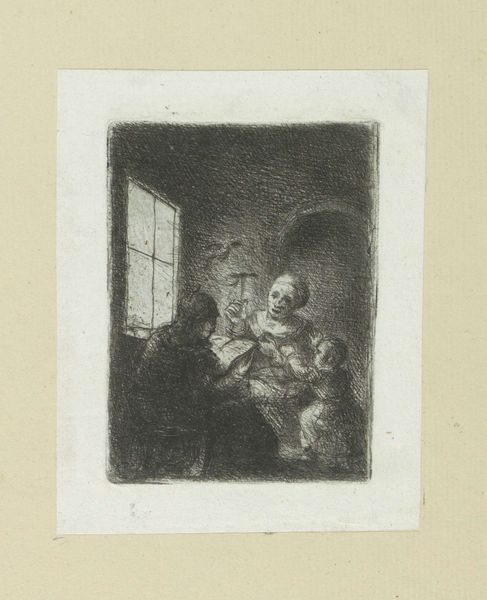
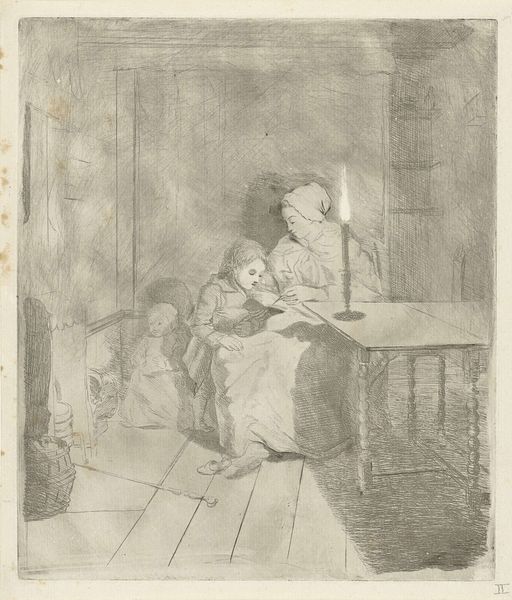
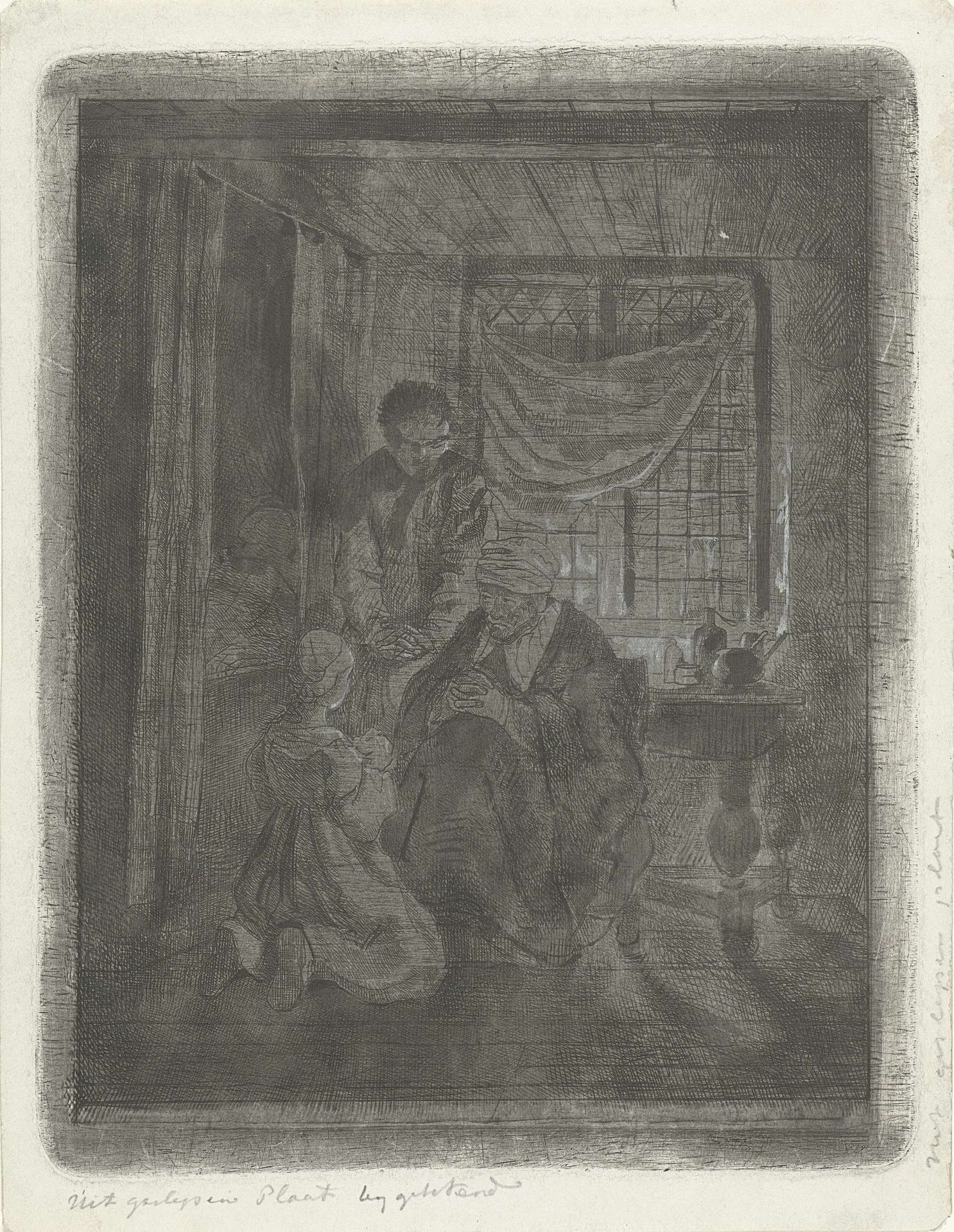
Editor: This etching by Jacobus Ludovicus Cornet, likely created sometime between 1825 and 1882, is titled "Praying Family Before a Box Bed." The composition is quite dark and intimate. What does this work communicate to you, considering its place in history? Curator: This genre scene reflects the 19th-century interest in depicting everyday life, particularly of the working class, appealing to a growing middle-class audience eager for glimpses into different social strata. What do you observe about the visual composition and how it may convey the artist's message about domesticity and piety? Editor: I notice the family is clustered in a tight space, almost as if pressed into the foreground, with a light source illuminating their faces. Is that to emphasize something? Curator: Precisely. The light highlights their expressions and gestures, drawing viewers to the act of prayer, an emphasis on morality prevalent in Dutch society at the time. Consider how the “genre-painting” style made such scenes popular. This work not only reflected life, but also reinforced certain socio-cultural values and moral narratives about family structure and proper behavior. How might that have been consumed by its intended public? Editor: I guess it offered a comforting picture, even perhaps an ideal, to strive for. But the bareness also gives it a feeling of hardship, right? Curator: That’s insightful. The “realism” is tempered by sentimentality. By portraying the act of piety within simple settings, Cornet appeals to the emotions of the viewer and implicitly prompts self-reflection. Ultimately, an engraving such as this played a public role. Editor: That’s so interesting – to consider this artwork not just as an aesthetic object but as a socio-political statement. I will definitely view genre painting differently going forward. Curator: And I will consider more thoroughly its domestic intimacy in a society-wide system of morality!
Biddend gezin voor een bedstede 1825 - 1882

Jacobus Ludovicus Cornet
1815 - 1882Location
RijksmuseumArtwork details
- Medium
- drawing, print, etching, intaglio, paper
- Dimensions
- height 182 mm, width 143 mm
- Location
- Rijksmuseum
- Copyright
- Rijks Museum: Open Domain
Tags
portrait
drawing
aged paper
toned paper
etching
intaglio
figuration
paper
genre-painting
realism
Comments
No comments
About this artwork
Editor: This etching by Jacobus Ludovicus Cornet, likely created sometime between 1825 and 1882, is titled "Praying Family Before a Box Bed." The composition is quite dark and intimate. What does this work communicate to you, considering its place in history? Curator: This genre scene reflects the 19th-century interest in depicting everyday life, particularly of the working class, appealing to a growing middle-class audience eager for glimpses into different social strata. What do you observe about the visual composition and how it may convey the artist's message about domesticity and piety? Editor: I notice the family is clustered in a tight space, almost as if pressed into the foreground, with a light source illuminating their faces. Is that to emphasize something? Curator: Precisely. The light highlights their expressions and gestures, drawing viewers to the act of prayer, an emphasis on morality prevalent in Dutch society at the time. Consider how the “genre-painting” style made such scenes popular. This work not only reflected life, but also reinforced certain socio-cultural values and moral narratives about family structure and proper behavior. How might that have been consumed by its intended public? Editor: I guess it offered a comforting picture, even perhaps an ideal, to strive for. But the bareness also gives it a feeling of hardship, right? Curator: That’s insightful. The “realism” is tempered by sentimentality. By portraying the act of piety within simple settings, Cornet appeals to the emotions of the viewer and implicitly prompts self-reflection. Ultimately, an engraving such as this played a public role. Editor: That’s so interesting – to consider this artwork not just as an aesthetic object but as a socio-political statement. I will definitely view genre painting differently going forward. Curator: And I will consider more thoroughly its domestic intimacy in a society-wide system of morality!
Comments
No comments